
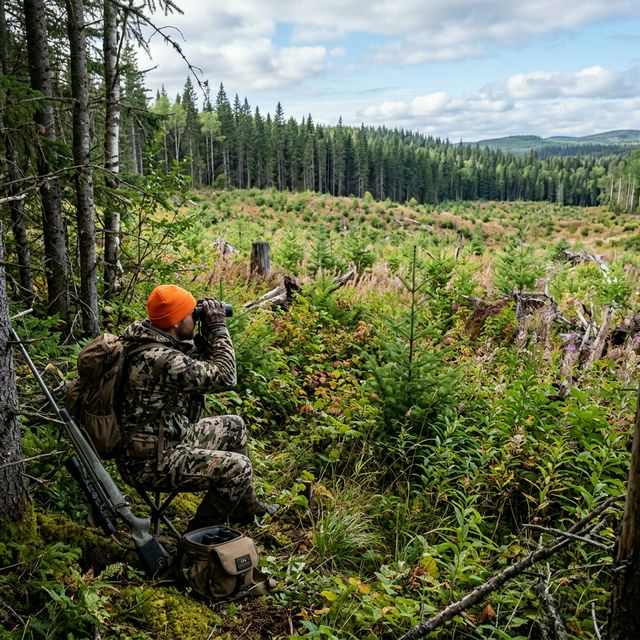
Hunting Clear-Cuts and Logging Roads: Mastering the Thick Stuff
Freshly logged timber tracks might look incredibly ugly and destroyed to a human, but they are an absolute whitetail's paradise. Learn exactly how to identify the right clear-cuts and tactically hunt the 'thick stuff'.
To the uninitiated, casual hunter who prefers a beautiful, park-like forest where you can see for 300 yards, a massive Commercial Clear-Cut or heavy timber harvest physically looks like a devastating, apocalyptic war zone.
But at Wildsnap, our biologists and master hunters definitively know it as the single most explosive, nutrient-dense, and highly lethal deer habitat in the entire woods.
When a heavy logging crew violently removes the massive oak or pine canopy, the sudden, extreme explosion of direct sunlight aggressively hitting the forest floor triggers a massive, almost instant botanical rebirth known as Early Successional Habitat. For a mature whitetail buck, this massive “thicket” means two incredible things: the world’s most massive, infinite botanical salad bar, and an absolutely impenetrable, thorny fortress of security cover where humans literally cannot walk.
1. The Biological “Year 3 to 7” Sweet Spot
Not all logging cuts are created biologically equal. You must relentlessly analyze historical satellite imagery to determine exactly when the timber was heavily harvested. Our field data shows a highly specific, explosive window of maximum productivity.
- Years 1 to 2 (The Wide-Open Buffet): The cut area is generally too open and visually terrifying for a mature buck to bed in. While there is plenty of immediate high-protein food (massive stump sprouts and new green buds), older deer do not feel visually secure enough to sleep there during daylight, preferring to only feed there under the absolute cover of total darkness.
- Years 3 to 7 (The Absolute Gold Mine): This is the holy grail. By year four, the regenerating brush and saplings are exactly head-high (4 to 6 feet tall). Explosive blackberry briars, massive pokeweed, and dense hardwood saplings create an impenetrable “visual wall” that completely blocks a human predator’s sight, but the low canopy perfectly allows a bedded deer to hear and detect movement from 50 yards away. It is the ultimate bedroom.
- Years 10+ (The Pole-Timber Desert): Fast forward a decade, and the new trees are now 20 feet tall. The canopy has once again aggressively closed over, heavily shading out all the high-protein, low-level ground browse. The “buffet” is closed, the briars die off, and the deer entirely abandon the area as a primary bedding hub.
2. Technical Access: The Logging Road Hub
The absolute hardest part about hunting a 5-year-old clear-cut is successfully physically getting into it without sounding like a bulldozer violently crashing through dry brush.
- The Arteries: The old, heavily compacted dirt logging roads and “skid trails” are the functional “arteries” of the clear-cut. Deer absolutely love to walk them because they provide the exact path of least physical resistance straight through the terrifying wall of briars and slash.
- The Intersection Strategy: Look aggressively on your mapping app for massive “Hubs”—the exact geometric location where three or four old skid-trails or logging roads seamlessly intersect in the middle of the cut. This is a massive, natural, high-traffic intersection where every cruising buck during the rut will eventually pass through to aggressively scent-check for hot does bedded in the thicket.
- The Off-Road Transition Ambush: The fatal mistake is setting a ground blind or tree stand directly on the wide-open logging road. A mature buck entering the road will instantly spot your obvious, skylighted silhouette. You must aggressively set your stand exactly 15 to 20 yards deep into the mature, uncut timber edge directly overlooking the road intersection. This allows the dark, heavy shadows of the big woods to perfectly hide your silhouette, while still giving you a commanding, clear visual shooting lane to the bucks cruising the edge of the brutal early successional growth.
BIOLOGICAL SAFETY: The Severe Tick Matrix
Plunging into early successional growth and overgrown logging roads during the early archery season carries a massive, frequently ignored medical risk to the hunter.
- The Perfect Storm: Dense 4-year-old clear-cuts are the absolute primary, explosive breeding grounds for Lyme-disease carrying Blacklegged (Deer) Ticks. The massive abundance of low ground cover provides the perfect, highly protected environment for thousands of white-footed mice (the primary biological host for larval ticks) to rapidly multiply. When you aggressively walk through thigh-high briars, you are physically sweeping thousands of “questing” ticks directly onto your pants.
- The Chemical Defense: You absolutely must aggressively treat your entire exterior hunting clothing (boots, pants, and shirts) with a heavy application of Permethrin spray (not just standard DEET on your skin) a full 24 hours before entering the woods. Furthermore, you must rigidly perform a thorough, full-body tick check immediately after every single scout or hunt in a clear-cut to prevent severe, life-altering tick-borne illnesses.
Passionately embrace the incredibly ugly woods. A messy, visually destroyed, wildly thorny clear-cut is exactly where the absolute biggest, oldest bucks on the entire property are actively hiding. Stop staring at the open oak flats, aggressively get in the thick of the nasty stuff, and reap the rewards.