
The Ultimate Layering System for Cold Weather Deer Hunting
Stop shaking in the stand. We break down the absolute science of moisture-wicking base layers, loft insulation, and wind-blocking shells to keep you hunting in sub-zero temperatures.
Cold weather is undeniably a late-season deer hunter’s best friend. A plunging thermometer combined with a heavy blanket of tracking snow triggers intense, desperate feeding activity and forces mature, nocturnal bucks onto their feet during daylight hours to survive.
But brutal cold is also a hunter’s worst enemy if they are under-equipped. Sitting completely motionless for 8 hours in a metal tree stand at 15°F is a massive physical and mental challenge.
At Wildsnap, we’ve learned through painful experience that the secret to surviving all-day November and December sits isn’t just buying the absolute “thickest jacket” on the rack. The secret is mastering a technical, thermodynamic layering system.
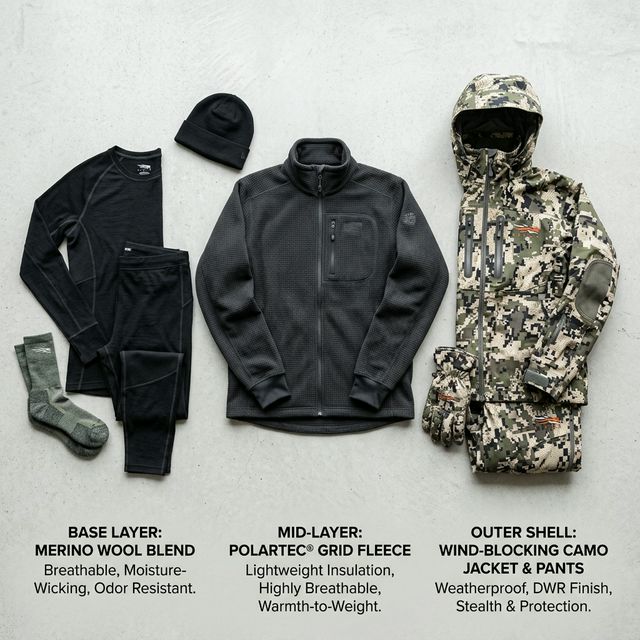
The 3-Part Science of Layering
A proper, scientific layering system consists of exactly three distinct functional parts. Each layer has one strictly defined job, and if one fails, the entire system collapses.
1. The Base Layer: Moisture Management
The layer resting directly against your skin has exactly one job: move sweat away from your body. When you drag a 20-pound climbing stand 400 yards through the frozen timber in the dark, you will sweat profusely. If that sweat stays against your skin, it will rapidly cool once you stop moving, inducing a violent, uncontrollable chill that drives you out of the woods by 9:00 AM.
- The Golden Rule: Avoid cotton at all costs. Cotton absorbs water like a sponge and holds it directly against your skin.
- The Solution: Invest heavily in high-quality Merino Wool (often considered the “holy grail” of base layers). It is naturally antimicrobial (kills human odor), is incredibly warm for its razor-thin weight, and miraculously continues to insulate your body even if it gets completely soaked with sweat.
2. The Mid Layer: Trapping Dead Air (Insulation)
The mid-layer’s only job is to trap the radiant heat your body naturally produces inside millions of tiny pockets of “dead air.”
- The Materials: This is where you wear heavy, high-loft garments like a thick grid-fleece hoodie, a compressible PrimaLoft synthetic puffy jacket, or high-fill goose down. You want something incredibly light, airy, and “puffy” to trap maximum thermal heat.
3. The Outer Shell: The Shield
You can wear three incredibly warm down jackets, but if a 15-mph icy north wind can blow directly through the fabric, you will lose your body heat instantly through convective cooling.
- The Wind-Blocker: Your outermost layer must feature a high-quality, 100% wind-blocking laminate membrane (like Gore-Tex Windstopper). For deer hunting, this membrane must be sandwiched inside a completely silent, brushed fleece or wool exterior to ensure you don’t sound like a crinkling potato chip bag when you draw your bow.
How to Keep Your Feet and Hands Warm
Frozen toes and numb fingers are the number one reason hunters surrender and head back to the truck early.
Footwear Discipline
- Do Not Over-Tighten: The most common mistake hunters make is lacing their heavy rubber boots as tight as possible. This rigidly restricts the capillary blood flow to your extremities. You must ensure you have enough room inside the boot toe-box to freely “wiggle your toes” even when wearing two pairs of heavy socks. If the boot is tight, your foot will freeze.
- The Two-Sock System: Wear a paper-thin synthetic or silk “liner sock” under your heavy wool outer socks to hyper-efficiently wick sweat away from your foot during the long walk in.
- Chemical Toe Warmers: Adhesive oxygen-activated heat packs stuck to the bottom of the toes (on the outside of your sock) are a cheap, mandatory solution for extreme cold-weather sits.
Hand Management
Thick, heavy ski gloves are terrible for bowhunting or operating a rifle safety.
- The Hand Muff: Our preferred system is wearing ultra-thin, tactile merino wool liner gloves on our hands, and wearing a fleece-lined waist muff (like a quarterback pouch) packed with two large chemical hand warmers. Your hands stay bare and perfectly dexterous inside the 90-degree muff until the exact second you need to grab your weapon.
Late-season hunting is not a test of how much misery you can physically endure. A scientifically built layering system allows you to completely ignore the thermometer and stay hyper-focused on the deer trail for hours on end.