
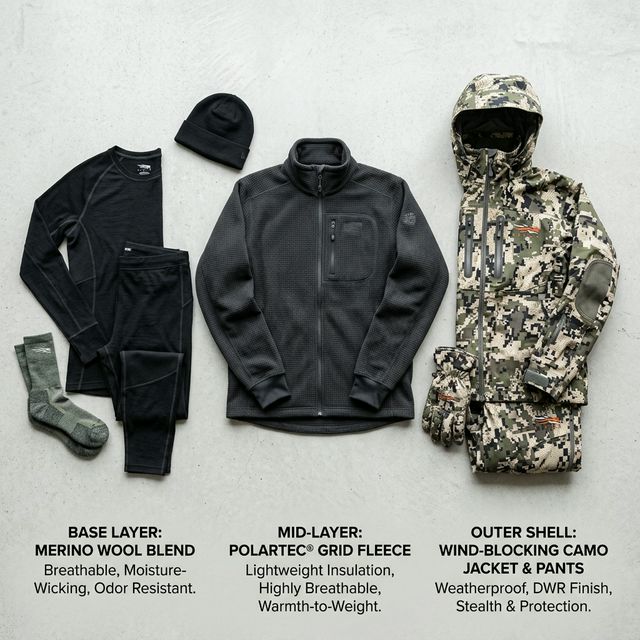
The Ultimate Layering System for Cold Weather Deer Hunting
Build a cold-weather deer hunting layering system: merino bases, lofted mids, silent wind shells, plus foot and hand tactics for all-day late-season sits.
Cold weather is a late-season ally. Plunging temperatures and tracking snow push bucks onto their feet in daylight to feed. It is also a hunter’s enemy if you under-dress for an 8-hour sit at 15°F.
The fix is not one “heaviest jacket.” It is a thermodynamic layering system: move moisture, trap dead air, block wind—then manage hands and feet as separate problems.
Why Layering Beats a Single Heavy Coat
A single parka fails when you hike hot and sit cold. Sweat soaks the inner fabric, then conductive heat loss drives violent shivering by midmorning.
Layers let you:
- Strip heat on the walk in
- Add loft when you stop
- Vent without exposing skin to wind
- Adapt from 35°F dawn to 10°F noon fronts
Late-season success is often comfort endurance. The hunter who stays still until 2:00 PM wins.
Base Layer: Move the Sweat
Skin layer job one: wick moisture.
- Avoid cotton—it holds water against skin
- Prefer merino wool or quality synthetics
- Fit snug without tourniquet tightness
- Choose midweight for most November sits; lightweight for high-output hikes
Merino also resists odor better than many synthetics—useful when sits stack up between washes. Pair clothing scent habits with whitetail scent control.
Mid Layer: Trap Dead Air
Insulation traps radiant heat in lofted fibers.
Strong mid options:
- Grid fleece hoodies for active warmth
- PrimaLoft or similar synthetic puffy jackets (wet-tolerant)
- High-fill down when you can keep it dry
Carry the heavy mid in the pack during the walk; put it on at the stand when pulse drops. Wearing max loft for a 600-yard crunch hike is how you freeze later.
Outer Shell: Block Wind Silently
Wind strips heat through convection even if loft is thick.
Shell requirements for deer hunting:
- True windproof membrane (Windstopper-style or equivalent)
- Quiet face fabric—brushed fleece or wool, not noisy hard shell
- Pit zips or vents for temperature dumps
- Cut that allows drawing a bow or mounting a rifle
A silent wind shirt under a loft layer can also work in moderate cold; in true single digits you usually want windproof as the exterior.
The Walk-In Protocol
Systemize the approach:
- Start the hike slightly cool—not cozy
- Base + light mid only while moving
- Stop 100 yards short if needed to cool and dry
- Add big loft and shell at the tree before you climb
- Seat insulation (foam pad) under your backside on metal stands
That last point matters: conductive loss into cold steel drains heat fast even when your torso feels fine.
Feet: Fit, Socks, and Insulation
Numb toes end hunts.
Rules:
- Leave toe-wiggle room—over-tight laces kill blood flow
- Thin liner sock under merino hunting sock
- Change into dry socks at the stand after sweaty approaches
- Match boot insulation to sit style (see rubber vs. leather hunting boots)
- Chemical toe warmers on the outside of the sock over toes in extremes
Late-season motionless sits often need 1,200g class insulation or oversized rubber with heavy socks. Mobile hunts need less.
Hands: Dexterity Without Frostbite
Ski gloves wreck bow releases and safety manipulations.
Proven system:
- Thin merino or synthetic liner gloves always on
- Fleece hand muff on the waist with chemical warmers inside
- Pull hands out only to shoot
- Optional mitt shells in the muff for brutal wind
Practice drawing and shouldering with liners before season so the first cold buck is not a dexterity experiment. Pre-season gear checks belong on your calendar—pre-season gear prep.
Head, Neck, and Extremity Heat Budget
You lose disproportionate heat from an uncovered head and neck.
- Merino beanie or wind-blocking hunting hood
- Neck gaiter that can pull over face without fogging optics endlessly
- Avoid cotton hoodies as the only head layer
If your core is warm but ears burn, fix the hat before adding a fourth torso layer that will soak with sweat on the next move.
Sample Systems by Temperature
| Conditions | Base | Mid | Shell / extras |
|---|---|---|---|
| 30–40°F all-day | Merino midweight | Grid fleece | Light wind shirt |
| 15–25°F | Merino midweight | Fleece + synthetic puffy | Quiet windproof parka |
| 0–10°F | Heavy merino | High-loft puffy | Windproof + muff + 1200g boots |
| High-output hike then sit | Light merino | Pack the puffy | Add loft only when still |
Adjust for wind speed—20 mph at 20°F hits harder than calm air at 10°F.
Moisture Management Beyond the Base Layer
Sweat is only half the moisture problem. Snow melt on pant cuffs, wet stand platforms, and condensation inside rubber boots all steal heat.
Countermeasures:
- Gaiters or tall rubber to keep snow out of boot tops
- Spare gloves in a waterproof stuff sack
- Sit on closed-cell foam, never bare metal
- Vent zippers when hiking even if it feels dramatic
- Pack a dry baselayer top for epic sweats on long approaches
If you arrive soaked, the best loft jacket in your pack cannot save a wet base layer against skin. Change what you can at the tree. Ego about “toughing through damp merino” costs deer sightings when shivering starts.
Nutrition and Hydration in the Cold
People under-drink in winter and then fade at 1:00 PM. Pack:
- Thermos with warm calories (broth, tea, cocoa)
- Dense snacks you can eat quietly
- Electrolytes if you hike hard in cold dry air
Avoid alcohol “for warmth”—it impairs judgment and can increase heat loss. Caffeine is fine in moderation but is not a substitute for insulation. Late-season all-day sits are athletic events disguised as sitting still; fuel them accordingly. Timing those long sits with movement science from late season whitetail tactics beats suffering without a plan.
Storage and Between-Hunt Care
Wet loft compressed in a truck bed loses loft. After each hunt:
- Hang layers to dry fully
- Store down/synthetic puffy uncompressed
- Separate damp gloves from dry spare sets
- Recharge headlamp batteries in the warm house—not left in the cold truck overnight
Gear that starts the next sit already damp guarantees an early walk-out. Pre-season organization habits in pre-season gear prep apply all winter, not only in August.
Quiet Fabrics and Movement Discipline
The warmest shell fails if it sounds like a tarp when you turn to shoot. Test full draws and shoulder mounts at home in the complete system. Replace loudly coated face fabrics with quieter hunting-specific shells when needed.
Movement rules for cold sits:
- Move in slow motion when deer are at 60 yards—cold muscles make hunters jerky
- Keep hand-muff zippers from freezing shut with a dab of appropriate lubricant
- Clear ice from boot treads before climbing sticks
- Practice lifting binoculars without elbowing noisy fabric
Late-season deer are often in open food. They have time to study you. Silence and smoothness matter as much as loft ratings on the hangtag.
Budget Layering Without Cheap Suffering
You can build a capable system without boutique prices:
- Solid merino or synthetic base from mid-tier outdoor brands
- Fleece mid you may already own
- One quality windproof hunting jacket as the spendy piece
- Oversized insulated boots instead of three mediocre pairs
- Muff + warmers instead of exotic heated gloves
Put money where wind and feet meet failure. Fashion camo patterns do not add degrees. If you hunt only a few bitter days a year, rent or borrow extreme loft before buying a closet full of gear you use twice.
Frequently Asked Questions
Is merino worth the cost? For base layers yes—odor control, warmth when damp, and comfort usually outperform cheap cotton blends.
Should I wear my heaviest jacket walking in? No. Hike light, dress heavy when motionless.
How do I keep a bow arm mobile? Avoid binding sleeves; choose articulated hunting fits and test full draws at home in the full system.
Do chemical warmers always help? They help extremities when blood flow and fit are already correct. They will not fix a boot laced like a skate.
What matters more—loft or windblock? In wind, block first. In dead calm deep cold, loft volume matters more. Best systems provide both.
Late season is not a misery contest. Build a layering system that lets you forget the thermometer and watch the trail until the buck has to move.