
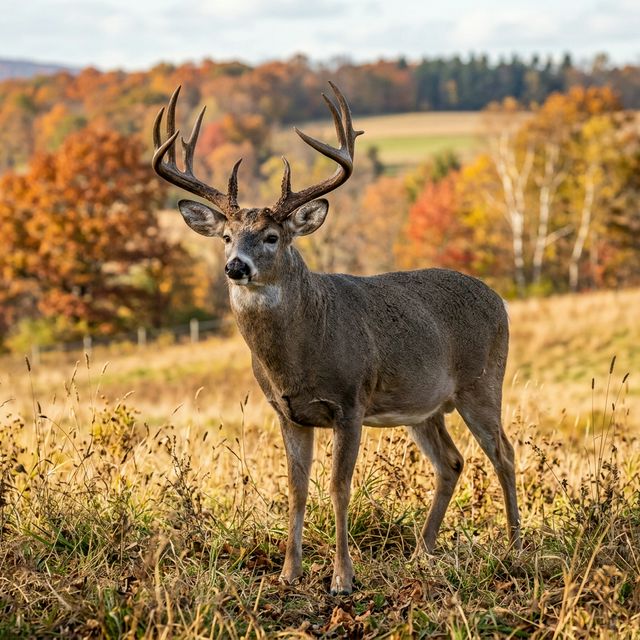
Evaluating Deer Age on the Hoof: The Science of Field Judging Whitetails
Master the biological art of estimating a buck's age before you pull the trigger. Learn exactly how to read the physical body characteristics that define specific age classes in mature whitetail deer.
Accurate age estimation is the absolute cornerstone of modern, high-level deer management. If you manage a property and your goal is to let the “up-and-comers” reach their full genetic potential, you must master the forensic art of aging a live deer on the hoof.
At Wildsnap, we constantly remind our hunters: Antlers sell magazines, but body mass determines maturity.
A 3.5-year-old buck with elite genetics can easily grow a stunning, 140-inch rack that completely fools an excited hunter into pulling the trigger. But if you stare exclusively at the bone, you will experience massive “ground shrinkage” when you walk up to the deer and realize the body is tiny. Antlers can deceive you, but a buck’s Skeletal Frame and muscle distribution rarely lie.
1. The Forensics of the Body: Center of Gravity
We evaluate live bucks strictly based on their Biological Center of Gravity. As a whitetail buck ages, his physical “weight” visually shifts from his narrow hindquarters straight down to his chest and brisket.
The Racehorse (2.5 - 3.5 years old)
These young bucks represent the vast majority of deer killed by hunters.
- The Look: They are incredibly athletic, sleek, and long-legged. They have a distinct, tight “waist” similar to a greyhound dog.
- The Neck-to-Shoulder Junction: The most telling feature of a 3-year-old is that the bottom of his neck meets his chest at a sharp, distinct 90-degree angle. He looks like a teenager in peak physical condition. He is not a fully mature buck.
The Tank (4.5 - 6.5+ years old)
This is the holy grail of herd management. By the time a buck reaches 5.5 years old, his body has completely finished growing structurally, and he begins to pack on sheer mass.
- The Look: A mature buck looks like a cinder block with antlers. His neck, his heavy brisket, and his front shoulders completely blend into one solid, indistinguishable mass of muscle.
- The Leg Illusion: His legs actually begin to look disproportionately short and stubby, not because his legs shrank, but because his chest and stomach have dropped so incredibly deep toward the ground. His back may visibly sway, and he waddles when he walks. This is a fully mature animal ready for harvest.
Tarsal-Stain Intensity
During the rut, we aggressively look at the tarsal glands (the dark patches of fur inside the back knee joints).
- A young 2.5-year-old buck generally has clean, lightly colored glands.
- A dominant, 5.5-year-old “boss” buck will have massive, dark, oily, and completely “burnt” black tarsal stains that often extend all the way down his leg to his hooves. This heavy staining is a direct biological sign of years of aggressive rub-urination and dominance scent-marking.
2. Post-Mortem Forensics: The Cementum-Annuli Standard
Field judging is always an educated hypothesis; true, unimpeachable biological forensics requires highly scientific post-mortem testing.
- The Tooth-Wear Myth: For decades, biologists aged dead deer by looking at the wear and dentin exposure on the back molars (“Tooth-Wear-and-Replacement”). We’ve found through extensive data that this method varies wildly in accuracy. A 3-year-old buck eating sandy, grit-filled roots in Texas will have violently worn-down teeth that look like a 6-year-old buck eating soft soybeans in Iowa.
- The Lab Test: For absolute 100% accuracy, the modern standard is the Cementum-Annuli test. You physically extract the two front incisor teeth from the lower jaw and send them to a forensic wildlife lab. Exactly like counting the concentric rings on a cut tree stump, biologists use a microscope to literally count the microscopic layers of dental cementum deposited on the tooth root each winter. This is the only definitive way to verify if that massive “tank” you shot was 5.5 or a 9.5-year-old local legend.
POST-MORTEM SAFETY: Zoonotic Disease Forensics
Physically extracting a jawbone or heavily handling a harvested deer for aging involves serious, under-reported biological risks to the hunter.
- Gloves are Mandatory: We mandate the usage of heavy-duty Nitrile Gloves during all field dressing and aging procedures. Microscopic open cuts or hangnails on your bare hands are direct, super-highway entry points for deadly bacteria from the animal’s digestive tract, or severe zoonotic diseases like Bovine Tuberculosis.
- Bone Fragment Hazards: Be hyper-aware of Broken Bone Fragments when manipulating the jaw. A deep puncture from a shattered mandible or a slipped scalpel blade can cause immediate, severe blood infections (sepsis) deep in the woods.
- CWD Zones: If you are hunting in a known Chronic Wasting Disease (CWD) infected county, you must avoid any physical contact with the spinal column, lymph nodes, and brain matter at all costs. Never attempt to extract a brain-stem sample for CWD testing yourself; always use a state-certified DNR testing drop-off station.
Age is the ultimate, defining trophy of the modern whitetail hunter. Train your eyes to master the body frame, actively ignore the distraction of the antlers, and truly respect the biological maturity of the animal you pursue.