
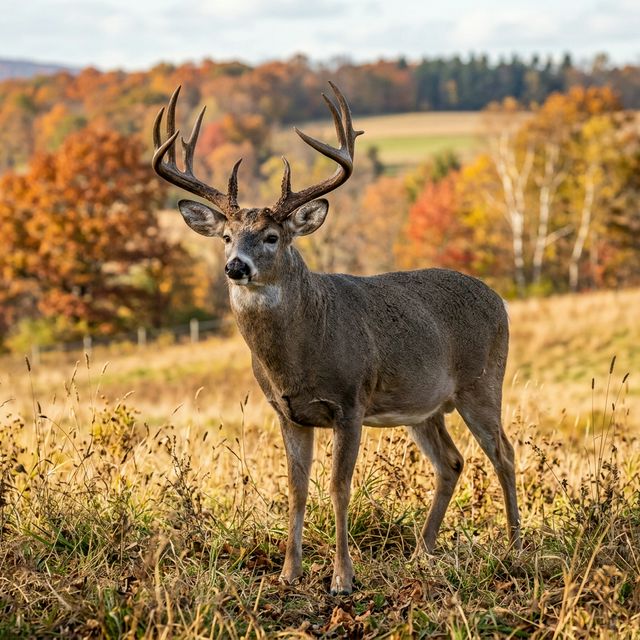
Evaluating Deer Age on the Hoof: The Science of Field Judging Whitetails
Estimate a buck's age before you shoot. Read body mass, neck junction, tarsals, and post-mortem tooth methods so antlers stop fooling harvest decisions.
Age estimation is the backbone of intentional deer management. If your goal is letting younger bucks reach potential, you cannot judge maturity by antlers alone. A 3.5-year-old with elite genetics can wear a 140-inch rack that looks “big” in the moment—then shrink when you walk up on a light-framed body.
Antlers sell magazines. Body mass shows maturity. Frame, muscle distribution, and how weight sits on the skeleton are far more honest than tine length. Learn those cues before the season, then practice on trail-camera stills and known-age deer whenever you can. For rack math after the shot, use a proper scoring guide; for growth biology, see antler growth.
Why Antlers Mislead
Antler size responds to age, nutrition, and genetics—but not in a straight line you can read at 40 yards in fading light.
- A well-fed 2.5-year-old can out-score a stressed 4.5-year-old.
- Drop tines and non-typical points inflate “wow” without adding years—read non-typical traits separately from age.
- Ground shrinkage is usually body disappointment, not tape disappointment.
Train yourself to look at the deer first, bone second. Give yourself a 10-second body checklist before the antler checklist.
Center of Gravity: The Field Judging Framework
As bucks age, visual weight shifts from narrow hindquarters toward chest, brisket, and neck.
Yearling to 2.5: Long and light
- Legs look long; body looks shallow
- Neck is slim; little swelling into the shoulders
- Overall impression: athletic and unfinished
Most yearlings are easy. The danger zone starts at 2.5–3.5 when racks get interesting.
The racehorse: 2.5–3.5 years
These bucks are the majority of “almost” harvests.
- Sleek, tight waist—greyhound outline
- Neck meets chest at a sharp, near 90° junction
- Muscular but not thick through the brisket
- Legs still look long relative to chest depth
He can look like a “shooter” if the rack is wide. Body says teenager.
The tank: 4.5–6.5+ years
By roughly 5.5, structural growth is largely done and mass accumulates.
- Neck, brisket, and shoulders blend into one block
- Legs look short—not because they shrank, but because the chest dropped
- Back may sway; gait can look heavy or deliberate
- Belly and brisket hang lower in side profile
This is the mature animal most management programs want to identify correctly before the trigger press.
Secondary Field Clues That Help
Use these as supporting evidence, not sole proof.
Face and snout
Older bucks often show a longer, blockier snout and a “Roman nose” look compared with refined young faces. Camera angle lies—prefer broadside stills.
Back and belly line
Young bucks show a straight, tight underline. Mature bucks show more sag and depth, especially pre-rut when weight is peak.
Tarsal staining in the rut
- Young bucks: lighter, cleaner tarsals
- Dominant mature bucks: dark, oily, “burnt” stains that can run toward the hocks
Heavy staining tracks years of rub-urination and status more than exact age, but it correlates with maturity during peak rut.
Behavior
Mature bucks often move with purpose, use edges, and appear less playful than bachelor-group 2-year-olds. Behavior alone will not age a deer—but combined with body, it helps.
Age Classes in a Simple Field Chart
| Age class | Body cue | Neck/chest | Harvest note |
|---|---|---|---|
| 1.5 | Very light, long-legged | Thin neck | Usually protect if managing |
| 2.5 | Athletic, tight waist | Defined neck-chest angle | Common “ground shrinkage” |
| 3.5 | Filling out, still sleek | Angle softening | Borderline on many properties |
| 4.5 | Heavy chest beginning | Blend starting | Often true management target |
| 5.5+ | Blocky, deep brisket | Fully blended mass | Prime mature harvest |
Regional nutrition changes the calendar—Iowa farm country grows mass faster than poor sandy range—so calibrate to your local herd.
Using Trail Cameras to Train Your Eye
Side-on, level photos at known distance are the best training tool short of jaw aging. Build a folder of labeled images: yearlings, 2.5s you later confirmed, and mature bucks from cementum samples.
Watch for lens distortion on close-up cameras—wide-angle lenses inflate racks and shrink bodies. Compare multiple photos across months; a buck that looks tank-like in November may have been a racehorse in July with a thinner neck.
If you run cellular trail cameras, resist the urge to shoot from the first daylight photo. Wait for a broadside still when the buck is relaxed, not mid-stride with a stretched neck.
Post-Mortem Aging: Tooth Wear vs Cementum
Field judging is a hypothesis. Lab methods settle arguments.
Tooth wear and replacement
Biologists long used molar wear and dentin exposure. It still works as a rough tool, but diet skews it. A 3-year-old on sandy, grit-heavy browse can look like a 6-year-old on soft Midwestern ag.
Cementum annuli
Extract lower front incisors and send them to a wildlife lab. Technicians count cementum layers on the root—like tree rings—deposited each winter. This is the most reliable common method for verifying whether that “tank” was 5.5 or 9.5.
If you manage land seriously, aging a sample of annual harvests builds a real age structure—not just campfire estimates.
Management Decisions on the Stand
Before you shoot, run a quick process:
- Broadside look—chest depth and leg proportion
- Neck junction—sharp angle or blended mass
- Antler check only after body grade
- Property goal—are you filling the freezer, managing age structure, or both?
On nuisance or crop-damage tags, age goals may differ—see depredation tags. Clarity beats impulse.
Write your property’s age target on an index card and tape it inside your stand door. When adrenaline hits, read the card before you decide. Share the same card with hunting partners so everyone applies the same body-first standard instead of arguing over antler inches at the skinning pole.
Common Field Judging Mistakes
Rut neck inflation: A swollen 3.5-year-old neck in November can fool you. Use pre-rut photos when possible and still weigh chest depth over neck alone.
Head-on angles: Front-facing views hide waist taper and belly depth. Hold your shot until a side profile if age matters.
Antler-first reflex: Wide beams trigger premature “shoot” decisions. Force the 10-second body scan every time.
Comparing across regions: A 3.5-year-old on poor soil may look younger than a 2.5-year-old on irrigated alfalfa. Judge against local bucks, not magazine covers. When in doubt on a borderline buck, passing is often the safer management call than shooting and guessing wrong.
Handling and Disease Precautions
Jaw extraction and aging work mean handling head and mouth tissues.
- Wear nitrile gloves for field dressing and tooth removal
- Watch for sharp bone fragments when working a mandible
- In CWD zones, avoid brain, spinal column, and lymph nodes; use official agency sampling points rather than improvising brainstem removal—see the full CWD guide
- Sanitize knives and tools after processing
Zoonotic risks (including bacterial infection from gut contents) are why gloves are standard, not optional.
Frequently Asked Questions
Can I accurately age a buck from a trail camera photo? Side-on, level photos at known distance help. Extreme angles, night infrared washout, and tight crops inflate racks and hide belly lines. Use multiple photos across months.
Is a thick neck during the rut proof of maturity? Rut swell makes 3.5-year-olds look older. Judge pre-rut cameras when possible, and still weight chest depth and leg proportion over neck alone.
Do does show the same aging cues? Body mass and face structure help, but most hunters focus aging effort on bucks for antler management. Tooth methods still apply post-mortem for both.
How wrong are most hunters on the hoof? Underestimating age is less common than overestimating 2.5–3.5-year-olds with big racks. That bias is exactly why body-first judging matters.
Should I pull jawbones on every deer? If you are building a management dataset, yes on a representative sample. For a single freezer buck, photos and honest field notes may be enough.
Does antler mass always increase with age? Generally yes until very old age, but nutrition, injury, and genetics cap potential. A mature buck on poor range may carry less mass than a young buck on rich ag. Body mass remains the better live-age signal when racks disagree with the frame.
Ignore the distraction of bone until the body tells you the truth. Maturity is a frame and mass story—antlers are the footnote.
Build a cleaner history of your herd
Spend less time sorting and more time seeing what matters—when detections are organized by time and class.
No credit card
Wildsnap • Open beta
Build a cleaner history of your herd
Spend less time sorting and more time seeing what matters—when detections are organized by time and class.
No credit card