
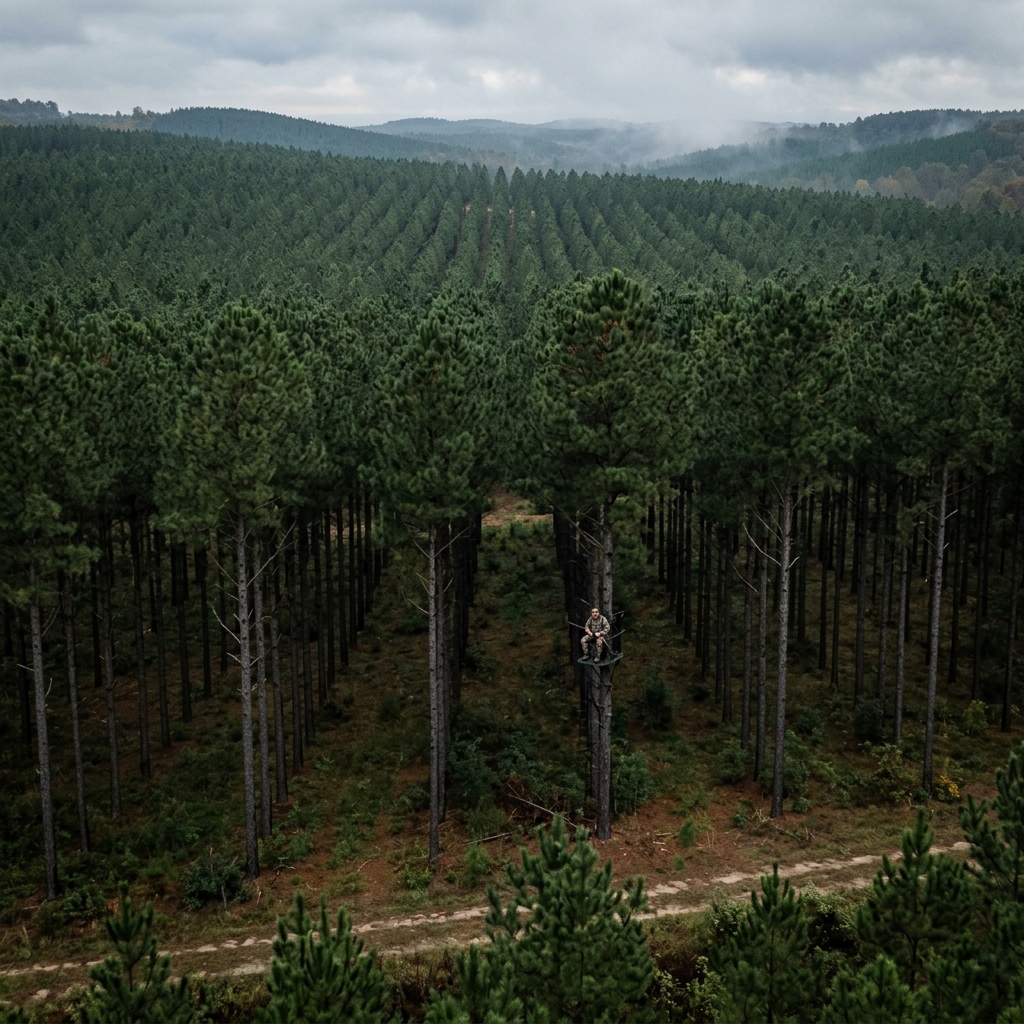
Hunting Pine Plantations: Cracking the Conifer Monoculture
Pine plantations look sterile but hide structured whitetail cover. Learn age classes, thinning rows, hardwood edges, and GPS habits for monoculture timber.
Across much of the South—and in pine belts elsewhere—commercial pine plantations dominate the hunting map. To a hunter raised on oak ridges and crop fields, endless rows of identical conifers can look lifeless. Learn the age class and find the diversity inside the grid, and those same acres become consistent, overlooked deer cover.
Deer rarely key on pine needles as preferred forage. Value comes from sunlight hitting the understory, thinning lanes that regrow browse, and the hard edge where pines meet hardwood bottoms. Treat the plantation like a structured fortress, not a desert. Compare tactics with clear-cuts and darker cedar thickets when your property mixes timber types. On small leased blocks, one blown lane can idle a whole grid for days—rotate pressure like you would on any tight property.
Pine Age Classes and What Deer Use
Ages 1–5: Food phase
Young pines have not closed canopy yet. Disturbed soil and full sun grow weeds, briars, and hardwood sprouts between rows. This stage is a browse buffet and can hold feeding and some bedding if stem density is high enough for security.
Ages 6–9: Transition
Canopy begins closing. Food declines in the interior; deer shift toward edges, thinned strips, and nearby openings. Travel still occurs between rows.
Ages 10–15: Dead zone (travel only)
Around 20-foot heights, canopy shade kills most understory. The floor becomes brown needles—a biological desert for forage. Deer use these stands as invisible travel corridors and thermal/security cover, not as primary feeding areas.
Post-thinning reset
Commercial thinning (often every 10–15 years, removing every 4th or 5th row) dumps light back on the ground. Those lanes brush up fast and become primary travel and browse strips. Fresh thins are hunt calendars—mark them the season they appear.
Finding Micro-Diversity in a Uniform Grid
Identical rows beat your eyes. Hunt features that break the pattern:
- Thinning-row intersections — where a thinned lane crosses a trail to bedding
- Hardwood fingers — creek bottoms with oaks and hickories cutting the pine block
- Natural drains and seeps — wetter soils with different vegetation
- Fire breaks — plowed perimeter strips that green up with grass and clover
- Clearing scars — log decks, turnarounds, and power corridors
E-scouting with recent imagery shows thins and decks before you walk a mile of needles. Confirm on foot midday with quiet entries.
On-Foot Scouting Without Overpressuring
Midday walks down non-primary thinned rows let you read tracks without ruining evening hunts on the main lanes. Look for:
- Concentrated rubs on saplings at row intersections
- Beds in the youngest, thickest blocks adjacent to food
- Droppings along fire breaks where deer loop the perimeter
Pin every find. The grid lies to memory; GPS does not. Scout one plantation block per trip rather than stomping every row in a afternoon.
Tactical Setups That Produce
Thinning-lane ambush
Thinned rows become straight, miles-long corridors. Bucks cruise them in the rut and use them as easy paths to food. Hang at geometric intersections or where a lane pinches against thicker unthinned bedding. Keep your silhouette in shadow off the lane centerline.
Hardwood edge transition
Classic Southern pattern: bed in dense pines by day, feed oak bottoms in evening. Sit the stark line where dark pines meet open hardwoods. Wind must drain scent into pines or parallel to the edge—not into the bedding block.
Fire-break sits
Perimeter fire breaks act like long, skinny food plots. Evening movement along the break toward ag or hardwood mast can be excellent. Watch for tracks crossing at predictable draws.
Bedding-edge morning intercept
If bedding cover sits deep in thick young pines, morning hunts on the first trail out toward the lane or bottom can catch bucks returning late.
Rut Behavior Inside the Pine Grid
During the rut, bucks stop behaving like edge creatures and start checking doe bedding inside young pine blocks. You do not need to sit on the bed—sit the downwind lane where a cruising buck can scent-check without entering the thickest stems.
Primary scrape lines often appear on thinned rows where soft ground holds sign and visibility is slightly better than the dead zone. Fresh rubs on 5–6 inch plantation pines at intersections are rut breadcrumbs—note wind and hang nearby, not on top of the sign.
Access, Wind, and Pressure
Plantations magnify scent and pressure mistakes because deer have long sight lanes down rows.
- Enter using thinned rows only when wind allows; otherwise use adjacent hardwoods
- Avoid walking primary lanes in the afternoon before an evening sit
- Rotate stands along a big plantation—burned corners go cold fast
- Midday moves are quieter for hanging and pulling cameras
In the rut, bucks grid doe bedding inside young pines. Patience beats novelty when you find a hot intersection.
Trail Cameras in Monoculture Timber
Face cameras down thinned lanes at 45° to the trail rather than straight across a row—long sight lines trigger flash-shy bucks to use the next row over. Set them 4–5 feet high on a pine trunk and trim only what blocks the lens.
Check cameras on rain days or midday when deer bed deep. Swapping cards on a crisp evening before your hunt educates every deer using that lane.
Navigation: The Grid Illusion
Every row looks the same. Depth perception collapses. Hunters regularly walk 100 yards off a thinning row while blood-trailing and lose the truck bearing.
Non-negotiables:
- Offline satellite maps on your phone
- GPS pin on the truck before you leave the road
- Pins on stand, last blood, and parking
- Compass backup if batteries die
Do not trust “I’ll remember this deck.” Mark it.
Seasonal Notes for Pine Country
- Early season: Young stands and fire breaks for green browse; focus water and shade in heat
- October: Acorn edges where pines meet hardwoods; interior dead-zone pines are mostly travel
- Rut: Thinning intersections and doe bedding fringes
- Late season: Thermal value of dense pines plus any remaining ag or mast on the edge—see post-rut food sources
Heat-wave days push deer into the darkest pine shade; cold snaps can shift them to sunlit southern edges of the same block.
Combining Plantations With Ag and Water
Many Southern farms are pine blocks stitched to soybeans, cut corn, or cattle pasture. The last 200 yards of pine before ag is often the kill zone—bucks stage in young pines and step out at last light. Hunt the pine side, not the open field, when pressure is high.
Creek bottoms that cut through a plantation create hardwood seams deer use as daytime highways. Map every blue line on satellite imagery before you pick a stand tree. Where a hardwood finger meets a fresh thin, hang two wind options the same week—plantation deer often shift rows after the first human pass, and a backup set 200 yards down the lane saves a season when the primary stand goes stale.
Frequently Asked Questions
Do deer eat pine needles? Almost never as preferred food. Occasional browse happens; the real value is cover, structure, and understory plants when light reaches the ground.
How soon after a thin should I hunt the lanes? As soon as green-up and tracks show use—often the first growing season. Fresh thins can be excellent the fall they are cut if browse responds and pressure stays low.
Are plantations better for morning or evening hunts? Edges and fire breaks shine in evenings. Mornings favor intercept routes from pine bedding back into the grid or toward staging cover. Match the sit to the trail, not a habit.
What stand height works in pines? Lower often works because canopy and trunks break outline—12–18 feet can be enough if you have cover behind you. Higher helps on open fire breaks. Safety harness always.
Can I still-hunt pine rows? Yes on windy days with soft ground, moving one row at a time and pausing at cross trails. It is advanced and easy to overpressure—use sparingly.
How do I hunt a plantation after a recent prescribed burn? Burns reset understory and attract tender regrowth. Deer often feed burned lanes within weeks. Hunt downwind edges of fresh burn blocks and avoid walking the ash centerline before an evening sit.
Do not skip the pines because they photograph poorly. Read the age class, hunt the thins and hardwood seams, and trust your GPS when every tree looks the same.
Wildsnap • Open beta
Join Wildsnap and try the beta
In the open beta, you turn trail-cam data into actionable insights—free, fast, and simple.
No credit card