
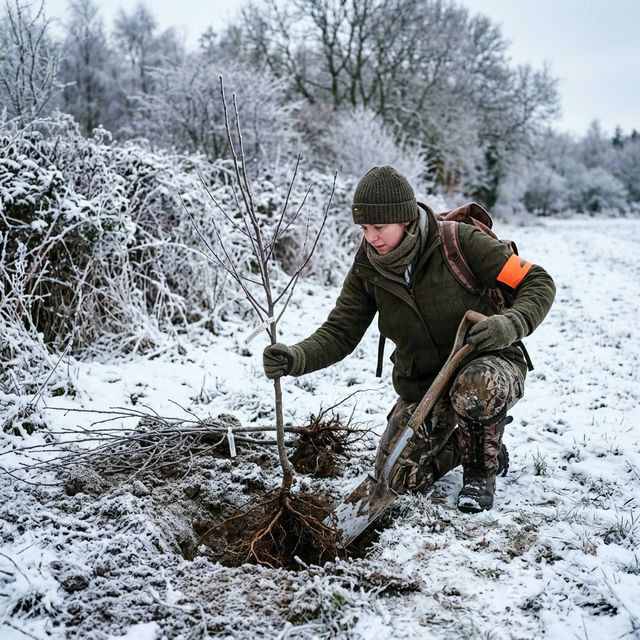
Late Winter Habitat Management: Frost Seeding and Fruit Trees
Use late winter for frost-seeding clover and planting dormant fruit trees. Get timing, seeding rates, cages, and protection tips that pay off next fall.
When snow is on the ground, most hunters are cleaning guns and waiting for shed season. Land managers treat late winter as prime time. Frozen ground, dormant trees, and freeze–thaw cycles create a short window for two high-impact jobs: frost seeding clover and planting fruit trees. Work done in February and March shows up as better forage and soft mast when October arrives.
Why Late Winter Matters for Deer Habitat
Dormant-season work wins because:
- Soil is accessible without deep ruts from heavy tractors on wet spring ground
- Freeze–thaw pulls small seeds into natural cracks
- Bare-root trees establish roots before leaf-out demands water
- Cool weather is easier on workers than July heat
Pair food work with cover work when snow reveals travel paths. Trails punched in white tell you where hinge cuts and sanctuaries will influence movement—see timber stand improvement.
What Is Frost Seeding?
Frost seeding means broadcasting seed on frozen or freeze–thaw ground in late winter or earliest spring so natural soil movement covers the seed. You get seed-to-soil contact without full tillage.
How the cycle works:
- Night freezing expands and fractures the surface
- Day thaw softens and closes micro-cracks
- Small round seeds settle into the honeycomb surface
- Spring moisture germinates seed ahead of many weeds
Best candidates are small, hardy legumes and some grasses. Medium red clover and white clover are the classic deer-plot frost-seed choices. Larger seeds (corn, beans, big brassicas) are poor frost-seed candidates—they need drilled or worked seedbeds.
Frost-Seeding Clover Step by Step
Practical field recipe:
- Timing: Often February through early March while freeze–thaw is active; exact windows vary by latitude. Avoid seeding on deep, unbroken snow that will raft seed away in a melt flood.
- Site prep: Mow or rake leaf litter from woodland trails and openings so seed hits mineral soil or thin sod, not a thatch mattress.
- Rates: Follow bag rates; many clover frost-seed applications land around 4 to 8 lb per acre depending on mix and pure live seed. Do not bury clover deep.
- Mixes: Red clover establishes faster; white clover persists longer in grazed systems. Many managers blend both.
- Fertility: Soil test when you can. Clover wants suitable pH (often near 6.0–7.0). Lime in advance when tests call for it.
Will frost seeding work in the woods? Yes—on skid trails, log landings, and thinned openings with sunlight. Deep shade under a closed maple canopy will not grow a lush plot no matter how you seed. Canopy release and hinge cutting create the light clover needs.
Planting Fruit Trees in the Dormant Season
Soft mast—apples, pears, persimmons, and similar—extends fall attraction beyond crop fields.
Dormant planting tips:
- Plant bare-root trees in late February or March while dormant, as soon as you can dig
- Dig holes wide enough for roots to spread without circling
- Set depth so the root collar sits at the right grade—do not bury the trunk deep
- Water at planting if soil is dry; mulch to hold moisture
- Stake only as needed in windy sites
Variety strategy: Plant at least three compatible apple varieties for pollination and staggered drop dates. A single tree that drops everything in two weeks feeds deer briefly and then goes quiet. Staggered varieties keep deer checking your orchard from early fall into late season.
Persimmons and pears add diversity where apples struggle. Match species to your hardiness zone and deer density.
Protecting Trees From Deer, Rabbits, and Voles
A $40 tree without protection is deer candy.
- Cages: Build circular fences about 5 feet tall from woven wire or stout mesh, staked firmly. Diameter should allow several years of growth before the trunk hits wire.
- Trunk wraps: Spiral plastic guards protect against vole and rabbit girdling under snow.
- Browse reality: In high-density herds, even older trees need protection until canopies are above browse line.
- Weed control: Grass competition kills more young trees than cold. Mulch or carefully spray a vegetation-free ring.
Check cages after ice storms. A leaning cage can rub bark raw.
Integrating Food Plots, Cover, and Cameras
Late winter is also when you plan the year’s layout:
- Frost-seed staging areas near bedding
- Plant mast trees along edges deer already travel
- Leave sanctuary blocks uncut and unvisited
- Place cameras on trails between cover and new food—not in the middle of a tiny plot you will stomp weekly
Summer glassing later confirms whether bachelor groups adopt your work—see velvet scouting. WildSnap can help you quantify whether nighttime orchard visits turn into daylight patterns as mast drops.
Avoid creating illegal bait situations. Standing crops and normal food plots are management; dumping corn in a CWD zone may be banned. Know your state rules and read CWD guidance if you hunt positive counties.
A Simple Late-Winter Checklist
- Soil-test primary plot sites
- Order clover seed and bare-root trees early (popular varieties sell out)
- Build cages before trees arrive
- Frost-seed during active freeze–thaw
- Mark new plantings on a map for summer watering and mowing
- Schedule hinge-cut days when snow reveals densest travel
The work is cold and unglamorous. It is also how average farms become deer magnets by November.
Measuring Success the Following Fall
Habitat work without feedback is guesswork. Set simple metrics:
- Clover coverage percentage by June on frost-seeded trails
- Survival count of caged trees after the first summer
- Camera hits on orchard edges as fruit begins to drop
- Daylight doe use near new browse created by hinge cuts
If clover fails, check pH, sunlight, and browse pressure before blaming the frost-seed method. If trees die, look at grass competition and vole girdling before ordering more genetics. Adjust next winter’s plan with evidence.
Tie food to cover. A gorgeous apple row beside an open park-like woods underperforms the same row screened by hinge-cut edges and a nearby sanctuary. Deer need to feel safe moving in daylight. That is why late-winter projects should be planned as a package: seed, plant, cut, and leave alone.
Budget time for summer maintenance—water young trees in drought, mow plot edges, and repair cages after storms. One neglected August can erase a March planting. Keep a property map with planting dates and varieties so future you remembers which apple drops in October versus December.
Hunting strategy should respect the investment. Do not hang a stand over a brand-new orchard and hunt it every evening in September. Let deer pattern the food with limited pressure, then hunt downwind trails on selective winds. Inventory bucks with summer glassing and cameras so you know whether your habitat is holding the age class you want.
Tools, Seed Storage, and Budget Reality
You do not need a tractor to start. A hand seeder or ATV spreader, a post-hole digger, wire, and a soil-test kit cover most late-winter projects on small acreage. Store leftover clover seed cool and dry; viability drops in hot sheds. Label bags with purchase year.
Budget priorities for a 20- to 40-acre parcel often look like: soil test and lime first, then seed, then trees and cages, then hinge-cut fuel and chain. Fancy mineral tubs rank last—especially where disease rules restrict them. Track expenses next to camera results so you invest in what deer actually use.
Neighbors sometimes share pollinizer apple varieties or split bulk seed orders. Coordinated habitat across fence lines beats a lonely half-acre island. Just agree on hunting pressure so one party does not burn the shared orchard every evening.
If winters are getting less reliable for freeze–thaw in your area, have a backup: early spring broadcast after a light disk or no-till drill rental on the first workable day. Frost seeding is a tool, not a religion.
Frequently Asked Questions
When is the best time to frost seed clover?
During late winter freeze–thaw, often February to early March depending on your region. Seed should contact soil, not ride away on a deep melting snowpack.
Can I frost seed into existing grass?
Yes, especially if you mow or flash-graze tight and expose soil. Thick thatch reduces success; some managers lightly disturb with a disk or chain harrow when conditions allow.
When should I plant apple trees for deer?
Plant bare-root stock while dormant in late winter/early spring so roots establish before leaf-out. Protect every tree with a cage immediately.
How many apple varieties do I need?
At least three compatible varieties improves pollination and spreads drop timing across the fall.
Is late winter too late for hinge cutting?
Often it is a great time—leaves are off, vision is clear, and ticks are scarce. Just follow safe cutting practices and leave mast trees standing.
Wildsnap • Open beta
Join Wildsnap and try the beta
In the open beta, you turn trail-cam data into actionable insights—free, fast, and simple.
No credit card