
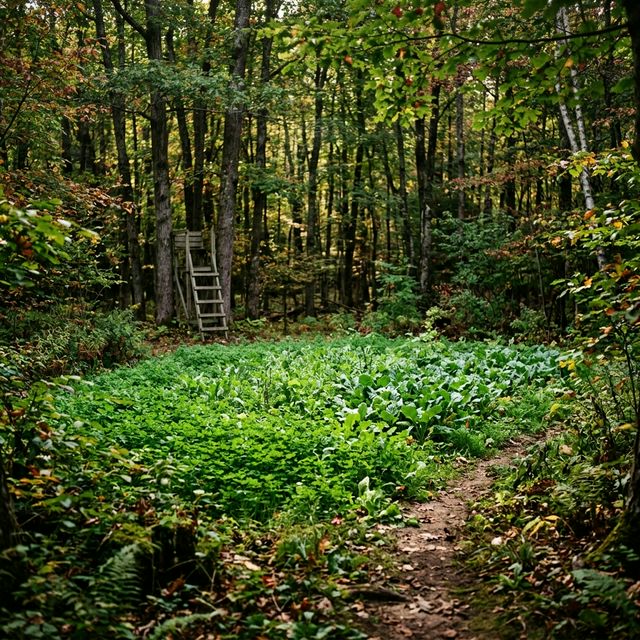
How to Build and Hunt Over Lethal 'Poor Man' Micro-Plots
Build no-till micro food plots with a blower, rake, lime, and clover or rye. Hunt them as kill plots—not herd feeders—with quiet access and light pressure.
You do not need a 60-horse tractor to change how deer use a small property. A “poor man” micro-plot—sometimes a quarter-acre or less—will not feed a whole herd through winter. It can stop a cruising buck for 20–30 seconds at 20 yards, which is the entire point of a kill plot.
Sweat, sunlight, seed-to-soil contact, and pressure control beat expensive iron.
What a Micro-Plot Is For
Define the job clearly:
- Destination snack inside timber between bed and big ag
- Daylight confidence for bucks that will not hit open fields early
- Shot clock extender so you are not rushing a walking shot
If you expect a micro-plot to replace 10 acres of beans, you will be disappointed. If you expect a predictable pause point, you are in the right business.
Site Selection: Sun First
Seed dies in deep shade. Hunt canopy gaps with at least 4 hours of direct summer sun: old logging landings, firebreaks, dead ash openings, narrow right-of-ways.
Also prefer:
- Soft edges near bedding, not the middle of a sanctuary core
- Soils you can reach with bags of lime on foot or ATV
- Locations with a downwind tree for a stand 30–40 yards off the plot
Transition logic ties to hunting habitat transition zones.
Blow, Rake, Lime, Seed, Boot-Pack
No-till success is contact with mineral soil.
- Blow every leaf off until you see dark dirt
- Scratch with a steel rake until tines “clink” on soil/rock
- Spread pelletized lime if pH is acidic (pine needle ground especially)
- Broadcast seed ahead of a soaking rain
- Walk the plot—boot pressure beats lazy surface raking for tiny seeds
Without seed-to-soil contact, you bought bird food.
Seed Choices That Survive Abuse
Tough “throw and grow” options for timber gaps:
- White ladino clover — shade-tolerant perennial if you keep weeds down
- Winter cereal rye — germinates in poor dirt; stays green late
- Brassicas (radish/turnip) — strong late-October visual magnet after frost sweetens them
- Oats (where climate allows) — quick green-up for early season
Mix for season goals: clover for multi-year plots, rye/brassica for fall punch. Late use overlaps post-rut late season food sources.
Soil Truth Without a Lab Van
A $15 soil test still helps. Targets many clover plots like:
- pH nearer 6.0–7.0
- Adequate phosphorus and potassium for legumes
- Not waterlogged for weeks after rain
If you cannot test, lime acidic timber soils and start with rye—it forgives more than premium clover blends.
Hunting Pressure: The Staging Ambush
Micro-plots die from overuse. Rules:
- Do not sit the middle every weekend shooting does only
- Hang 30–40 yards downwind on the entry trail
- Treat the plot as a scent-check pause for bucks heading to bigger feed after dark
- Limit daylight sits to prime wind/days
Quiet access is mandatory. Rake a 2-foot dirt path to the stand months early. Crunching 200 yards of leaves makes the green patch irrelevant.
Access mindset matches tree stand placement and concealment.
Pair Plots With Cover Work
Micro-plots shine beside hinge-cuts and thick edges that bed deer nearby. Dropped crowns provide browse and security; the plot provides the pause. See timber stand improvement and hinge cutting and native cover ideas in planting native warm season grasses.
Keep sanctuary core unplanted if deer need a pressure-free hole—whitetail sanctuaries on small parcels.
Maintenance Calendar
- Late winter: lime and clear debris
- Spring: clover weed control as needed; avoid destroying new seedlings
- Late summer: brassica/rye prep in gaps
- Fall: hunt lightly; note which trails light up
- Post-season: soil test and reseeding notes
Camera one trail, not the plot center every week. Cellular saves steps—cellular trail cameras.
Tools, Budget, and Time Reality
A functional micro-plot kit often costs less than one guided hunt day:
- Leaf blower (gas or strong battery)
- Steel rake and hand seeder or jug
- Pelletized lime and clover/rye/brassica seed
- Sprayer for selective weed control where legal and labeled
- Gloves, eye protection, and a soil-test mailer
Expect 4–8 hours for a first clearing and seeding of a small lane plot. Year two is faster if clover establishes. Track seed lot and pound-per-acre rates in a notebook—overseeding clover too heavy wastes money; underseeding rye in poor dirt frustrates you into quitting.
Measuring Success Without Ego
Success is daylight buck use and kill opportunities, not Instagram greenness. A plot that looks average but stops a cruiser at 22 yards beat a prettier plot hunted into nocturnality. Use one camera on the entry trail and review weekly patterns. If deer only hit it at 11 p.m., lengthen the buffer to bedding or reduce sits for two weeks.
Revisit soil pH every year or two. Timber plots acidify under leaf litter; a cheap lime habit keeps clover alive longer than dumping fancy seed on sour dirt.
Weed Control and Year-Two Reality
Year one is germination. Year two is competition. Grasses and shade-tolerant weeds will try to smother clover. Spot-spray or carefully hand-pull where labels and laws allow. Mow high if appropriate for your mix—some clover plots respond to light maintenance that keeps stems productive.
Do not panic-plant every gap with a different seed each month. Pick a plan, give it a season, and adjust with soil data. Random seed tossing creates patchy plots that look busy and hunt poorly.
If deer blow out a tiny plot overnight in early growth, temporary exclusion fencing (where practical) or planting a slightly larger lane can help. On high-density properties, plant two micro-plots and rest one while hunting the other.
Document first frost dates and when brassicas sweeten. That calendar tells you when late-season sits become high odds on turnips versus when you should switch to rye edges or ag waste.
Layout Shapes That Hunt Better
Long, narrow lane plots along trails often hunt better than square openings. Deer feel safer traversing a lane with cover on both sides, and you get crossing shots instead of only frontal feeding angles. Aim for 15–30 yards of width where sun allows, and bend the lane slightly so deer do not silhouette against open sky from your stand.
Put the stand on the downwind outside edge, not the geometric center. Leave a brushy “lip” so the plot does not look like a manicured trap. The goal is a pause, not a pasture.
If sunlight only supports a tiny pocket, plant it anyway as a staging snack and rely on nearby mast for volume. Micro-plots amplify patterns; they rarely replace landscape foods entirely.
Common Failure Modes and Fixes
Most failed micro-plots share the same autopsy:
- Shade: less than 4 hours sun → enlarge canopy gap or move the plot
- Leaf mulch: seed never touched dirt → blow/rake harder next time
- pH: clover yellow and weak → lime and retest
- Pressure: nocturnal only → rest sits and fix entry noise
- Wrong species: fancy blends in pine needles → switch to rye first
Fix one variable per season. Changing seed, location, and hunting pressure all at once teaches you nothing. A boring rye lane that deer use at 6:10 p.m. is worth more than a colorful failure.
Sweat equity compounds. A micro-plot improved a little each March becomes a reliable daylight pause point by year three—especially when you protect it with quiet access and restrained sit frequency.
Frequently Asked Questions
How small can a kill plot be?
Even a bowling-lane clearing can work if sun and access are right. Focus on shape (long and narrow along a trail) more than acreage bragging rights.
Can I plant on public land?
Usually no—without permission it can be illegal. This method is for private ground or properties where habitat work is allowed.
Why did nothing germinate?
Common causes: seed on leaves, no rain, too much shade, ants/birds, or residual herbicide. Fix contact and sun before buying pricier seed.
Should I fertilize heavily?
Moderate fertility helps; dumping nitrogen on clover can favor grasses/weeds. Match fertilizer to soil test and species.
When is the best time to hunt a micro-plot?
Often evenings in early season and pre-rut when bucks stage. During peak acorn drop, timber mast may outcompete your plot—adjust using locating fall food sources.
Habitat work is sweat equity. A screaming-green quarter-acre in a brown timber sea can become the most productive 20 yards you own—if you plant for contact, hunt for wind, and refuse to burn it out.
Wildsnap • Open beta
Join Wildsnap and try the beta
In the open beta, you turn trail-cam data into actionable insights—free, fast, and simple.
No credit card