
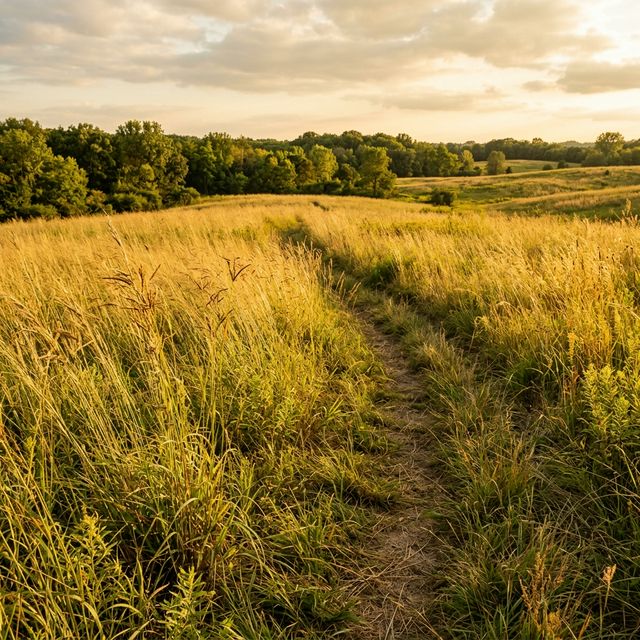
Planting Native Warm Season Grasses (NWSG) for Elite Whitetail Fawning Cover
Plant switchgrass and native warm-season grasses for bedding and fawning cover—year-by-year growth, glyphosate prep, no-till tips, and burn maintenance.
Most land managers spend the bulk of their budget on green food plots. Protein matters—but daylight deer need security cover. If bucks and does do not feel safe resting on your place, they will feed and leave.
Native warm-season grasses (NWSG)—switchgrass, big bluestem, indiangrass, and related mixes—build vertical structure whitetails use for bedding and spring fawning. Done right, a grass stand becomes a multi-year sanctuary that food plots alone cannot replace.
Why NWSG Beats Cool-Season Sod for Bedding
Cool-season pastures (fescue, orchardgrass) mat flat under snow and offer little winter thermal cover. NWSG bunch grasses grow stiff stalks that stand through winter.
What deer gain:
- Visual screening from predators and hunters
- Thermal wind break in cold months
- Maze-like fawning cover in May–June
- Daylight bedding close to your food sources
If your goal is seeing mature deer in legal light, cover is not optional—it is the product.
Best Grasses for Whitetail Cover
Cave-in-Rock switchgrass is a widely recommended bedding standard in many Midwestern and Eastern latitudes. Expect mature height around 5–7 feet with stiff stems.
Other strong components:
- Big bluestem — tall structure, good mixture diversity
- Indiangrass — complements switchgrass stands
- Local ecotype mixes recommended by NRCS or state wildlife agencies
Match seed to your USDA hardiness zone and soil moisture. Upland dry sites and mesic bottoms need different mixes. Ask your local extension or NRCS office before ordering bulk seed.
The Three-Year Reality Check
NWSG is a multi-year investment. The old saying still fits:
Year 1 — “It sleeps.” Most energy goes into roots. The field may look weedy and short. Do not disk it up in panic.
Year 2 — “It creeps.” Bunches thicken; stands often reach 2–3 feet by late summer.
Year 3 — “It leaps.” Full height and density arrive. The plot becomes functional bedding.
Plan hunting pressure accordingly: treat young NWSG as a future sanctuary, not a year-one kill plot.
Site Prep: Kill Competition First
Throwing expensive seed into living fescue fails. Cool-season sod outcompetes seedlings.
Prep sequence many managers follow:
- Soil test; correct pH toward the range recommended for your mix (often near 6.0–7.0, confirm locally)
- Fall glyphosate application on green cool-season sod (follow label law)
- Spring follow-up spray on survivors before planting
- Plant into a clean, firm seedbed—not fluffy tilled dust when possible
If you skip kill-down, expect failure. Chemical prep is the unglamorous half of success.
Planting Depth, Timing, and Equipment
NWSG seed is often tiny and light. No-till drills with fluffy-seed boxes excel when they place seed about 1/4 inch deep into firm soil.
Timing tips:
- Plant after soil warms in late spring/early summer for your region
- Avoid burying seed deeper than recommended—common failure mode
- Consider native wildflower companions only if they will not overshadow grass goals
Broadcasting can work with proper cultipacking and higher seeding rates, but drills usually waste less seed. Calibrate rates to the bag’s pure live seed (PLS) numbers—not just pounds per acre of bulk product.
Layout: Where to Put Grass on the Farm
Think like a deer, not like a landscaper.
Strong layouts:
- Blocks of 2–10+ acres adjacent to timber rather than skinny roadside strips alone
- Grass between bedding timber and food plots to create staging cover
- Irregular edges instead of perfect rectangles (more travel lines)
- Sanctuary cores with hunting only on downwind fringes
Pair edge food with cover using ideas from poor man’s food plots. Protect the core the same way you would a small woodlot sanctuary—see strategies for hunting small woodlots.
Prescribed Fire and Long-Term Maintenance
Established NWSG is fire-adapted. A prescribed burn every 3–4 years (where legal and safely executed) removes thatch and stimulates vigorous regrowth.
Maintenance options when fire is not feasible:
- Strip disking portions on a rotation
- Targeted herbicide for woody invaders
- Avoid annual close mowing that turns cover into lawn
Hire qualified burn partners if you lack training. Escaped fire is not a habitat plan.
Fawning Cover and Predator Reality
Dense NWSG hides neonates from aerial view and complicates ground scenting for coyotes during the vulnerable first weeks of life. It is one of the highest-ROI predator buffers a landowner can plant.
Habitat still outperforms random winter coyote shooting for most private lands. For the biology behind recruitment, read predator impact on whitetail herds.
Keep human traffic out of grass blocks in May–June. ATV joyrides through fawning cover undo years of planting.
Hunting Edges Without Burning the Sanctuary
Once the stand matures:
- Hunt fringe funnels where grass meets timber or plots
- Use blow-off winds that carry scent out of the block
- Limit sits; grass bedding educates quickly if you barge through
- Place cameras on edges, not walking lanes through the core
Daylight bucks living in NWSG are a reward for restraint. Treat the block like a bedroom.
Cost, Scale, and Phased Planting
You do not need to convert 40 acres in year one. Phased planting spreads cost and learning risk.
Example plan for a 80-acre farm:
- Year A: 3 acres of switchgrass mix adjacent to timber
- Year B: expand 3 more acres or thicken edges with shrubs
- Year C: first maintenance burn on the original block while food plots stay funded
Budget lines to expect: herbicide, seed (PLS-based), drill rental or contractor, and burn assistance. Cost per acre varies widely by region; get local contractor quotes before ordering seed online in bulk. Cheap seed with poor germination is the most expensive mistake in this category.
Common Failure Modes (And Fixes)
| Failure | Likely cause | Fix |
|---|---|---|
| Thin stand year 2 | Competition not killed | Re-spray prep; overseed into clean gaps |
| Seed vanished | Planted too deep | Recalibrate drill to ~1/4 inch |
| Weedy takeover | No follow-up weed control | Selective herbicides labeled for NWSG |
| Lodged/flat grass | Wrong variety or no burn | Burn cycle; check ecotype |
| Deer ignore it year 1 | Immature structure | Wait—cover value peaks later |
Patience is a management skill. Pulling the plug in August of year one because Instagram food plots look greener wastes the root investment already underground.
Integrating NWSG With Timber Stand Work
Grass blocks shine beside timber improvements. Hinge-cutting low-value trees along the grass–timber edge creates a soft wall deer use as a daylight line. Avoid clear-cutting the only thermal cover on the farm the same year you plant grass—give animals overlapping security options.
Water helps. A small pond edge or intermittent creek near NWSG increases daylight loafing in warm months. You are building a home range core, not a single habitat gimmick. For pressure-sensitive hunting around that core, revisit early season whitetail tactics and keep summer intrusion low while seedlings establish.
Hunting the Grass Edge Through the Calendar
Once NWSG matures, seasonal edge tactics change:
- Early season: evening sits where grass meets plots or beans; bucks may stage inside the first 20 yards of cover
- Rut: bucks cruise the grass–timber seam checking doe bedding inside the block—hunt downwind fringe only
- Late season: thermal value rises; deer may bed deeper—shorten sits and protect the core harder
Never drive ATVs through the block for a “quick look.” That single habit converts sanctuary into lawn. If you need intel, hang a cellular camera on the edge and stay out. Habitat success is measured in daylight deer, not in how often you visit the pretty grass.
Document planting dates, seed lots, spray timings, and first burn years in a simple farm notebook. Future you will thank present you when it is time to expand the stand or explain to a partner why the “weedy” field in year one was actually on schedule.
Frequently Asked Questions
How long until switchgrass holds deer? Expect meaningful bedding structure by year 2–3, not year 1.
Can I plant NWSG and food plots in the same field? Better as adjacent blocks: grass for security, plots for groceries, with a soft edge between.
Do I need a no-till drill? It is the most reliable tool for depth control, but calibrated broadcast plus packing can work on clean seedbeds.
Will deer eat switchgrass? They use it primarily for cover. Food still comes from browse, mast, and plots.
How often should I burn? Many stands respond well every 3–4 years; follow local guidance and permits.
If you want daylight deer, give them a place to hide. Plant tall grass correctly, protect the sanctuary, and let cover do what food plots alone cannot.
Wildsnap • Open beta
Join Wildsnap and try the beta
In the open beta, you turn trail-cam data into actionable insights—free, fast, and simple.
No credit card