
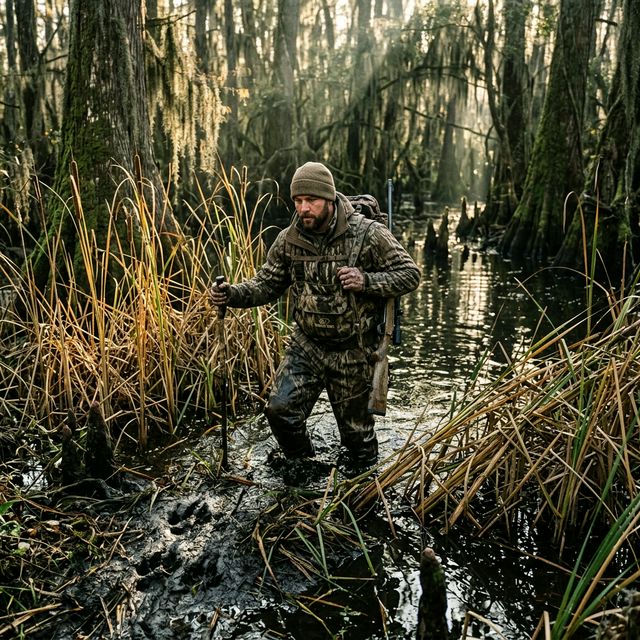
Swamp Buck Tactics: Penetrating the Unforgiving Aquatic Sanctuaries
Hunt swamp bucks with micro-island scouting, kayak access, wader routes, wind cover, and safety habits for flooded timber and cattail marshes.
When pressure rises, mature bucks do not disappear—they retreat into ground most hunters refuse to walk: cedar swamps, cattail marshes, and flooded timber. Water and mud create a 360-degree alarm system. Splash once and every deer in the basin knows.
Killing swamp bucks means embracing hard access, precise micro-terrain, and honest safety planning. Easy parking-lot oaks will not get it done.
Anatomy of a Swamp Fortress
Bucks do not bed randomly in deep water. They use subtle elevation.
- Micro-islands: One-tenth to one-half acre dry humps in cattails or flooded timber. Find them with topo, lidar, and leaf-off imagery—see e-scouting.
- Transition edges: Where wet cover meets upland hardwoods or ag. Evening exit trails pinch hard here.
- Scent pooling: Swamps sit in bowls. Evening thermals sink; bucks often bed facing the primary entry so falling air delivers warning scent.
Mark islands and the driest walkable fingers, not just “the swamp” as one blob.
Access: Kayak, Waders, and Wind
Silent entry is the whole game.
- Kayak or canoe: Glide to interior islands without a mile of splashy footprints. Pack a simple tie-off and dry bag for electronics. More tactics: kayak and canoe access hunting.
- Chest waders: Standard 16-inch boots fail. Puncture-resistant waders let you use creek channels as scent-masking highways.
- High wind days: Sustained 20–30 mph winds cover splash noise. Dead-calm mornings are brutal for walking entries.
- One way in, different way out when possible, so you do not loop scent through bedding twice.
Related wet-ground patterns appear in beaver ponds and sloughs and hunting over water.
Stand and Ambush Placement
- Hang on the dry transition where exit trails leave the wet, if wind allows.
- Interior island sits work during lockdown and heavy pressure—expect swirling winds; hunt shorter windows.
- Morning: intercept returning bucks before they hit the island.
- Evening: sit the hard edge facing the swamp, wind into the upland non-deer zone.
- Mobile saddle kits shine when the only tree is leaning and ugly.
Scouting Without Destroying the Hole
- Glass edges from upland first.
- Use cameras on exit trails, not on the bed itself.
- Limit interior walks to preseason or post-season, except when hunting.
- Read sign: chewed cedar, droppings on humps, trails that braid onto one dry path.
If you bump a buck off an island, rest it 3 to 7 days before returning.
Safety: Mud, Hypothermia, and Navigation
Swamps punish mistakes.
- Probe every step with a stout stick—beaver runs and sinkholes break ankles.
- Carry a waterproof lighter, space blanket, and charged phone in a dry bag.
- Tell someone your float plan and return time.
- Hunt with a partner within shouting distance in sub-freezing flooded timber.
- Know exit bearings; fog and cattails erase landmarks fast.
- If waders flood, get to dry ground and change—hypothermia is the real predator.
Fitness matters; review backcountry hunting fitness before you commit to long wet extractions.
Gear Checklist for Swamp Hunts
- Chest waders + repair kit
- Spare wool socks in dry bag
- Compact stand/saddle and quiet sticks
- Headlamp with red mode for boat loading
- Drag rope / floating game bags
- GPS mark of truck and put-in
- Insect protection early season; ice cleats late
Timing: When Swamps Shine
| Period | Why hunt the swamp |
|---|---|
| Opening pressure | Refuge from roadside hunters |
| Pre-rut / seeking | Bucks check doe groups on edges |
| Lockdown | Pairs tuck on islands |
| Late season | Thermal cover + secluded browse |
Do not ignore upland oaks entirely—but when parking lots fill, interior water separates serious hunters from casual ones.
Common Swamp Mistakes
- Splashing the primary entrance at first light on a calm day
- Hunting the scenic open pond bank instead of the cattail island
- No backup exit when water rises overnight
- Overconfidence on thin ice
- Leaving a scent trail across the only dry trail deer use
Mapping Islands Before You Get Wet
Spend winter evenings on lidar and historical topos:
- Color-code dry humps versus flooded basins.
- Measure distances from put-ins; a 800-yard paddle beats a 800-yard muddy slog.
- Note secondary exits if water rises 1 to 2 feet after rain.
- Mark hazard zones—beaver channels you already punched through last year.
Print a waterproof map backup. Phones die in the wet; a marked paper map and compass bearing to the truck have saved more hunts than any gadget.
Shot Opportunity and Recovery Reality
Swamp shots are often 20 to 40 yards through lanes you barely cut. Pass on low-percentage angles into deep water if tracking will be unethical.
- Prefer blood trails that stay on humps or exit to upland.
- Flag every drop; water washes sign fast.
- Bring extra markers and a partner for evening recoveries.
- Stage a canoe for floating quarters when walking out is unsafe.
- If darkness and rising water collide, grid carefully and return at first light rather than creating a second stuck hunter.
Killing the buck is only half the swamp problem—getting him out cleanly is the other half.
Field Notes and Practical Numbers Use these benchmarks to keep decisions concrete rather than vague:
- Log every sit with date, wind direction, temperature, and deer observations—patterns appear after 8 to 12 recorded hunts on the same property.
- Limit first-time pressure on a hot pin to one quality sit, then rest at least 24 to 48 hours unless the rut calendar demands otherwise.
- Carry a short checklist in your phone notes so gear and safety steps do not depend on memory at 4:30 a.m.
- Revisit your plan weekly during the season; crops, pressure, and breeding phases change the right answer.
- When in doubt, choose the option that leaves mature deer less educated for the next sit—longevity beats one burned encounter.
These habits compound across a season and across years on the same ground.
Successful hunters treat preparation as part of the hunt itself. Write down what worked, what failed, and what you will change next time. Small improvements in access, timing, and patience usually matter more than buying another gadget. Stay flexible after weather swings, keep safety non-negotiable, and measure success by clean opportunities and ethical recoveries—not only by antlers on the wall. Over a full season, disciplined routines outperform random hard hunting.
Weather Windows Worth the Misery Prioritize swamp sits when:
- Sustained winds top 18 mph and cover splash.
- A cold front ends a warm spell and bucks relocate to thermal cover.
- Opening weekend fills upland parking lots.
- Lockdown pairs vanish from dry funnels.
- Late-season snow pushes deer into cedar for cover and browse.
Skip calm, warm, high-pressure mornings for deep wading unless you can paddle silently. Save brutal entries for days when nature masks you—or when pressure leaves you no upland options.
Keep refining your approach with honest notes after every outing. Track winds that worked, access mistakes, and timing windows that produced daylight movement. Share lessons with your hunting partners so the whole group improves pressure management. Small, consistent upgrades in planning usually add more encounters than a single new piece of equipment. Stay patient through slow sits, stay aggressive when sign and weather align, and protect the long-term health of the places you hunt.
Frequently Asked Questions
How deep is too deep to hunt?
If you cannot maintain safe footing and a clear exit, skip it. Thigh-deep channels with known bottoms are workable; chest-deep unknowns are not worth a drowned pack.
Do swamp bucks only move at night?
Under pressure, yes more often—but edges still produce daylight, and midday water visits happen in heat and rut. Interior sitters see odd hours.
Are rubber boots enough?
Rarely for true flooded timber. Chest waders open routes boots cannot, and keep you drier when you kneel or stumble.
Should I build a permanent stand in a swamp?
Only if floods will not wreck it and access stays quiet. Many hunters prefer mobile gear to avoid educating the island all season.
Can cameras survive swamp humidity?
Use fresh seals, desiccant, and elevated trees. Check less often; cellular helps if signal reaches the basin.
Swamp bucks are earned with planning and discomfort. Find the dry hump, arrive quieter than the hunters on the ridge, and the fortress that hides giants becomes the place you finally catch them on their feet.
Wildsnap • Open beta
Join Wildsnap and try the beta
In the open beta, you turn trail-cam data into actionable insights—free, fast, and simple.
No credit card