
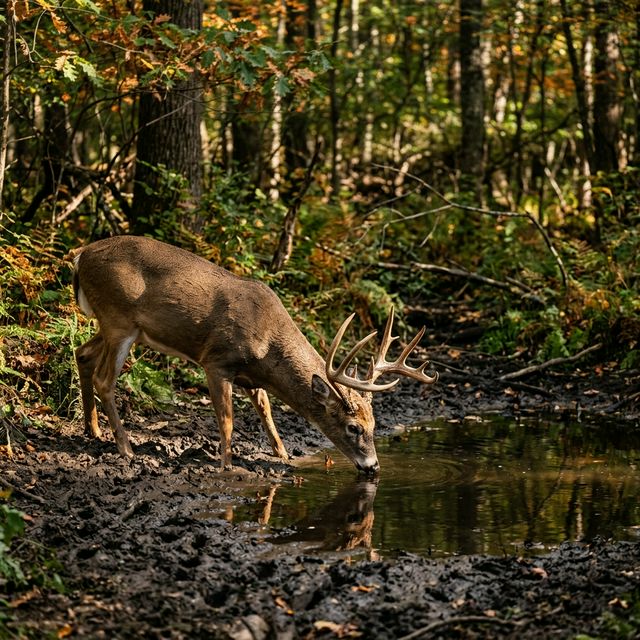
Hunting Over Water: When, Where, and How Whitetails Drink
Learn when whitetails drink, how to find secluded kill water, beat thermal pooling, and set scent-safe tanks that pull daylight bucks reliably.
Food plots and bedding get most of the attention. Secluded water is the third leg of the whitetail survival triangle—and one of the most overlooked ambush setups in the fall.
A well-timed sit over a hidden water hole shines when temperatures spike in early or late season, and again when rutting bucks burn moisture chasing does. If you only hunt food, you are hunting half the property.
When Do Deer Actually Drink?
Deer get some moisture from green forage, but that drops hard after frost kills lush vegetation. Dry mast and crop residue do not replace standing water. A healthy adult whitetail often drinks one to two times per day, and demand rises with heat, lactation, and hard travel.
- Early/late heat: Mid-80s to 90°F afternoons pull deer to water earlier than cold fronts.
- Rut spike: Bucks chasing for hours pant heavily in winter coats. Midday drinks between 10:00 a.m. and 2:00 p.m. are common.
- Dry mast years: Heavy acorn crops with little green browse increase daytime water visits.
Watch your local forecast. A 15°F jump after a cool stretch is often enough to make a timber hole worth an all-day sit.
Kill Water vs. Useless Water
Not every pond is a hunting destination. A 10-acre lake or open cattle pond in a pasture rarely produces mature daylight bucks. Deer favor survival over convenience.
Prioritize water with these traits:
- Seclusion: Tight creek bends, logging ruts, “cow holes,” and tiny timber puddles beat open banks.
- Firm footing: Shallow, sandy or hard edges beat deep muck that swallows legs.
- Transition placement: The best holes sit between bedding and evening food—deer stand, drink for 20 to 60 seconds, then move.
- Limited alternatives: If the farm has five open ponds and one hidden tank in the staging timber, hunt the hidden one.
For wet-country patterns that go beyond a single tank, see beaver ponds and swamp edges and swamp buck tactics.
Reading Thermals Around Low Water
Water holes usually sit in the lowest ground: ravines, creek bottoms, swamp bowls. That creates thermal pooling.
- As evening cools, dense air falls into the bottom and can dump your scent onto the water and exit trails.
- Morning thermals may reverse as sun hits slopes—swirls are common until midmorning.
Practical fixes:
- Hang slightly uphill from the hole, not directly over the bank when possible.
- Use a mobile saddle setup to keep height and adjust trees without a permanent stand.
- Hunt mornings when your scent drifts into a non-deer zone (pasture, deep water, neighbor’s ag).
- Skip the sit if wind is swirling and you cannot get above the pool.
Pair water sits with solid scent control habits—rubber boots, clean gloves when filling tanks, and no casual walks across the drink line.
How to Build a DIY Water Hole
On high, dry parcels with no natural seclusion water, a manufactured hole can become a daylight magnet.
Stock-tank basics:
- Bury a 50- to 100-gallon agricultural tank flush with the ground in staging cover 60 to 120 yards off the main food.
- Fill with clean water using jugs; wear rubber boots and gloves.
- Place a heavy branch as an escape ramp so squirrels, birds, and raccoons do not drown and spoil the hole.
- Refresh water every 1 to 2 weeks in hot weather; skim algae and debris.
- Keep human traffic to fill days only—do not check it daily on foot.
Camera the hole from a downwind tree for 2 to 3 weeks before hunting it hard. Confirm daylight use, then hang once and leave it alone between sits.
Timing: Best Sits of the Season
Use water as a situational tactic, not a season-long default.
| Window | Why water works | Sit style |
|---|---|---|
| Early September heat | Dry forage, warm afternoons | Evening or midday |
| Pre-rut / seeking | Bucks cover miles | All-day near staging water |
| Peak lockdown | Paired deer water midday | Thick cover near swamp water |
| Late-season warm-up | Dry food + heat | Midday after cold nights |
During seeking and lockdown weeks, combine water with pre-rut tactics and lockdown strategies rather than sitting only field edges.
Mistakes That Burn Water Setups
- Hunting the open pond bank where deer only drink at night.
- Standing downwind at dusk so thermals dump scent into the hole.
- Touching tank rims with bare hands and teaching bucks to ghost the site.
- Overhunting the only water on a 40-acre farm three evenings in a row.
- Ignoring alternate drinks after rain fills every ditch—wait for dry-downs.
- No escape ramp, then abandoning a fouled tank.
Gear Checklist for Water-Hole Hunts
- Knee or chest waders if banks are soft
- Lightweight stand or saddle for uphill trees
- Wind checker (powder or milkweed)
- Cellular or SD camera for inventory
- Fill jugs, gloves, and a dedicated tank brush for DIY holes
- Quiet access path planned so you never cross the drink trail
How to Scout Water Without Spooking the Drink Line
Treat water the way you treat bedding: look from afar first.
- Glass banks with binoculars from 150 to 300 yards when terrain allows.
- Walk the high side downwind; never skyline the open pond bank at midday if that is your only water.
- Read tracks: multiple sizes converging on one muddy notch beats a scenic shoreline with sparse prints.
- Note escape routes—where deer splash away when startled tells you where to expect them under pressure.
- Check after dry spells of 5 to 10 days; that is when secluded holes outperform flooded ditches.
On public land, photograph unique features (bent willow, beaver dam corner) so you can return in the dark without wandering. Mark the stand tree and the drink edge as separate waypoints.
Midday Rut Water: A Practical Sit Script
When seeking or lockdown bucks are running hard:
- Be in the tree by 9:00 a.m. on warm days above 55°F.
- Face the most likely trail from bedding thickets, not the prettiest reflection on the water.
- Stay until 2:00 or 3:00 p.m. before relocating—many drinks happen in that window.
- Keep movement minimal; water bowls amplify sound.
- If a doe group drinks and leaves, stay—cruising bucks often check the same hole 20 to 60 minutes later.
Bring a quiet lunch, a pee bottle, and layered clothing so you are not forced down by discomfort. One disciplined midday water sit in November can outperform five evenings on a pressured field edge.
Field Notes and Practical Numbers
Use these benchmarks to keep decisions concrete rather than vague:
- Log every sit with date, wind direction, temperature, and deer observations—patterns appear after 8 to 12 recorded hunts on the same property.
- Limit first-time pressure on a hot pin to one quality sit, then rest at least 24 to 48 hours unless the rut calendar demands otherwise.
- Carry a short checklist in your phone notes so gear and safety steps do not depend on memory at 4:30 a.m.
- Revisit your plan weekly during the season; crops, pressure, and breeding phases change the right answer.
- When in doubt, choose the option that leaves mature deer less educated for the next sit—longevity beats one burned encounter.
These habits compound across a season and across years on the same ground.
Frequently Asked Questions
Do deer drink every day in cold weather?
They still need water, but frequency can drop when snow and wet browse are available. Focus water sits on warm-ups above freezing and dry, windy stretches.
How far should my stand be from the water?
Often 15 to 40 yards for archery, slightly offset and preferably uphill. Extreme close setups get busted by swirling bottoms.
Is creek hunting the same as hunting a tank?
Creeks offer more travel options, so pick shallow crossings and tight bends rather than random banks. Tanks concentrate traffic when alternatives are scarce.
Can I hunt water on public land?
Yes—look for secluded oxbows, beaver flowages, and logging ruts far from parking. Expect competition near obvious ponds; walk farther.
Should I put scent or attractants in a water hole?
Usually no. Clean water in the right spot is enough. Additives can create legal issues and unnatural scent associations.
Overlooked water will not replace food-source hunting, but on hot afternoons and rut midday marathons it is often the highest-odds place on the farm to catch a buck on his feet. Find the secluded drink, respect thermals, and sit when biology says he needs it.
Wildsnap • Open beta
Join Wildsnap and try the beta
In the open beta, you turn trail-cam data into actionable insights—free, fast, and simple.
No credit card