
Whitetail Hearing: How Far Can a Deer Hear You?
Deer ears pinpoint unnatural noise from hundreds of yards. Learn hearing ranges, binaural locating, and how to silence boots, zippers, stands, and clothing.
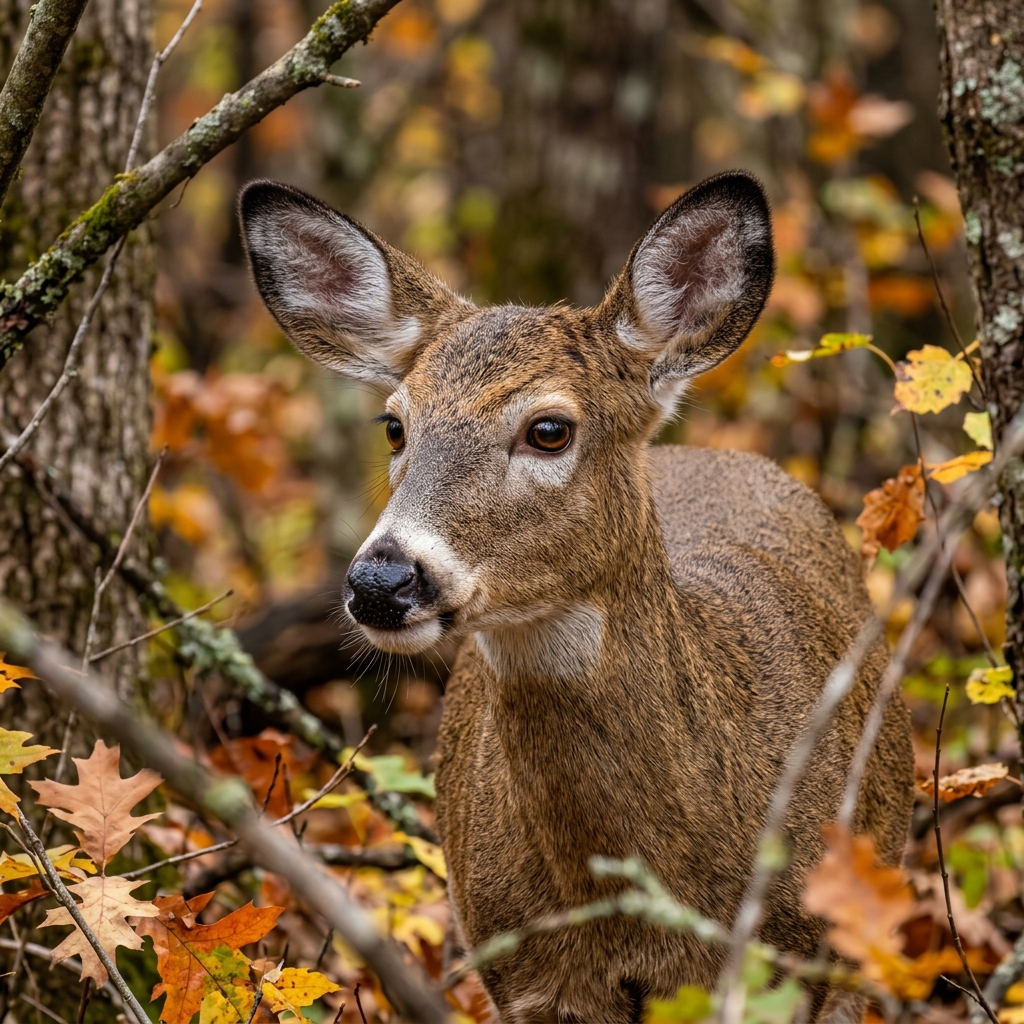
Hunters spend heavily on camouflage and scent control, then announce themselves with a zipper, a clanging stick, or a rhythmic boot march. Whitetail ears are large, mobile sound collectors that rotate nearly independently through a wide arc. Deer do not just hear “something.” They separate forest white noise from patterned human sounds—and they often react to the latter long before they see you.
Silence is not optional gear. It is a tactic.
How Far Can a Deer Hear a Snapped Twig?
In quiet timber, a sharp twig snap can alert deer from roughly 200 to 400 yards, depending on humidity, wind, terrain, and competing noise. Distance alone is not the whole story. Volume matters; character matters more.
- Natural sounds: Falling limbs, squirrels cutting, wind in leaves—deer hear these constantly and often ignore them.
- Unnatural sounds: Metal-on-metal clicks, nylon zippers, plastic buckle snaps, rangefinder beeps, phone vibrations, and the steady cadence of human walking.
A soft footfall at 40 yards can be worse than a distant branch fall at 200 if the soft footfall repeats in human rhythm toward the bed.
Can Deer Pinpoint Exactly Where a Sound Came From?
Yes—remarkably well. Large pinnae spaced on either side of the skull give whitetails strong binaural cues. By flicking ears independently, they compare timing and intensity to triangulate direction.
Field consequence: when you clank a carabiner in a stand, a deer may not merely “look toward the ridge.” She may stare at the exact trunk you occupy. Motion after that—raising binoculars, shifting weight—finishes the job.
Hunt as if every metallic sound paints a laser on your chest.
Wind, Terrain, and When Hearing Helps You
Hearing cuts both ways.
- Steady wind covers minor noise but also makes deer edgier about relying on ears alone—they lean harder on eyes and nose.
- Calm, cold mornings are acoustic amplifiers. Frozen leaves and crust snow betray every step.
- Rain and drizzle are gifts to still-hunters and access walks—see still hunting.
- Ridges and hollows reflect and funnel sound. A cough on a point can travel farther than you think.
Pair silence with wind discipline from tree stand placement. Quiet scenting into a bed still fails.
How to Silence Your Hunting Gear
Treat sound like a checklist, not a vibe.
- Stealth tape / moleskin: Cover metal contact points on stands, sticks, bow risers, quiver mounts, and binocular straps.
- Paracord zipper pulls: Replace jingling metal pulls on packs and jackets.
- Quiet fasteners: Prefer silent buckles or cover plastic clips with fabric.
- Bow and release: Felt on the shelf; watch release gates and D-loop slap. Release choice and form also affect punch noise—see archery releases.
- Rangefinder and electronics: Mute beeps; learn button locations by feel.
- Pack test: Wear full kit, walk through brush at home, and listen. If you hear swish or clink, a deer will hear it clearer.
Stand platforms squeak. Spray lubricant compatible with your stand, tighten bolts, and stand on the quietest section of the platform when drawing or shouldering.
Walking Cadence: Stop Sounding Like a Human
Deer pattern footsteps.
- Avoid metronome hiking: step-step-step-step
- Use predator cadence: two steps, pause, one step, pause, long freeze
- Place each foot deliberately—heel outer edge first, feel for sticks, then weight (the same “slow roll” used in still hunting)
- Time moves with wind gusts when possible
- On crust snow, sometimes you simply cannot sneak—adjust expectations or wait for softer conditions
Access trails should be cleared of noisy blowdowns before season, not kicked aside in the dark on opening morning.
Clothing Fabrics and Noise
Camo pattern will not save a loud laminate shell.
- Soft fleece and quiet softshells beat noisy hard membranes for close-range bowhunting
- Rain gear is often the loudest layer—practice drawing and shouldering while wearing it
- Avoid clothes that rasp at the knees and underarms every stride
- Tighten straps so binoculars and rifles do not slap your chest
Layering systems built for warmth sometimes ignore acoustics. Test the full stack.
Training Your Own Ears in the Stand
Sit still and inventory the soundscape for ten minutes. Identify squirrels, birds, distant roads, and farm equipment. When a new sound appears, freeze and glass before you move. Many “mystery” deer are already watching you when you finally notice them.
Cameras cannot hear, but they reveal how early deer stop using a trail after you educate them with noise. If daylight photos vanish after two loud sits, silence and access—not the “October lull”—may be the real problem. Tools like WildSnap help you spot activity pattern changes after specific hunt dates.
Stand Noise, Calls, and Knowing When to Freeze
Elevated stands create their own acoustic problems: shifting weight on a hollow platform, lowering a binocular against a riser, or clipping a release on a metal rail. Before season, sit in each stand in full gear and draw or shoulder your weapon five times. Fix every squeak you hear. Haul ropes should be silent paracord, not something that taps the tree all morning in the wind.
Calling adds intentional sound. Doe bleats and grunts work because they resemble deer—until you overdo cadence or volume. Space calls, watch body language, and stop if a deer locks on your tree without committing. A poorly timed snort-wheeze can pin you as effectively as a dropped water bottle.
When a deer hears something questionable, it often stares for minutes. Hunters lose those standoffs by moving too soon. Start a mental clock: wait until the head drops to feed or the deer turns completely before you adjust. Pair that patience with wind discipline from stand placement and you remove two of the three ways deer bust you (ears and nose)—eyes still need camo and stillness.
Entry in the dark deserves a rehearsal. Walk your access once at dusk in the off-season so you know every noisy stick by feel. Mark silent footing with discreet reflectors you remove later if needed. Opening morning is the worst time to invent a new path through crusty leaves.
Partners, Kids, and Communicating Without Sound
Two hunters whispering every five minutes educate more deer than one careful solo sit. Agree on hand signals before you leave the truck: deer sighted, wind check, move, freeze. Keep phones on silent and in a pocket that does not buzz against a metal stand. If you must text a hunting partner, do it after the deer has passed or when woods are empty.
Youth hunts are louder by nature. Shorten walks, pick stands with easy access, and accept that silence will be imperfect. Position kids so fidgeting happens against a solid backrest, and practice sitting still at home for five-minute blocks. Celebrate the quiet moments they achieve rather than only the shot.
Dogs at camp should never run free near hunting cover at dawn. One bark chain can clear a creek bottom for hours. Control camp noise the same way you control stand noise.
Remember that deer also use hearing to find each other—grunts, bleats, and sparring. When you hear real deer sounds, freeze and glass; do not immediately blast a call. Let the situation develop. Silence keeps options open. On pressured public land, the hunters who shoot mature bucks are often not the ones with the fanciest camo—they are the ones who never announced the last 200 yards of their walk. Make silence a pride point equal to a clean kill.
Frequently Asked Questions
How far away can a deer hear you walking?
On a quiet day, rhythmic walking and gear noise can alert deer hundreds of yards away. Soft, broken-cadence steps in damp woods may go unnoticed until much closer—sometimes inside 50 to 100 yards—if wind and cover cooperate.
Do deer hear better than humans?
They are better at detecting and locating certain sounds relevant to survival, especially with independent ear movement. Assume they outperform you in the woods.
Does talking whisper-quiet scare deer?
Human voices are unnatural. Whispering is better than normal speech but still risky at close range. Use hand signals with partners.
Should I hunt in the rain for silence?
Light rain often helps access and still hunting. Hard storms can shut movement and create safety issues. Match tactics to the whole weather system, including pressure trends.
Are rubber boots quieter than leather?
Boot noise depends more on sole design, gait, and ground conditions than material alone. Soft ground and deliberate foot placement matter most.
Build a cleaner history of your herd
Spend less time sorting and more time seeing what matters—when detections are organized by time and class.
No credit card
Wildsnap • Open beta
Build a cleaner history of your herd
Spend less time sorting and more time seeing what matters—when detections are organized by time and class.
No credit card