
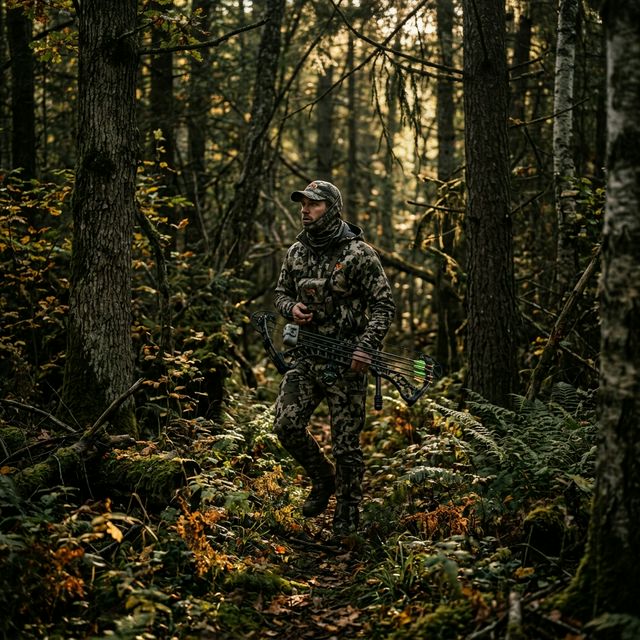
Still Hunting and Spot-and-Stalk Tactics for Mature Whitetails
Learn still hunting vs spot-and-stalk for whitetails: silent footwork, wind play, glassing beds, and when moving beats sitting in a stand all day.
The frozen hunter in a metal tree stand is the classic whitetail image—and for good reason. Sitting works. But on big public tracts, after a bump, or when deer go nocturnal under pressure, the older skills still matter: still hunting and spot-and-stalk. Moving with purpose through timber is slower, harder, and more intimate than a dawn sit. It also puts you into beds and thickets stand hunters never see.
Master the difference between the two methods, then practice the footwork until silence is a habit.
Still Hunting vs Spot-and-Stalk
Beginners mix these up. They demand different tempos.
Still hunting means moving extremely slowly through cover without a pre-located deer. You take one or two quiet steps, then stop for minutes to glass. You are hunting blind as you go—looking for an ear flick, a horizontal back line, a white throat patch, or the curve of an antler before the deer locates you.
Spot-and-stalk means finding a visible deer first—often from a ridge, field edge, or opposite hillside—then planning a covered route that keeps the wind honest until you reach bow or gun range.
| Method | Best conditions | Typical pace |
|---|---|---|
| Still hunting | Damp leaves, light rain, steady wind | 100–200 yards/hour |
| Spot-and-stalk | Open hills, ag edges, snow | Fast walk to glass, slow final approach |
If you are crashing 400 yards in 10 minutes, you are hiking, not still hunting.
When Moving Beats Sitting
Still hunting shines when:
- Wet vegetation muffles footsteps after rain or snowmelt
- Steady 5 to 15 mph winds cover minor noise
- Midday bucks bed in thick cover you cannot hang over ethically
- Weekend pressure pushes deer into sanctuaries—see weekdays vs weekends
- You bumped a deer and need a careful loop downwind to relocate
Stay on stand when thermals are swirling at first light, when dry oak leaves explode underfoot, or when you have a proven trail with the right wind. Moving is a tool, not a personality trait.
The Silent Step and Walking Cadence
Silent movement is a physical skill.
- Slow roll: Land on the outside of the heel, feel for sticks, then roll to the ball of the foot before committing weight.
- Break human rhythm: Two steps, pause. One step, pause. Deer pattern the metronome walk of hikers and hunters in a hurry.
- Stop in cover: Freeze beside trunks and brush, not in open lanes where your outline pops.
- Glass during every pause: Most deer are bedded or standing still. Your eyes must work harder than your legs.
- Use noise cover: Move when wind gusts or distant traffic covers sound; freeze in the lulls.
Quiet clothing matters as much as boots. Soft shells beat noisy hard membranes. Silence metal (binocular bungees, release clips, sling swivels) the same way you would for a stand hunt—see our notes on whitetail hearing.
Wind, Thermals, and Approach Angles
You cannot still-hunt into the wind forever in broken country, but you should never casually hunt with the wind at your back toward bedding.
Guidelines:
- Prefer a quartering wind that drifts your scent off the strip of timber you expect deer to occupy.
- In hill country, remember morning rise and evening fall. Crossing a hollow at the wrong hour can perfume an entire sanctuary.
- For spot-and-stalk, glass from downwind or crosswind first. Once you mark a buck, pick a route that keeps terrain between you—ditches, points, and vegetation—not open ground.
- Plan a bailout. If the wind switches, abort. Mature bucks rarely give second chances after a nose full of human scent.
Leeward benches and thermal tunnels that work for stands also work for stalks. Review tree stand placement concepts even if you never leave the ground—the deer use the same air.
Glassing Beds and Piecing Deer Together
Still hunting success is mostly vision.
Train yourself to look for pieces:
- Horizontal lines in a vertical timber world
- The round shape of a rump in waist-high grass
- Ear tips above blowdowns
- Wet noses and eye whites catching light
- Antler curves that do not match branches
Binoculars are mandatory—even at 40 yards. Glass the next 30 yards of cover before you step into it. In snow, track routing becomes easier; combine slow still hunting with the tracking discipline covered in winter hunting articles on this site.
When you finally spot a bedded buck, do not rush. Mark a landmark, check wind again, and decide whether you are within a still-hunter’s creep or need a full spot-and-stalk loop.
Gear for Mobile Whitetail Hunting
Travel light so every step is quieter:
- Soft boots with moderate tread (aggressive lug soles collect sticks)
- Binoculars on a quiet harness
- Rangefinder for gun hunters and stalk-to-range bowhunters
- Minimal pack—water, knife, license, kill kit, drag rope
- Weapon you can shoulder or draw without a circus of straps
Rifle hunters gain flexibility on longer stalks; bowhunters need 20 to 40 yards and perfect wind. Either way, shot choice still follows anatomy—do not take low-percentage angles just because you earned the sneak. Refresh shot placement before the season.
Cameras and e-scouting help you pick still-hunt blocks: find thick bedding with nearby food and multiple exit routes. WildSnap can highlight which camera sites show daylight bed-to-feed movement worth a midday creep.
Ethics, Safety, and Knowing When to Sit Back Down
Moving hunters share the woods with other people—especially on public land.
- Wear required blaze orange when mandated, even if it feels loud to your predator brain.
- Identify the full animal and what stands beyond it before any shot.
- Never stalk toward another hunter’s vehicle or marked stand.
- If you jump a deer and it blows out with white flag flying for 200 yards, let the woods settle; immediate crashing pursuit rarely ends well.
Some days the honest move is to climb back into a stand. Still hunting is a high-skill option for the right conditions—not a rejection of elevated hunting.
Reading Sign While You Creep
Still hunting is not aimless wandering. You are constantly updating a map in your head.
Watch for:
- Fresh tracks with sharp edges in mud or snow—note direction and gait
- Beds still warm or with pressed vegetation and droppings
- Rub lines that indicate travel direction more than a random fight club
- Feeding sign: nipped twigs, pawed mast, fresh droppings in oak flats
- Alarm signals: birds flushing ahead, squirrels scolding a line of timber
When sign goes cold, change elevation or switch to the next parallel bench instead of stubbornly grinding the same empty hollow. Midday bucks often bed within 100 to 200 yards of the last food they used at dawn—especially after cold nights. Use that logic to pick your still-hunt block before you leave the truck.
Snow transforms the game. A single set of walking tracks can turn a 40-acre wander into a deliberate track-and-stalk. Move only when the deer’s head is down or screened, and never skyline yourself on the track. If the trail suddenly shows a bed and a hard exit, you jumped him—loop downwind and slow down further rather than charging the white flag.
Keep shots ethical when the encounter finally happens inside 40 yards. Adrenaline makes bowhunters close too fast and rifle hunters take through-brush gambles. If the angle is wrong, freeze and wait; the deer you spotted first often stands up on its own timetable. Review shot placement until the decision is automatic.
Frequently Asked Questions
How slow should I still-hunt?
Slow enough that an hour covers roughly a football field or less in dry woods, maybe twice that when wet. If deer keep busting at 60 yards, cut your pace in half.
Is still hunting effective for mature bucks?
Yes, especially midday in thick cover and during wet weather. It is lower percentage than a great stand on a great wind, but it creates opportunities stands cannot.
What weather is best for spot-and-stalk whitetails?
Steady wind, soft ground, and terrain that lets you glass from distance—rolling ag ground, river bluffs, and snow. Gusty swirling winds in tight hollows are poor stalk conditions.
Should I still-hunt in the morning?
You can, but thermals and deer already feeding toward bedding complicate it. Many hunters still-hunt late morning through afternoon after deer bed, then sit evenings on trails.
Do I need camouflage for still hunting?
Pattern helps at close range, but movement and scent matter more. Quiet fabrics, broken outline, and shadow use beat brand-new camo worn loudly.
Wildsnap • Open beta
Join Wildsnap and try the beta
In the open beta, you turn trail-cam data into actionable insights—free, fast, and simple.
No credit card