
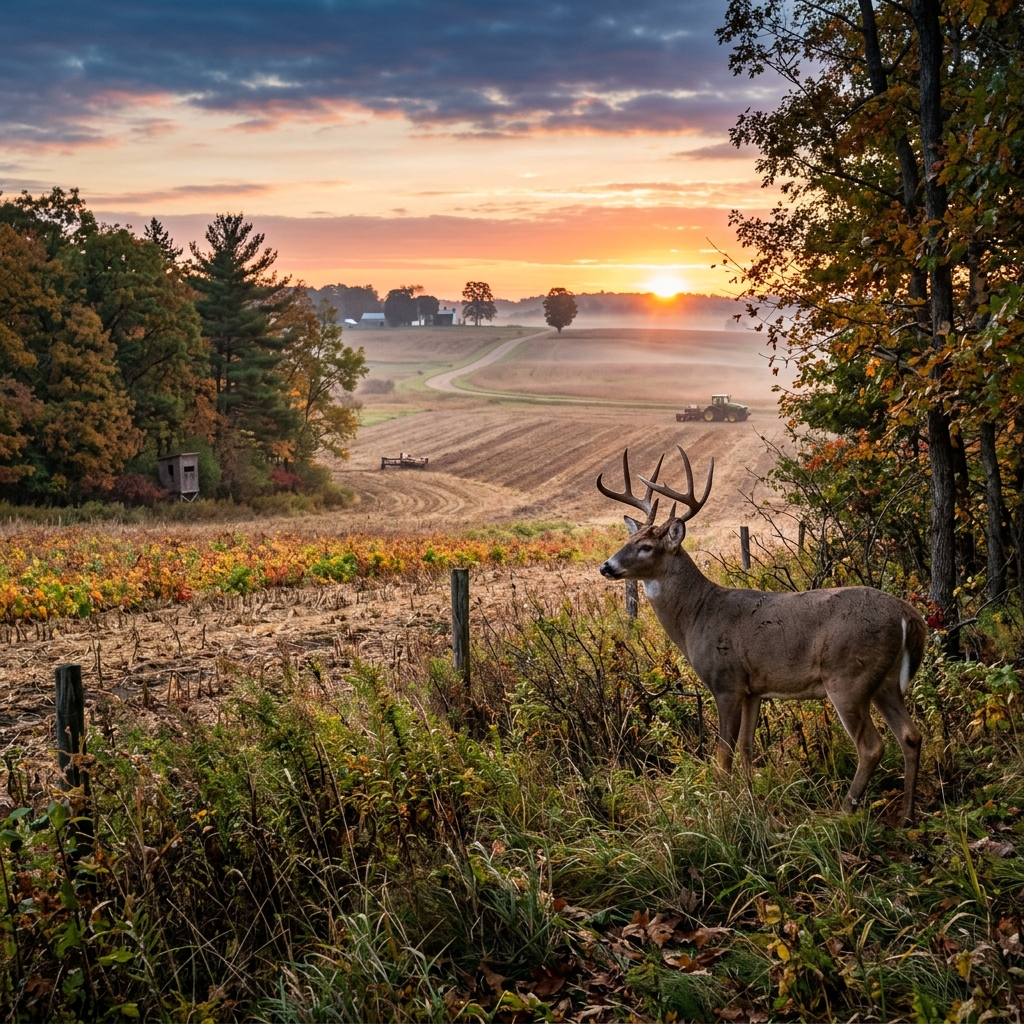
The Role of Agricultural Leases in US Hunting
Learn how agricultural hunting leases work—typical costs per acre, how to find farm ground, contract must-haves, and how to keep landowners happy.
In the United States, whitetail hunting is increasingly a game of access. Public land remains the backbone of the sport, but agricultural hunting leases—paying a farmer or landowner for exclusive (or shared) hunting rights—are how many hunters secure quality habitat without buying ground. A lease is a business relationship: cash and stewardship for the landowner, controlled pressure and better patterning for you.
Done right, leasing supports farms and creates multi-year hunt plans. Done wrong, it ends in gate disputes and a canceled contract.
What Is an Agricultural Hunting Lease?
An agricultural hunting lease is a written (ideally) agreement granting hunting privileges on farm or ranch property for a set term—often 1–3 years—in exchange for payment.
Common variants:
- Exclusive lease: Only your group hunts
- Shared lease: Multiple parties split cost and days
- Trophy / managed lease: Harvest restrictions and habitat rules built in
- Day lease / outfitter access: Short-term paid hunts (different economics)
You’re usually paying for hunting rights, not crop ownership. Crops, livestock, and buildings remain the landowner’s domain unless stated otherwise.
How Much Does It Cost to Lease Farmland for Hunting?
Prices swing hard by region, deer density, trophy reputation, and amenities (lodging, food plots, lakes).
Ballpark annual rates:
- Midwest trophy belt (parts of Iowa, Illinois, Kansas, Missouri): often $25–$75+ per acre
- South / East / mixed ag: commonly $10–$25 per acre
- Small high-demand tracts near cities: sometimes priced per farm, not per acre—$2,000–$10,000+ for modest acreage
A 160-acre Midwest lease at $40/acre is $6,400/year before insurance, seed, and fuel. Split four ways and it becomes realistic; solo it becomes a second rent payment.
Remember: you’re also buying reduced competition. Opening-morning solitude has a price.
How Do You Find Private Hunting Land to Lease?
Don’t rely on random cold-knocking alone—though respectful door-knocking still works.
- Lease marketplaces / brokers: Platforms and brokers list farms, handle paperwork, and often require insurance.
- Local networking: Diners, co-ops, feed stores, churches—post a clean “land wanted” flyer with a family photo and phone number.
- Mapping apps: Use ownership layers to identify large tracts, then send a short, polite letter—not a novel.
- Landowner referrals: A happy farmer neighbor is the best broker you’ll ever have.
- Auction / estate transitions: When farms change hands, new owners sometimes prefer lease income to strangers asking each fall.
For patterning once you secure ground, E-Scouting Whitetails and Beginner’s Guide to Whitetail Hunting help new lease partners start responsibly.
What Should a Written Lease Agreement Include?
Handshakes fail when deer show up and opinions differ. Put it on paper:
- Parties, acreage map, and term dates
- Payment amount, due dates, late fees
- Exclusive vs. shared rights; guest rules
- Allowed weapons and seasons
- Vehicle rules (no trucks in soft fields; designated parking)
- Food plot / mineral / camera permissions
- Tree stand and blind policies (screw-ins vs. straps, removal dates)
- Doe harvest expectations and buck age goals
- Liability insurance requirements (often $1M)
- Termination clause and property damage remedies
- Livestock and building setbacks
Lawyer review on multi-year expensive leases is cheap insurance.
How Do You Keep a Landowner Relationship Strong?
Farmers talk. Your reputation is your renewal.
Do:
- Pay early
- Share game meat or help with a weekend chore when offered
- Text fences, gates, and litter problems you didn’t create—tell them anyway
- Ask before cutting trees or planting plots (Cutting Shooting Lanes should never surprise a landowner)
- Control hunter numbers—pressure management keeps everyone happier (Managing Hunter Pressure on a Hunting Lease)
Don’t:
- Drive across wet bean fields for a 50-yard shortcut
- Leave gut piles beside the house lane
- Bring unapproved guests
- Argue politics at the kitchen table if you want next year’s signature
How Should You Manage Habitat and Harvest on Leased Ag Ground?
Ag leases often include CRP edges, creek timber, and crop rotations that shift deer yearly.
Practical management:
- Inventory with cameras without spamming the bedding cover—Managing Trail Camera Data
- Align doe harvest with landowner crop-damage goals
- Protect sanctuaries; hunt edges and funnels
- Plan late-season sits around standing corn/beans and brassicas—Post-Rut Late Season Food Sources
- Coordinate with the farmer’s harvest schedule—combine day changes everything
You’re a guest with a contract, not the sovereign of the section.
Lease vs. Public Land vs. Buying: How Do They Compare?
| Option | Pros | Cons |
|---|---|---|
| Ag lease | Control, privacy, patternable | Cost, politics, impermanence |
| Public land | Low cost, adventure | Pressure, theft, less control |
| Buying | Ultimate control | Capital, taxes, maintenance |
Many serious hunters run a hybrid: lease for evenings after work, public for overnight adventures. Neither path is morally superior—ethics live in how you treat deer, landowners, and other hunters.
How Do You Split Costs and Duties in a Lease Group?
Money fights kill leases faster than coyotes.
Put in writing among hunters:
- Who pays the landowner (one treasurer)
- Equal vs. weighted shares (some members hunt 5 days, others 40)
- Stand placement approval process
- Doe harvest assignments for crop-damage goals
- Camera sharing and target-buck rules
- Work days for plots, lane cutting, and trash cleanup
A simple group chat rule helps: no new stands without a photo and GPS pin to the group. Surprise lock-ons on the prime oak ridge are how friendships end in November.
If one member wants to outfitted-style entertain clients, that’s a different business—get landowner approval or keep it off the farm.
What Red Flags Appear Before You Sign?
Walk away—or renegotiate—when you see:
- Verbal-only deals on expensive ground
- Unclear boundaries with angry neighbors
- Landowner refusing any insurance requirement
- Existing trash, abandoned stands, and “my cousin also hunts here” surprises
- Crop damage so severe the farmer wants unrealistic doe numbers overnight without access to the right cover
Ask who hunted it last year and why they left. Orphaned leases sometimes hide pressure, trespassing, or deer that were shot out.
How Do You Evaluate Deer Quality Before Signing a Multi-Year Lease?
Ask for more than a brochure photo of a dead buck.
Useful diligence:
- Age structure anecdotes from the last tenant (honest ones mention 2.5-year-old harvest mistakes)
- Crop rotation plans for the next 2 years—corn/beans vs. continuous cattle pasture changes everything
- Neighbor pressure and posted lines
- Winter cover availability after harvest
- Permission for cameras and food plots in writing
Visit in late summer if you can. Look for tracks, trails, beds, and water. A pretty farm with no cover and no winter food may lease cheap for a reason. Pair the visit with e-scouting layers so you know how the parcel sits in the wider neighborhood of public access and competing leases.
How Do Food Plots Fit Into Lease Negotiations?
Plots can add value—or start fights—depending on who pays, who plants, and who owns the equipment.
Negotiate up front: acreage allowed, seed type, lime/fertilizer costs, mowing rights, and whether plots revert to the farmer’s use after the lease. A handshake “sure, plant something” becomes a dispute when a brassica plot sits in next year’s bean rotation. Get the sketch on the map attachment of the lease. Send a short thank-you note and season summary after the last hunt—harvest numbers, fence issues fixed, and next-year interest. That single page renews more leases than any handshake in the dark.
Frequently Asked Questions
Is liability insurance mandatory?
Often yes in modern leases. Even if not required, carry it. One injury lawsuit can exceed decades of lease fees.
Can I sublease or bring paid clients?
Only with written permission. Most farm leases forbid outfitting without a separate agreement.
Who owns the stands at lease end?
Specify it. Many contracts require removal of all stands, blinds, and trash by a date—or they become the landowner’s problem (and your lost gear).
What if the farm sells mid-lease?
Sale clauses vary. Some leases terminate on sale; some transfer. Read that section before you build food plots.
How many hunters per acre is reasonable?
Depends on cover and goals. As a rough pressure guide, many groups aim for something like one hunter per 40–100 acres of huntable cover during peak weekends—not one per 10 acres of open tillage.
Price the acres, paper the rules, and treat the farm like a partnership. Agricultural leases aren’t just access—they’re relationships measured in renewals.
Wildsnap • Open beta
Join Wildsnap and try the beta
In the open beta, you turn trail-cam data into actionable insights—free, fast, and simple.
No credit card