
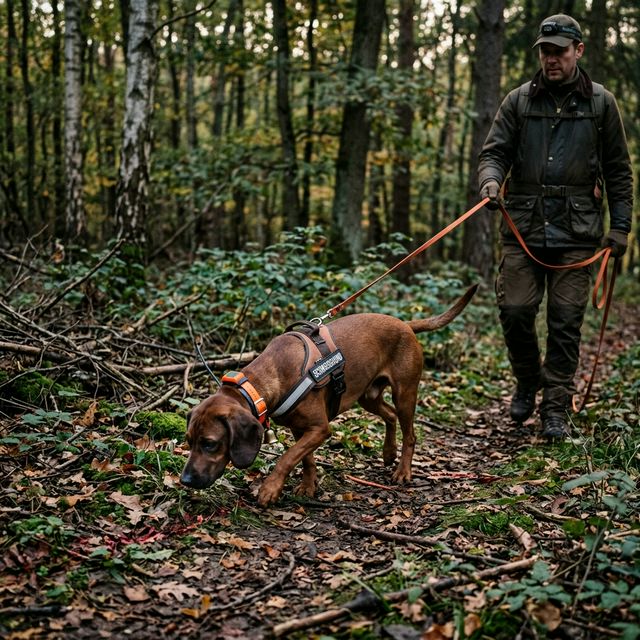
Blood Tracking Dogs: The Ultimate Whitetail Recovery Tool
When blood fades, a trained tracking dog follows scent humans cannot see. Learn breeds, hunter etiquette, legality, and night safety for ethical K9 finds.
Recovery is the most important part of a hunt. Even a solid hit can send a buck 100–200 yards into swamp grass before he piles up. Fat can plug an exit, rain can wipe sign, and darkness can erase confidence. When human eyes fail, a trained blood-tracking dog follows a chemical trail you will never see.
Using a dog is not admitting failure—it is finishing the ethical job. Pair good hits from shot placement with disciplined tracking and a packed kill kit so meat care starts the moment you recover. For spoilage timing after long tracks, read meat spoilage limits. When you want to sharpen human trailing before you call a handler, review expert blood trailing tips so you do not destroy the scene first.
What Dogs Smell That You Cannot
A tracking dog is not only hunting red drops. Trauma releases stress chemistry, and running deer shed scent from hooves, hair, and breath. The nose reads a layered story that a flashlight and pink ribbon never capture.
Scent cloud
Microscopic skin particles (scurf), hair, and gland scent fall along the path. Interdigital glands and cortisol-related stress odor differ from a calm deer that walked through earlier. Trained dogs learn that difference and can distinguish a wounded animal’s trail from old sign that crossed the same lane hours before.
Cold trails
Capable dogs can work trails 12–24+ hours old in decent conditions—sometimes longer. Heat, heavy rain, and contamination shorten the window. Call early rather than grinding the scene into mush for three hours first. A handler who arrives while the trail is still intact has a dramatically better chance than one who inherits a trampled mess.
Breeds Built for Blood Trailing
Family pets occasionally find deer. Professionals favor lineages selected for ground scent and persistence:
- Bavarian Mountain Hound
- Hannoverian Scenthound
- Wirehaired Dachshund (Teckel) and other tracking dachshund lines
- Some Catahoula, cur, and specialized crosses in North America
Low-to-the-ground dogs often keep noses in the scent ribbon below swirling thermals that lift odor for taller breeds. Temperament and training matter more than pure brand names—hire a proven handler when you can. Ask how many recoveries they logged last season and whether they train on simulated cold trails, not only fresh blood.
How Handlers Train a Recovery Dog
Most serious blood trackers start young dogs on short, controlled scent lines with reward at the end. Training progresses from obvious blood to aged trails, water crossings, and contaminated scenes where human scent competes with deer odor. Handlers teach a specific alert—often a change in body language or a bark at the carcass—so you know the moment the job is done.
This is not something you replicate in a weekend with a family Lab. The dog must stay focused under gunfire memories, coyote scent, and your adrenaline. Respect the years invested when you hire a pro.
Hunter Etiquette: Do Not Ruin the Trail
Most failed dog finds start with well-meaning hunters who could not resist one more grid walk.
Back out early
If blood thins and you lose the next mark, stop. Grid-walking spreads human scent, smears micro-blood on boot soles in wrong directions, and creates noise the dog must filter. Mark last blood and wait for the dog. Every extra minute you spend stomping circles is a tax on the nose that follows.
Mark, do not trample
- Biodegradable flagging or toilet paper on last blood
- GPS pin on hit site, last blood, and direction of travel
- Note shot angle, hit sound, and deer body language for the handler
Treat the area like a crime scene until the nose arrives. If you must leave for work, send the handler a pinned map and stay reachable by phone.
Share honest shot info
Handlers need the truth: quartering angle, estimated hit height, blood color, and whether you already walked loops. Ego wastes daylight and meat. A gut-hit admission lets the handler plan a slower, wider search instead of assuming a lung trail that no longer exists.
When to Call a Dog Versus Keep Trailing
Not every lost trail needs a dog—but hesitation costs recoveries. Call when:
- You lose blood after two careful casts and cannot find the next drop
- Rain is approaching and will erase sign within the hour
- Darkness falls with no body found and the hit was not clearly fatal
- The deer crossed a creek, pavement, or crowded bedding area where human eyes fail
Wait briefly—not hours—on a clearly liver-colored trail with consistent sign if you can still see blood. Discuss timing with your local handler; some prefer a few hours on marginal hits so the deer beds and expires, but that only works if you have not already contaminated the path.
How a Typical Call Works
- You mark hit site and last blood; withdraw.
- Handler arrives with dog on a long lead (20–40 feet common).
- Dog starts at hit site or last blood per handler preference.
- You follow quietly with light, water, and tagging gear—do not crowd the nose.
- On recovery, you take over tagging, field care, and packing.
Ask about fees, response radius, and night availability before season—not at midnight on opening weekend. Save two or three handlers in your phone by county. Some work on donation; others charge a flat call-out plus mileage. Either way, the economics beat losing 50–70 pounds of boneless venison.
Legality: Check Before You Call
Rules vary by state and sometimes by season.
- Many states encourage leashed tracking dogs for recovery
- Some require the dog to remain on a lead of specified length
- A few jurisdictions restrict dogs during certain seasons or on public land
- Landowner permission still applies on private leases
Read the current regulations or call your agency. Illegal recovery helps no one. On leased ground, confirm whether the landowner allows outside handlers with dogs—some do not.
Night Recovery Safety
Long lines in the dark create unique risks that daylight tracks avoid.
Predators and scavengers
Coyotes, bears, and other scavengers may work the same trail. Carry adequate light, maintain voice contact with the handler, and know local rules for sidearms or bear spray. A found deer in bear country may already have company—approach with light and noise.
Entanglement
When the dog surges on final scent, leads catch on wire, vines, and ankles. Carry a knife you can reach to cut a lead in an emergency. Watch footing—falling on a knife or stick while focused on the dog is a real clinic visit.
Hypothermia and exhaustion
Slow, wet tracks in December drain hunters. Dress for standing still between moves, not only for the hike in. Hand warmers and a spare layer in your pack turn a three-hour night track from misery into manageable work.
After the Find: Meat and Evidence
Once recovered:
- Tag per law immediately
- Start cooling—especially after multi-hour delays (field dressing)
- Photograph the hit site and recovery for your records
- Thank and pay the handler promptly; tip if they saved a tough trail
- Note lessons for next season’s shot selection
A dog find on a marginal hit is a gift—and a reminder to tighten angles next time. If the autopsy of the trail shows a shoulder hit you called “high lung,” adjust your next pin, not your story.
Building a Handler Contact List Before Season
The worst time to find a tracker is after the shot. Before opening day:
- Search your state’s blood-tracking dog association or social groups
- Confirm who covers your county after dark
- Ask whether they want to be called immediately or after a short wait on liver hits
- Store numbers where your hunting partners can access them
Some clubs maintain statewide on-call lists. One saved contact beats three hours of panicked searching on a phone with 4% battery.
Frequently Asked Questions
When should I call a dog instead of waiting longer? If you lose blood and cannot find the next mark after careful casting—or rain is coming—call. Waiting overnight helps some poorly hit deer expire, but trampling all evening before calling often hurts more than it helps. Discuss timing with local handlers.
Can my Lab do this? Some sporting dogs have nose and drive. Most lack specific blood-trail training. For a trophy or tough hit, a specialist is worth it.
Will a dog scare other deer off my property? A leashed tracking job is usually a short intrusion. Avoid repeated practice runs through core bedding without need.
What does a typical service cost? Varies widely by region and difficulty—often a call-out fee plus mileage. Ask upfront. Compare that cost to losing 50–70 pounds of boneless venison.
Do I need to be present? Usually yes—land access, tagging, and legal possession. Handlers are not there to replace your responsibilities.
Can dogs track without visible blood? Yes. Trained dogs follow interdigital scent, hair, and stress odor when blood is sparse or washed away. That is exactly when they earn their fee.
Mark last blood, stop walking circles, and trust a trained nose when the drops disappear. Ethical hunting includes how you finish the job—not only how you start it.