
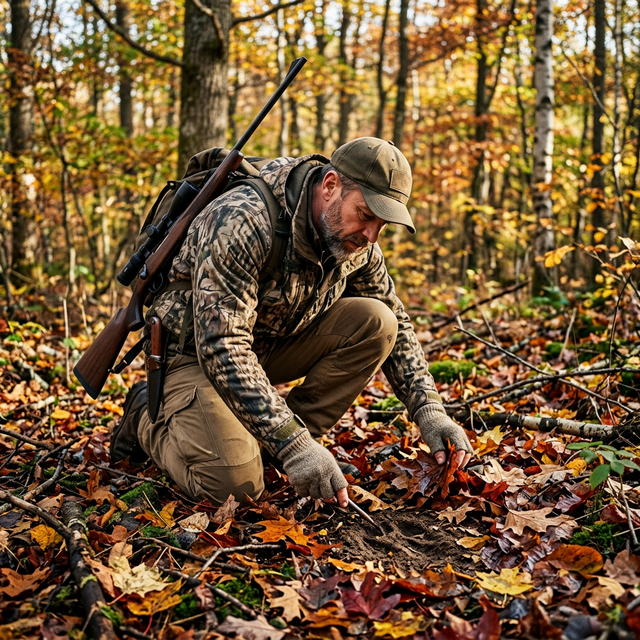
Expert Blood Trailing: Technical Forensic Tips for Recovering Wounded Deer
Recover wounded deer with wait times by hit type, blood-color forensics, grid-search steps, night trailing tips, and when to call a tracking dog.
The shot is the climax; the recovery is the obligation. Misread blood, push too early, or trample the hit site, and a recoverable deer becomes a lost one. Blood trailing is patience plus pattern recognition—not a footrace fueled by adrenaline.
This guide covers wait times by hit type, what blood color means, how to mark and grid a cold trail, night trailing, dog use, and field safety.
First Rule: Mark, Then Wait
Before you climb down, fix in your mind—or GPS—the deer’s standing position, the arrow/bullet direction, and the last place you saw it. Pick landmarks. Adrenaline edits memory.
Then wait according to the hit you believe you made. The worst common error is rushing the impact site in five minutes “just to look.”
Wait Times by Suspected Hit
Double lung / heart. Even with a mule kick and great hit sound, wait at least 30–60 minutes (many hunters use 45 as a default). Let the deer bed and expire. Early pressure can send a dying animal farther with a weaker trail.
Liver. Dark, thick blood; slower demise. Wait 4–6 hours minimum before serious trailing, longer if you bump the deer.
Paunch / gut. Green/brown matter, sour smell, hunched walk. Wait 8–12+ hours, often overnight. Pushing a gut-shot deer is how trails die. Soft estimate your hit using whitetail anatomy and shot placement.
Muscle / high / brisket. Watery blood, hair, fat. Trails often fade. Give time, then grid carefully; be honest if the hit may be non-lethal and the deer needs space.
If you are unsure, err toward longer waits—especially in warm weather where meat care still matters after recovery—meat spoilage limits.
Blood Color and Sign Forensics
- Bright pink, frothy/bubbly: lung; oxygenated; usually strong trail after the wait
- Bright crimson spray: heart or major artery; often heavy, easy trail
- Dark maroon/purple, thick: liver; slower; do not rush
- Watery red with fat/tissue: muscle or marginal; expect sparse sign
- Gut contents / foul smell: abdomen; long wait mandatory
Also read hair color/length, bone fragments, and bubble presence on the arrow or ground. One clue misleads; clusters of clues persuade.
At the Hit Site
Move slowly. Do not gather a crowd to stomp leaves.
- Find the arrow if archery, or impact hair/blood for firearm
- Determine direction from blood splash and tracks
- Flag the hit site
- Only then begin trailing after the wait
If you find the arrow with clear lung evidence and a short blood trail into a bed, resist the urge to “just peek” early—stick to the clock unless weather or coyotes demand a judgment call.
When the Trail Goes Cold
Stop at the last blood. Flag it or drop a pin. Do not wander destroying evidence.
Escape logic. Dying deer favor downhill paths, known thickets, and water. Look where a hurting animal would hide—not where you wish it went.
Grid search. From last blood, expand concentric circles or lane sweeps. Check knee-high grass edges, undersides of leaves, logs, and bed bowls. Blood is not always on the ground—it wipes on brush.
Light. In daylight use polarized sunglasses; at night use quality lights (some hunters prefer colored filters to preserve night vision—practice what works for you).
Snow changes visibility—tracking deer in snow—but fresh flurries can bury sparse hits.
Night Trailing and Help
Bring extra flagging, GPS, water, and a partner who will go slow. Assign one person to walk beside the trail, not on it.
Notify landowners if you must cross boundaries—especially in suburban settings—suburban bowhunting.
If legal and available after a diligent effort, call a blood-tracking dog handler. Pride costs deer. Dogs recover animals humans walk past.
Weather and Coyote Judgment Calls
Rain can wash trails—sometimes you start sooner with care. Extreme heat raises meat-care urgency after a known lethal hit—but gut shots still need time; balance ethics of recovery vs spoilage with local conditions and experience.
Coyote-heavy ground may justify careful earlier follows on known lethal hits. Document your reasoning; do not invent “coyotes” as an excuse to rush every deer.
Pack List for Serious Tracking
- Orange flagging
- GPS/phone offline maps
- Bright light + spare batteries
- Gloves
- Compass backup
- Water and snack
- Binoculars for scanning beds ahead
- Permission contacts for adjacent land
After recovery, process cleanly—DIY venison processing—and keep wounds away from your bloodstream with gloves.
Bio-Safety
Wear rubber gloves for trailing through heavy blood and for field dressing. Cover your own cuts. Animal bacteria are not a toughness contest.
Common Trailing Mistakes
- Climbing down in five minutes every time
- Walking past last blood without flagging
- Assuming no blood means a miss without a grid search
- Taking a parade of buddies down the trail
- Giving up at the first open creek without checking the far bank
- Refusing to call a dog out of ego
Decision Checklist After the Shot
- Replay the angle and reaction honestly
- Mark last visual and hit site
- Set a timer for the appropriate wait
- Return quietly; read sign before moving far
- Flag last blood; grid when sparse
- Escalate to more help/dog if needed
Arrow and Bullet Clues Beyond Color
Archery shafts tell stories: how deep the blood sits in the vanes, whether bubbles coat the insert, and if hair is trapped in a broadhead ferrule. A snapped arrow in the deer is not a tracking excuse to quit—treat it as a lethal-hit possibility until proven otherwise and grid harder.
With firearms, look for hair at impact and froth on vegetation along the flight line. High shoulder hits may leave little blood initially while still being lethal or crippling—another reason to investigate thoroughly before declaring a miss.
Working Thick Cover and Water
Wounded deer often dive into the nastiest briars within 100 yards of the hit. Crawl if you must. Check bed bowls for blood pools and kicked leaves. At creeks, inspect both banks and downstream snags; blood can wash while the deer stands in water to hide scent from coyotes—and from you.
If the trail enters a standing crop, use lanes and height (careful wagon or truck glassing where legal and safe) rather than random trampling that destroys sign and the farmer’s goodwill.
Emotional Discipline for Solo Hunters
Solo trailing is when bad decisions spike. Set phone alarms for wait times. Tell someone where you are. If darkness and fatigue hit, mark last blood precisely, back out, and return at first light rather than inventing a 2 a.m. freestyle grid that walks over the only drops left. Pride recovers fewer deer than method.
Celebrate only after the tag is on and the meat is cooling. The woods are full of “sure things” that stood back up.
Documenting for Next Time
After every recovery—easy or hard—write what the deer did at the shot, what blood looked like, how long you waited, and where you found him. Patterns in your own notes teach faster than internet anecdotes. Hard trails become less mysterious when you treat them like case studies.
Include weather, time of day, and whether you bumped the deer. Over a few seasons you will see which of your “sure lung shots” were actually marginal—and fix aiming or patience accordingly.
Second-Guessing a “Miss”
Many “misses” are hits with delayed blood. If the deer reacted, the bow jumped, or you heard impact, treat the event as a hit until a careful grid says otherwise. Search the ground beyond the animal’s standing position for hair and cut twigs. Declaring a miss too early is how gut-shot deer are lost without a real search.
Second-Guessing a Missed Call
Many declared misses are hits with delayed blood. If the deer reacted oddly, you heard impact, or the bow jumped on contact, treat it as a hit until a careful grid says otherwise. Search beyond the standing position for hair and cut twigs before you shrug and climb back up.
Frequently Asked Questions
How long should I wait on a perfect-looking lung shot? At least 30–45 minutes is a solid default even when you are confident. Longer does not hurt if temperatures allow.
What if I find only a few drops then nothing? Flag last drop, grid, check beds and thickets in the direction of travel. Sparse trails are still often recoverable with discipline.
Should I trail in the rain immediately? If rain is erasing sign and you are sure of a lethal hit, start carefully sooner. If it might be a gut hit, you still face a hard trade-off—prefer shorter careful looks over aggressive bumping.
Can I push a deer to keep it from bedding? Usually the opposite of what you want on lethal hits. Bedded and expired is the goal.
Is no blood always a miss? No. Complete pass-throughs can leave delayed blood; high lung hits may bleed internally first. Investigate the site thoroughly.
When do I stop? After systematic search, time, help, and (where possible) a dog effort. Stopping because you are tired at the first open hardwood flat is too early.
Respect the animal with time and method. The best trailers are not mystical—they are the ones who refuse to rush, refuse to trample, and refuse to quit at the first blank leaf.