
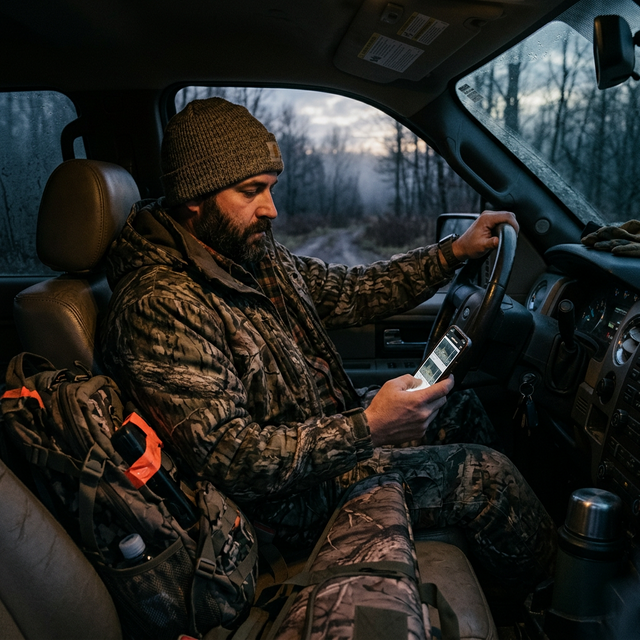
How Cellular Trail Cameras Are Revolutionizing Hunting Strategy
Cellular cameras enable zero-intrusion scouting. Learn sanctuary plays, macro wind trends, notification discipline, theft deterrence, and battery tips.
The marketing pitch for cellular trail cameras is the dopamine hit: a buck photo on your phone at work. The real advantage is quieter and more durable: zero-intrusion scouting. You learn movement patterns without weekly scent bombs through bedding areas and rut funnels that mature bucks abandon the moment they smell repeated human traffic.
Used poorly, cell cams create neurotic stand-burning—every notification becomes an emergency hunt. Used well, they tell you when wind, timing, and location finally overlap so your one clean entry of the week actually matters.
Zero-Intrusion: The Strategic Point
Traditional SD card cameras forced walk-ins. Every check left odor on boots, noise on branches, and crushed vegetation on trails deer use at dawn. Mature bucks do not need to see you; they smell and hear the pattern of Tuesday afternoon card pulls within two weeks on pressured ground.
Cellular units hung in August on a scrape or funnel can sit untouched until you hunt. Data uploads to the cloud. Your sanctuary stays quiet while you build a wind-and-time database from your couch.
Concrete benefits:
- No midday ATV loops “just to pull cards” through core bedding
- Fewer bumped beds when does pattern your intrusion route
- Cleaner November funnels that still produce daylight cruisers
- Faster correlation of wind direction with buck movement without contaminating the set
Placement still matters more than connectivity. A cell cam on a dead food plot teaches nothing. See trail camera placement for the rut for where to hang during November, and summer patterning in summer velvet buck scouting for baseline buck IDs before ranges expand.
The strategic shift is psychological as much as technical. You are no longer visiting the woods to learn—you are visiting to hunt when the data says conditions align. That separation protects mature deer from the death-by-a-thousand-checks that empty many private parcels by mid-season.
Hang It Right the First Time
Because you will not visit often, first-install mistakes linger for months.
Installation checklist:
- Test signal strength on-site before leaving—use the manufacturer’s app or a dedicated signal tool at exact hang height
- Secure with a steel cable and lock box on public land; Python-style cables on private
- Aim for the trail centerline, confirm detection with a trigger walk-test at 10, 20, and 30 feet
- Run lithium AAs or a quality external 12V solar solution rated for your transmission volume
- Label the cam in your app with wind notes, feature name, and install date
- Set realistic photo delay and sensitivity before closing the housing
A dead cam in a black hole of coverage teaches nothing except that you wasted a mount. Move until you have reliable uploads on three consecutive test days. Weak signal areas may need an external antenna or a different carrier module—verify before rut, not after.
Angle the camera slightly downward to reduce sky false triggers from moving clouds and branches. Clear a lens window the size of your hand, not a landing pad. Deer should not notice the set changed.
Macro Trends Beat Single Photos
Amateur move: buck at 4:00 p.m. Tuesday → sit Wednesday at all costs regardless of wind.
Professional move: aggregate 2–3 weeks of data before treating any buck as patternable.
Wind correlation: If daylight photos of a target buck cluster on northwest winds at 8–12 mph, that stand becomes a northwest-wind-only tool. Other winds get other trees or no hunt at all. One photo on southwest wind is an outlier until repeated.
Time clusters: Seeking-hour daylight appearances (9–11 a.m.) need different sit plans than pure night feeders who never show before legal light ends. Do not hunt morning stands for evening-only bucks without adjusting entry routes.
Direction of travel: Morning return toward bedding vs evening outbound toward scrapes changes which side of the funnel you hang and which stand gets the shot opportunity.
Frequency gaps: Some mature bucks cruise properties on 48–72 hour loops. Absence for three days is not abandonment—it may be the pattern.
Workflow ideas and spreadsheet templates: managing trail camera data. The hunters who win with cell cams treat photos like a dataset, not a slot machine.
Notification Discipline
Apps can ping all day—raccoons, wind-tossed brush, yearlings, the same fork horn walking the scrape hourly. Unchecked notifications turn every hunter into a reactive stand-burner.
Discipline rules:
- Mute push alerts or batch-review once daily at a fixed time
- Filter for bucks and ignore fluff if your app allows species or size filtering
- Do not drive to the farm for every spike photo during work hours
- Never hunt the same day you serviced a cam unless entry route avoids the set entirely
Cell cams are for pattern recognition, not twitch response. Over-hunting a hotspot because your phone buzzed at lunch is how you educate the buck you named in your notes. Ethics and longevity matter: ethics of smart hunting.
Set a personal rule: no stand switch based on fewer than three daylight appearances on the same wind. Your future self will thank you when the giant shows on the fourth confirming day instead of the first adrenaline ping.
Signal, Plans, and Cost Realism
Cellular scouting has real ongoing costs. Budget honestly before buying six cameras.
Typical annual costs per camera:
- Camera body: $150–400 depending on features
- Transmission plan: $8–20/month per cam on most carriers
- Batteries or solar: $30–80/year in lithium or panel maintenance
- Security hardware: $25–50 for box and cable
Weak LTE or 5G edges need cameras that store-and-forward when signal drops, or modules that work on the carrier that actually serves your timber—not the carrier that won a Super Bowl ad. Ask locals who hunt the same block; test on-site with the exact SIM you plan to use.
Data overage happens on hot scrapes during rut. Set photo delay to 15–30 seconds, reduce video mode if you only need timestamps, and review plan tiers before November. One raccoon party can burn a month’s data allotment overnight on the wrong settings.
Power details for long sits without visits: trail camera tech, battery, and solar.
Theft and Battery Failures
Public-land cell cams are targets. Private-land cams disappear too when access is shared or property lines are disputed.
Theft deterrence:
- Steel security box plus python-style cable through a substantial tree
- Higher mounts aimed down where PIR detection still triggers at trail height
- Avoid obvious trails and tree “camera alleys” every hunter uses
- Engrave or mark ownership discreetly inside the door, not outside advertising
- Register serial numbers; some insurers cover theft with documentation
Batteries: Alkalines under heavy transmit loads leak and destroy boards from the inside. Prefer lithium AAs (Energizer L91 or equivalent) or manufacturer-approved rechargeable systems and 12V solar kits sized for your photo volume. Cheap batteries are how $200 cameras die permanently.
Check battery health remotely if your app reports voltage. Plan a single pre-rut service window for swaps—midday, crosswind, fast in and out—rather than monthly visits that pattern your intrusion.
Cold weather reduces battery output. In northern states, expect 30–50% shorter life below 20°F unless solar supplements daytime charging.
Integrating Cell Data With Wind and Pressure
Build a simple log—spreadsheet, notebook, or app export—and update it weekly during rut.
| Date | Buck ID | Time | Wind | Pressure trend | Notes |
|---|---|---|---|---|---|
| Nov 3 | 8pt A | 09:12 | NW 8 | Rising post-front | North scrape cam |
| Nov 4 | 8pt A | — | SW 12 | Flat | No daylight |
| Nov 6 | 8pt A | 10:45 | NW 6 | High steady | Same scrape, trailing doe |
When a cold front and the buck’s preferred wind align, you hunt. When they do not, you wait—even if your buddy got a random daylight photo on the wrong wind and swears you should sit anyway.
Barometric pressure adds context: barometric pressure and deer movement. Rising pressure after a front often correlates with increased daylight movement; falling pressure during storms may push activity to night-only on pressured ground.
The revolution is not the ping itself. It is the ability to wait intelligently while your sanctuary stays untouched.
Frequently Asked Questions
Do I still need SD card cams? They work for low-priority spots, backup sets, and areas with zero cell signal. Keep cellular units on sanctuaries and rut funnels you refuse to contaminate with weekly walks.
Will cell cams spook deer with transmission lights or noise? Modern units are quiet during upload. Flash type and placement spook more than radios. Use no-glow infrared where hunting pressure is high.
How many cell cams are enough? Often 2–4 well-placed units on a modest property. More cameras help only if you analyze them; ten unmanaged cams create noise without pattern.
Can I hunt the same day as a daylight photo? Sometimes—if wind matches, entry avoids the camera corridor, and you have multiple confirming photos on that wind. Often better to wait for pattern confirmation unless season days are running out.
What about fake “AI buck ID” marketing? Treat auto-ID as a helper, not gospel. Verify images yourself before inventing a ghost buck or misidentifying two similar eight-pointers.
Do cell cams replace scouting? No. They magnify good woodsmanship and expose bad stand choices faster. Boots, wind reading, and entry discipline still kill deer.
Wireless scouting is a magnifying glass, not a shortcut. Protect sanctuaries, read macro wind trends, silence the notification circus, and move only when the trap is actually set.
Turn your trail camera data into scouting intelligence
Wildsnap AI filters noise, recognizes species, and surfaces activity patterns from your own photos.
No credit card
Wildsnap • Open beta
Turn your trail camera data into scouting intelligence
Wildsnap AI filters noise, recognizes species, and surfaces activity patterns from your own photos.
No credit card