
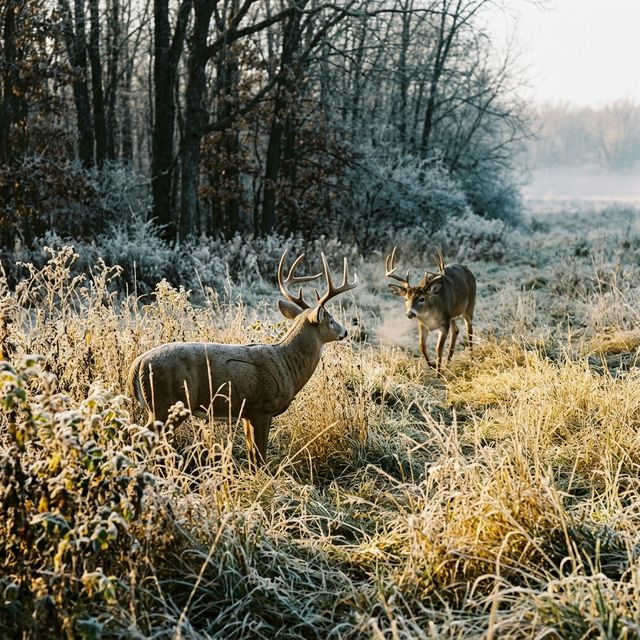
The Art of Decoying Whitetails: Mathematically Mastering the Rut's Most Violent Mind Games
Deploy whitetail decoys that work: reverse-angle setups, scent geometry, buck vs doe postures, calling pairings, and blaze-orange safety rules.
A realistic decoy turns curiosity into commitment. Grunts and rattles get attention; a 3D deer gives a buck something to fight or breed. Done right, he walks into your lap broadside. Done wrong, he blows for the season and teaches every deer on the ridge to avoid that opening.
This guide covers buck vs doe decoy strategy, reverse-angle geometry, scent and wind placement, calling pairings, timing by rut phase, and the safety rules that keep you from becoming a target.
When Decoying Is Worth the Effort
Decoys shine when bucks are seeking and fighting—roughly late pre-rut through peak rut. They are less useful when deer are purely bed-to-feed in deep winter, unless a second-rut doe group is active on a food edge.
Best conditions:
- Daylight cruising weather (cool, stable)
- Open enough visibility for a buck to spot the decoy at 60–100+ yards
- Wind you can engineer
- Private land or low-risk public setups where transport safety is managed
For aggressive pre-rut posture specifically, see also using decoys in the pre-rut.
Buck Decoy: Reverse-Angle Geometry
The most common mistake is pointing the decoy’s nose at the timber where you expect the real buck to appear. Dominant bucks usually circle to face a rival. If the decoy already faces the woods, the real buck may hang up out of range or approach from an awkward angle.
Set the buck decoy facing your stand. When the live buck swings face-to-face, he often presents broadside or quartering-away in your lane.
Distance. Typically 15–20 yards upwind of your position (see scent section). Close enough for a bow shot when he commits; far enough that he focuses on plastic, not your silhouette.
Posture. Pin ears back if adjustable. A challenge posture sells a fight. A sleepy, ears-forward buck decoy can look subordinate or uninteresting.
Doe Decoy Strategy
Doe decoys pull bucks during seeking and can work on field edges in the second rut. They also look less threatening to other hunters than antlered decoys—useful on public land.
Place a doe decoy where a cruising buck expects to find does: field corners, funnel mouths, scrape lines near doe bedding. Pair with soft estrous bleats sparingly. Over-calling next to a motionless doe can look wrong—keep sequences short.
A buck-and-doe combo (doe feeding, small buck nearby) can trigger possessive aggression, but it is heavier to pack and easier to scent-contaminate.
Wind and the Downwind Scent Trap
Bucks that see a decoy almost always try to get downwind for a scent check. Use that.
Place the decoy upwind of your stand so his circling path crosses your shooting lane before he reaches the decoy’s scent stream—and before he reaches your human scent if geometry is right.
If he reaches the decoy’s downwind and smells garage plastic and human sweat, the game ends. Wash the decoy with scent-free soap, transport in a sealed bag or tote, and handle only with gloves. Add a quality gland scent to the ground under the decoy, not a bath of lure on every surface.
Scent fundamentals still rule—whitetail scent control and understanding thermals.
Calling With a Decoy
The decoy is the visual; calling is the audio prompt.
- Soft grunts when a buck is looking but not committing
- Short rattle sequences to suggest a fight already underway near your buck decoy
- Avoid marathon calling that telegraphs “hunter”
If he is coming hard, shut up and prepare for the shot. Motion from drawing often matters more than another grunt. Shot angles—whitetail anatomy and shot placement.
Rut-Phase Cheat Sheet
| Phase | Decoy bias | Notes |
|---|---|---|
| Early pre-rut | Smaller buck | Curiosity without full aggression |
| Peak seeking | Challenging buck | Reverse-angle + light rattling |
| Lockdown | Doe | Near known doe bedding/food |
| Second rut | Doe on food | Cold evenings, doe groups |
Lockdown hunting without a decoy is covered in hunting the rut lockdown phase.
Public-Land Safety: Non-Negotiable
Carrying a brown 3D deer through public timber during firearm overlap—or any time other hunters are afield—is dangerous.
Rules:
- Wrap the decoy in blaze orange during all transport
- Never carry it fully assembled with antlers exposed while walking
- Assemble only at the stand when safe
- Prefer doe decoys with removable orange patches in high-pressure areas
- Know whether your state restricts decoys during firearm seasons
If someone else’s orange is visible nearby, reconsider the decoy sit. No deer is worth a mistaken-identity risk.
Mistakes That Blow Spots
- Facing the buck decoy toward the expected approach
- Setting downwind of your stand so the buck scents you first
- Bare hands all over the decoy
- Huge open-field decoy on a swirling wind day
- Leaving a decoy out overnight on public land (theft and ethics issues)
- Drawing while the buck is staring at the decoy and your movement
Packing and Setup Checklist
- Gloves, scent-free wipes, sealed transport bag
- Stakes and ground blind spikes that won’t squeak
- Orange wrap for walk-in/out
- Wind powder
- Soft grunt tube
- Plan for a quick teardown if winds shift
Terrain Types That Favor Decoys
Open CRP strips, harvested field corners, oak flats with 60-yard visibility, and river-bottom openings all let a buck spot plastic early enough to commit. Dark cedar jungles where visibility is 20 yards rarely justify the pack-in weight—the buck is already inside your scent before he sees the decoy.
Elevation helps: a decoy slightly downhill of your stand keeps his eyes off your outline while he focuses on the rival. Avoid skylining the decoy on a ridge crest where every hunter and deer for a half mile can see the show.
Setup Timeline on Stand Day
Arrive earlier than usual. Decoy assembly makes noise and requires glove changes. Stake the decoy, apply scent, wrap orange gear out of sight, then climb and settle before prime light. Rushing a decoy setup at 7:05 a.m. when deer already move is backwards.
If winds shift mid-sit into your face from the decoy direction, consider pulling the plug. A decoy that forces a buck through your scent stream becomes an education machine. Have a non-decoy backup sit for swirl days.
Reading the Approach
Bucks often stiff-leg, bristle, and circle. Does may snort and leave—acceptable collateral if your target is a territorial buck. Young bucks may jog in and hover; be ready for quick shots but do not take frontal lunges. If a buck hang-ups and starts feeding while staring, one soft grunt can help; ten grunts usually hurt.
When he commits, pick a spot on his vitals and execute. Do not watch the decoy fight that will never happen. Real deer sometimes hit plastic—stay safe and let the scene finish only after your arrow or bullet is away and the animal is accounted for.
Storage and Off-Season Care
Mice destroy decoy flocking in sheds. Store elevated in sealed totes—skip fragranced products unless you will fully rewash the decoy before season. Repair cracks before October; a shiny broken rump in sunrise light looks like trash, not a rival.
Label the tote with a checklist: stakes, scent wafers, gloves, orange wrap. Decoy mornings already run long; hunting for missing stakes in the dark teaches deer where your truck is parked.
Doe Groups and Decoy Etiquette
If a doe group approaches your buck decoy, they may snort, circle, or leave—sometimes taking your target buck with them. That is a known risk of aggressive buck decoys. On days when you need doe traffic to pull a cruiser, switch to a doe decoy or hunt without plastic. Match the decoy to the day’s goal, not to the gear you happen to have in the truck.
Frequently Asked Questions
Do motion decoys help? Subtle tail or ear motion can sell realism. Erratic battery gadgets in wrong contexts look fake. Keep motion minimal and quiet.
Will a decoy scare does? Sometimes. Does may avoid a buck decoy. If you need doe traffic for a specific afternoon, use a doe decoy or pull the fake.
How close should I set a decoy for rifles? You can set farther for visibility, but the same wind geometry applies. Safety marking becomes even more important.
Can I decoy from a ground blind? Yes—excellent for hiding draw movement. Keep windows dark and the decoy at a practiced yardage.
What if a buck hangs up at 60 yards? Try one soft grunt or a light horn tickle. If he won’t commit, you may lack wind confidence or the decoy posture looks wrong. Do not train him with constant calling.
Are silhouette decoys enough? Full-body 3D sells better at close bow ranges. Silhouettes can work for rifles at distance but flop more often for archery.
Decoying is theater with real consequences. Face the buck decoy at your stand, put it upwind, keep it clean, wrap it orange on the hike, and be ready when aggression overrides caution—that is when the shot appears.
Confirm seasonal patterns from your cameras
Find patterns and time your hunts right when your camera history tells you what happened — and when.
No credit card
Wildsnap • Open beta
Confirm seasonal patterns from your cameras
Find patterns and time your hunts right when your camera history tells you what happened — and when.
No credit card