
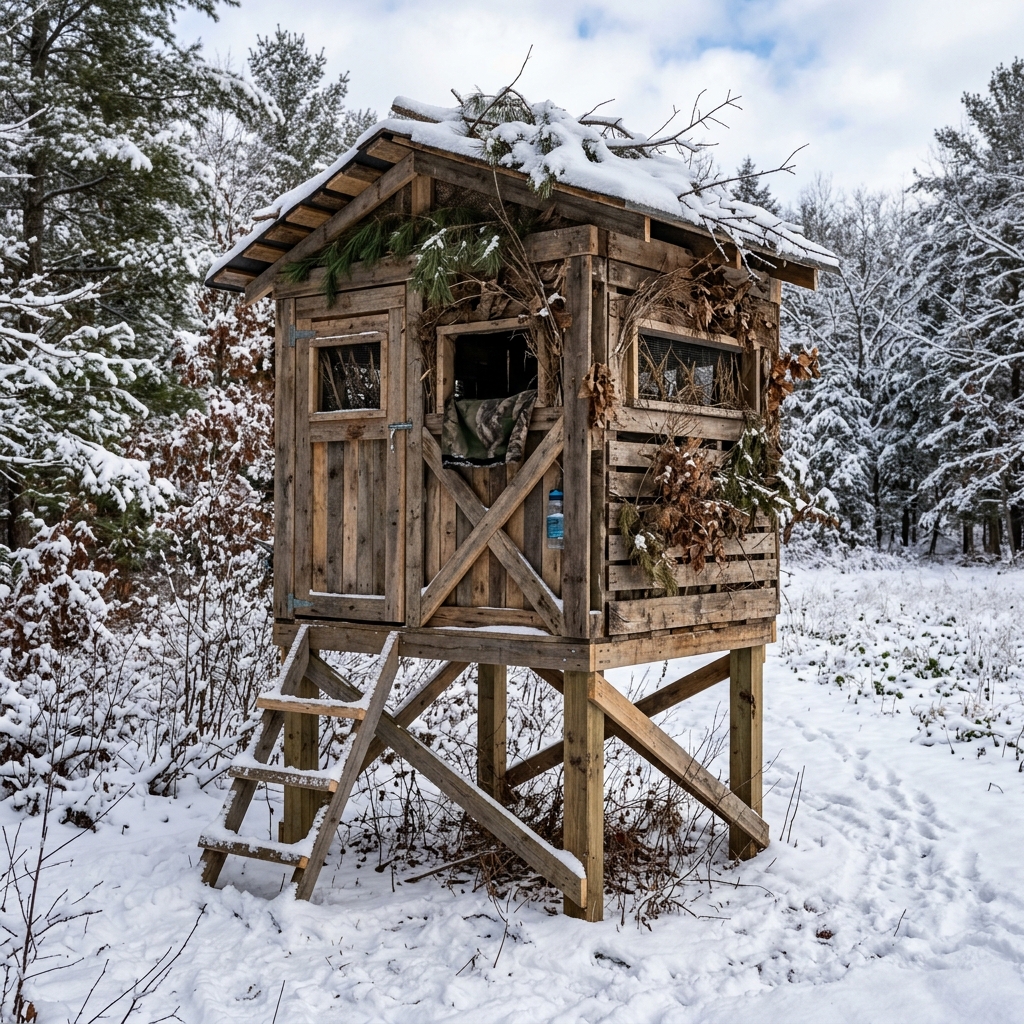
DIY Pallet Deer Blinds: How to Build a Cheap, Permanent Hunting Box
Build a durable DIY pallet deer blind: foundation, walls, roof pitch, window concealment, placement timing, and mistakes that educate deer Practical tips.
A hard-sided box blind blocks wind, contains movement, and lets you sit through rain and snow without quitting at 9 a.m. Factory fiberglass blinds can cost well over a thousand dollars. On private ground or a long-term lease, a pallet-built blind can deliver most of the same hunting advantages for scrap lumber and a weekend of work.
This is a ground blind project—not a tower engineering thesis. Built right, it lasts years. Built wrong, it rots, leaks, or tips. Here is a practical build plan, concealment details, placement strategy, and a checklist of mistakes that educate deer.
Why Pallets Work
Standard shipping pallets are roughly modular frames—often near 4×4 feet—already braced for abuse. Screw them together like oversized blocks, skin them, and you have walls faster than stick-framing a shed from scratch.
Ask warehouse or farm-store managers before taking stacks. Avoid chemically suspect pallets when possible; when in doubt, use them for framing you will fully skin and paint, and keep food/gear off raw stained wood.
Materials and Tools Checklist
- Pressure-treated 4×4 or 4×6 ground-contact posts/joists
- Cinder blocks for elevation
- 3/4-inch exterior plywood or OSB for floor and skin
- Exterior deck screws (3-inch for framing)
- Corrugated metal or EPDM for roofing
- Landscape fabric or house wrap (optional under-skin)
- Exterior paint (flat dark interior; earth-tone exterior)
- Scrap carpet for the floor
- Hinges and latch for a quiet door
- Basic saw, drill, level, square, stapler
Optional: cheap shelf brackets for a bow hook, battery lantern mount, and a small shelf for a heater where safe and legal.
Foundation and Floor
Never set untreated wood on dirt.
- Level a pad; place cinder blocks.
- Set treated joists on blocks so the floor sits ~6 inches above soil.
- Deck with 3/4-inch exterior plywood.
- Staple scrap carpet to kill boot noise and dropped-gear clanks.
A squeak-free floor matters more than fancy siding. Quiet shifts equal more shot opportunities when a buck hangs up at 30 yards.
Walls: Framing With Pallets
Stand pallets upright on the floor platform. Screw adjoining edges with long exterior screws. Corner bracing prevents racking in wind.
Sizing.
- 4×4 footprint: solo rifle or crossbow hunter
- 6×6 footprint: two hunters, youth mentor sit, or camera tripod space
Leave a framed door opening on the downwind or least-visible side relative to deer approach—not necessarily the “pretty” side facing the field.
Skinning, Weatherproofing, and the Black-Hole Interior
Pallets have gaps. Skin the exterior with plywood, barn wood, or corrugated tin. On a budget, heavy landscape fabric or house wrap buys time but needs UV protection and eventual hard skin.
Interior: paint everything flat matte black. Wear dark clothing. From outside, the window should look like a void—not a face in a bright box.
Exterior: dull earth tones or natural weathering. Avoid glossy paint that flashes sun.
Seal seams where wind and light leak. Light leaks educate deer as fast as movement.
Roof and Windows
Roof pitch. Never build perfectly flat. Raise the front wall ~6 inches over the rear for a lean-to pitch. Sheath with plywood; cap with continuous metal or EPDM. Overhang the drip edge so water does not soak wall tops.
Windows. Cut horizontal slots—about 8–12 inches tall and limited width—rather than picture windows. Multiple small openings beat one giant silhouette hole. Add simple plywood shutters or black mesh you can open quietly.
Shooting rest. A padded interior shelf under the window steadies rifles and crossbows and reduces exposed movement.
Placement: Where DIY Blinds Shine
Pallet blinds excel on field edges, food-plot corners, and late-season ag transitions where wind and cold punish open stands. They also help with scent containment if seams are tight—but they are not magic. Still play the wind.
Build in July–August when possible so lumber smell, paint, and human traffic fade before season. Fresh OSB glue stink in October is a deer-repellent.
Leave brush and grass around the base. A naked plywood cube on a dirt pad looks wrong; a weathered box tucked into a hedgerow looks like farm clutter.
For complementary cover ideas on small properties, see strategies for hunting small woodlots and poor man food plots.
Transport and Assembly Strategy
Do not build the finished blind in the driveway and expect to drag 400 pounds intact through a gate. Pre-fit wall panels at home, haul flat sections by truck or UTV, and final-screw on site.
If you share the property, label the blind and agree on hunting rotation so one person does not burn the spot daily. Overhunting a permanent blind is the fastest way to make it a midday deer void.
Safety and Structural Limits
Ground only unless you are qualified. Elevating a heavy plywood pallet box on a homemade tower is a collapse and tip hazard. If you want height, buy engineered systems or hire carpentry that meets real loads and wind.
Heaters. Follow manufacturer clearance rules. Carbon monoxide kills in tight blinds—vent properly or use safe catalytic options designed for enclosed spaces.
Entry noise. Oil hinges. Soft-close the door. Practice shouldering the gun without scraping the window sill.
Stand hunters still need harness habits when using nearby trees; blinds do not replace tree stand safety education for the rest of your setups.
Common Build Mistakes
- Floor on dirt → rot in two seasons
- Flat roof → ponding and collapse risk
- Huge windows → silhouette city
- Bright interior → face glowing at dawn
- Building in October → odor and avoidance
- No carpet → every boot squeak announced
- Facing the door into the primary deer approach
Maintenance Checklist Each Summer
- Tighten screws and re-brace corners
- Patch roof leaks
- Touch up interior black paint
- Trim shooting lanes without scalping all cover
- Check for wasp nests and mice damage
- Verify the blind still sits level after frost heave
Hunting the Blind: First-Season Tactics
A new blind is a visual question mark for deer. Brush the exterior with local cedar, corn stalks, or native grasses so outlines break up. Leave a soft perimeter of weeds—do not mow a manicured pad that screams “human project.” Hunt it on perfect winds first, and do not burn it three evenings in a row after every truck drive-by.
Inside, minimize shine: no glossy phones, no white coolers visible through windows. Keep shutters closed until deer are in range, then open only the shooting window you need. Practice shouldering the gun or drawing the bow without scraping plywood. Felt pads on shelves and rest edges pay for themselves on frosty mornings.
For bowhunters, confirm you can draw seated without limb tip contact. Mark a quiet foot stance on the carpet so you do not reinvent footing when a buck appears.
Comfort Upgrades That Stay Quiet
- Shelf for binoculars and rangefinder
- Hook for release or gloves
- Dark curtain behind you if a rear window exists
- Dry floor mat for wet boots
- Small gear crate that does not rattle
Skip bluetooth speakers and clanking metal chairs. A quiet cloth camp chair beats a folding lawn chair that pops every time you lean.
Long-Term Land Use
Rotate blinds if you manage multiple corners so deer do not pattern a single plywood box. On shared leases, write a simple schedule. Permanent blinds concentrate pressure—use that honestly. Pair the blind with unpressured sanctuary cover nearby so deer still feel safe on the property after they leave the food.
Condensation, Mold, and Off-Season Care
Tight blinds collect moisture from breath and wet boots. Crack a shutter after hunts when rain is not blowing in. In spring, open the door on dry days, sweep out droppings, and check for mold on carpet scraps. Replace soaked OSB floor panels before they soft-rot the joists you carefully elevated off soil.
Inspect screw heads for rust and re-drive any that backed out in freeze-thaw cycles. Trim vines that silently close shooting windows over summer. A one-hour August maintenance visit prevents the September surprise of a warped door and a wasp condo above your shooting shelf.
Frequently Asked Questions
Can I elevate a pallet blind on a tower? Only with proper engineering. Most DIY hunters should keep pallet blinds on the ground. Weight and wind leverage are easy to underestimate.
How do I move it later? Build in panelized sections with screws, not glue-only joints, so you can relocate. Design for disassembly from day one if your lease is unsure.
Do deer care about new lumber smell? Yes. Build early, let it weather, and minimize visits after construction until season.
Is a pallet blind good for bowhunting? It can be, if windows allow a clean draw and you can shoot seated accurately. Practice from the blind. Many bowhunters still prefer stands for maneuverability—use what you shoot best.
What about public land? Permanent structures are often illegal on public land. This project is for places you have permission to build.
How long will it last? A elevated treated floor, pitched metal roof, and basic upkeep can last a decade or more in many climates.
A pallet blind is a comfort tool and a concealment tool—not a substitute for wind, access discipline, or patience. Build it early, paint it dark inside, and hunt it like a limited resource.
Wildsnap • Open beta
Join Wildsnap and try the beta
In the open beta, you turn trail-cam data into actionable insights—free, fast, and simple.
No credit card