
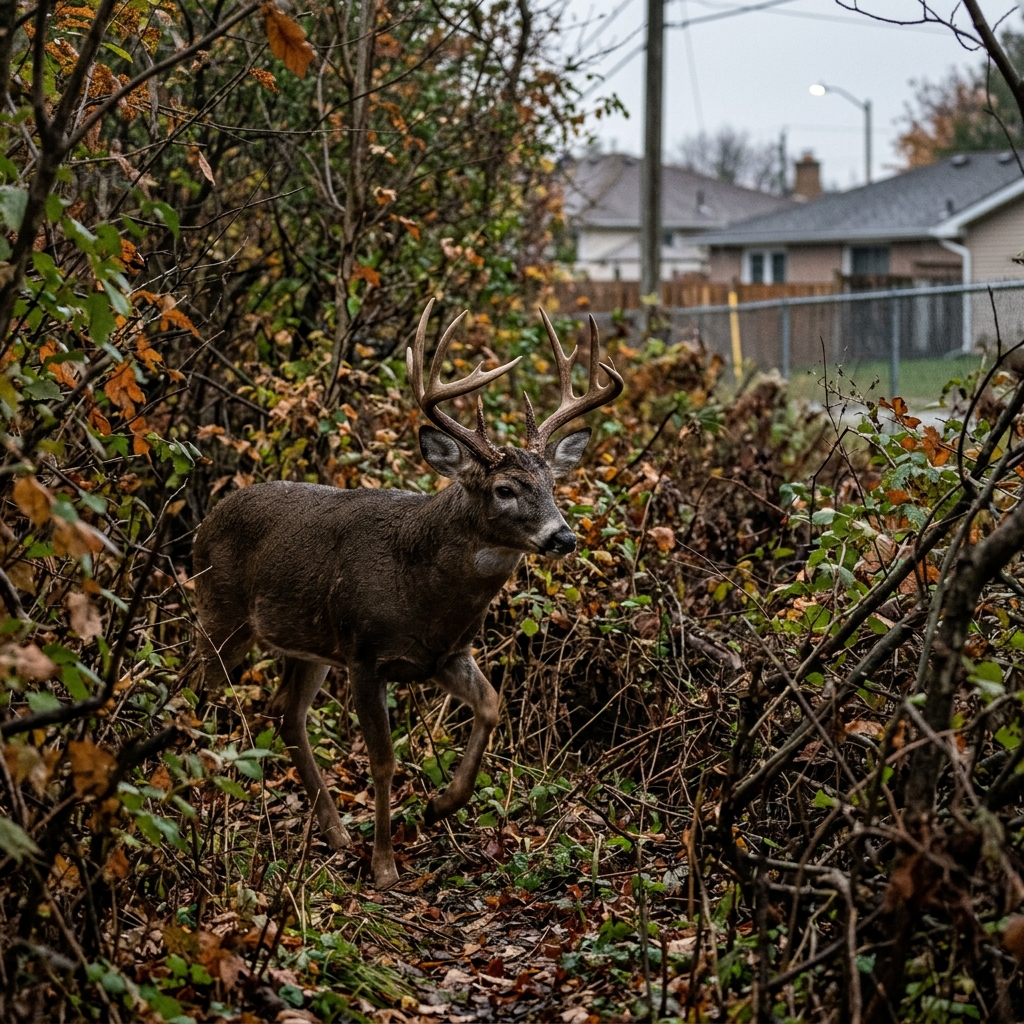
Strategies for Hunting Small Woodlots: The Tactical 10-Acre Advantage
Hunt fragile 5–10 acre woodlots without burning them: sanctuary rules, perimeter entry, blow-off winds, and low-frequency sits that hold mature bucks.
Open any major hunting show and you will see sprawling 500-acre leases in Iowa. That is not reality for most eastern hunters. Most of us hunt small parcels—the 5-acre woodlot behind a subdivision, or a thick 10-acre creek bottom pinched between two cornfields.
These “micro parcels” can be goldmines for mature bucks, but they are also fragile. One swirling wind, one noisy entry, or one over-hunted week can burn the entire property for the season. Hunting small woodlots requires a surgical approach: fewer sits, smarter access, and absolute respect for the sanctuary.
Why Small Woodlots Hold Mature Bucks
On a 500-acre farm you hunt herd dynamics. On 10 acres you are hunting a hub—a destination bed, a pinch point, or a travel corridor that connects larger timber blocks.
Mature bucks often prefer small, overlooked tracts because:
- Neighboring pressure pushes them into the quietest pocket available
- Creek bottoms and brushy edges provide food and cover in a compact footprint
- Human traffic is lower when the parcel looks “too small to hunt”
The tradeoff is capacity. A 10-acre woodlot might support one or two daylight bucks at a time. Educate them once, and the daylight pattern collapses for weeks.
The Sanctuary Mindset
Can you kill a mature buck on 5 acres? Yes—if you change how you use the ground.
Golden rule: treat the center of the woodlot as an absolute sanctuary. Never walk through the middle. If a mature buck decides your 5 acres is the only place in the county where he will not smell a human, he will daylight-bed there.
Practical sanctuary rules:
- Hunt edges and downwind fringes only
- Leave the thickest core uncut and unwalked from August through January
- Hang stands from the perimeter so approach never crosses bedding cover
- Limit daylight intrusion to setup days and recovery
Think of the woodlot as a spare bedroom, not a living room. You visit rarely, quietly, and only when conditions are perfect.
Low-Impact Entry and Exit Routes
On a small property, your path to the stand matters more than the stand location. If a deer hears you or crosses your scent trail before daylight, the hunt is over before you climb.
The perimeter walk is non-negotiable:
- Access stands along property lines, not interior trails
- Use paved roads, manicured lawns (with permission), ditch banks, or creek beds to hide ground scent and foot noise
- Exit the same way you entered—never cut through the middle after dark
Time your walks. Arrive 45–60 minutes before legal light so you are settled before the thermal shift. Leave after full dark when possible, or wait until deer have cleared the food edge before climbing down.
Strict Wind and Frequency Rules
A 10-acre parcel is tiny. A wrong wind blankets the entire footprint with human odor in minutes.
Blow-off wind only. Wait for a wind that carries scent off your property into pasture, a road, a pond, or open ag where deer are not bedding. If the wind dumps scent into the sanctuary core, stay home.
Low-frequency hunting. Do not hunt your best stand every day. Cap micro-parcel sits at 2–3 times per week, and only on cold fronts, perfect winds, or high-probability rut windows. Skipping days is a tactic, not laziness.
Track every sit in a notebook: date, wind, sit length, deer seen. After three blank sits on the same stand, rest that tree for at least a week.
Stand Placement on Micro Parcels
You rarely need five stands. Two well-placed trees cover most 10-acre parcels.
Prioritize:
- Funnels: fence corners, creek crossings, ditches, and brushy fence lines
- Edge bedding: the first 30–40 yards of thick cover off a field
- Exit trails: trails leaving food at first light (morning) or entering food at last light (evening)
Stay 15–25 yards off primary trails so you can draw without being sky-lined against open ground. On tiny parcels, a slight elevation change—even 8–10 feet of bank—beats a flat tree in the open.
For scent-aware setups that pair well with small-woodlot pressure management, see whitetail scent control. Early-season timing on fragile ground also benefits from the tactics in early season whitetail tactics.
Food, Cover, and Habitat on Limited Acres
You cannot plant 40 acres of brassicas on a 8-acre woodlot. Scale habitat to the parcel:
- Plant a 0.25–0.5 acre food plot on the edge, not in the core
- Hinge-cut a few low-value trees along the perimeter to thicken edge cover
- Leave deadfalls and briars in the sanctuary—do not “clean up” the bedding
- Maintain one quiet mineral or water feature on the fringe if legal and low-impact
If you want inexpensive attraction without burning the sanctuary, poor man’s food plots scale well to micro parcels.
Property Line Safety and Neighbor Relations
If you shoot a deer on 5 acres, it often crosses a fence before expiring. Plan for that before opening day.
- Introduce yourself to neighbors before the season
- Exchange phone numbers and clarify recovery permission
- Mark boundaries with GPS and visible posts so you never shoot across a line
- Never trespass with a weapon to recover a deer—call first, then follow local law
Ethics and optics matter on small tracts. A respectful recovery conversation keeps access open for years; a fence-jump with a rifle ends leases overnight.
Camera Intel Without Burning the Spot
Trail cameras help—but only if you do not check them like a mailbox. On small woodlots, over-checking is the fastest way to educate daylight bucks.
Hang cameras on the perimeter (field edges, fence crossings, scrape lines off the core) and check them infrequently. Cellular units let you stay out of the timber entirely. For placement and data discipline, see trail camera placement during the rut and managing trail camera data.
Rule of thumb: if walking to a camera requires cutting the sanctuary, do not hang it there.
Seasonal Playbook for Micro Parcels
Small woodlots reward different tactics as the calendar moves. Force-fitting a November all-day rut sit into a sweltering September evening is how you educate every doe on the tract.
Early season (Sept–early Oct): Prioritize evening sits on the fringe of soft mast, ag edges, or a tiny food plot. Keep walks under 10 minutes. One or two carefully timed cold fronts beat a week of average sits. If bachelor groups are still visible, glass from outside the timber before you ever hang a stand in the core.
Pre-rut (mid–late Oct): Scrapes and rub lines on the perimeter become useful. Hunt the first cold snap that aligns with a blow-off wind. This is often the highest-odds window on a micro parcel because bucks daylight travel edges without yet being fully nocturnal from pressure.
Peak rut: Resist the urge to sit daily. Mature bucks may cruise through your 10 acres in a 20-minute window. All-day sits are justified only on perfect winds after a temperature drop. Otherwise, pick the best half-day and leave the sanctuary quiet the rest of the week.
Late season: Food dictates everything. If your woodlot holds thermal cover next to a remaining grain field or cut corn, evening fringe sits return. If the parcel is pure timber with no destination food, you may be better off resting it and hunting elsewhere until a snow locks deer into the thickest cover you own.
Write the plan on a single page before opener: which two stands, which winds, which months. Then follow it when excitement tries to rewrite the rules.
Pressure Accounting: How to Know You Are Overhunting
Burnout rarely announces itself with a single spooked buck. It shows up as a slow slide:
- Daylight camera hits on the edge drop by half within 10 days
- Does start circling downwind of your stand tree before committing
- Fresh scrapes go cold except after midnight
- You bump deer on entry that “were never there before”
When two or more of those appear, shut the parcel down for 7–14 days. Hunt other ground, fix access routes, or wait for a weather event strong enough to reset movement. Micro parcels recover if you let them; they do not recover if you “just check one more sit.”
Keep a simple sit log with wind, duration, and deer observed. Patterns in the log are more honest than memory after a blank weekend.
Gear Minimalism for Tiny Tracts
You do not need a mobile saddle kit and six hang-ons for 8 acres. Overbuilding stands creates more setup intrusion than the property can absorb.
Practical kit:
- Two fixed hang-ons or lock-ons on opposite wind needs
- One lightweight climber or saddle only if you truly rotate fringe trees
- Stick ladders left in place only where neighbors and regulations allow
- A quiet pack with pull-up rope—no rattling hangers on every tree
Set stands in the off-season or during midday heat in early September, then leave them alone. Every “quick adjust” walk in October costs daylight credibility you cannot buy back with scent spray.
Frequently Asked Questions
How many times can I hunt a 10-acre woodlot per week? Most parcels tolerate 2–3 well-timed sits per week on perfect winds. Daily hunting usually collapses daylight use within 7–10 days.
Should I hunt mornings or evenings on small woodlots? Evenings are safer for entry because you can approach from open ground while deer are still bedded. Mornings work only with backside entry that never crosses food or bedding.
Where should I place my best stand? On the downwind fringe of the thickest cover, covering a funnel or trail that connects food to the sanctuary—never in the middle of bedding.
Do food plots help on micro parcels? Yes, if they stay on the edge. A small edge plot can concentrate evening movement without inviting you into the core.
What if my neighbors hunt hard next door? Pressure next door can push bucks onto your quiet acres. Protect that advantage with low frequency and blow-off winds rather than hunting more.
Small woodlots reward discipline more than acreage. Protect the sanctuary, enter from the edge, hunt only perfect winds—and a 10-acre tract can punch far above its size.
Wildsnap • Open beta
Join Wildsnap and try the beta
In the open beta, you turn trail-cam data into actionable insights—free, fast, and simple.
No credit card