
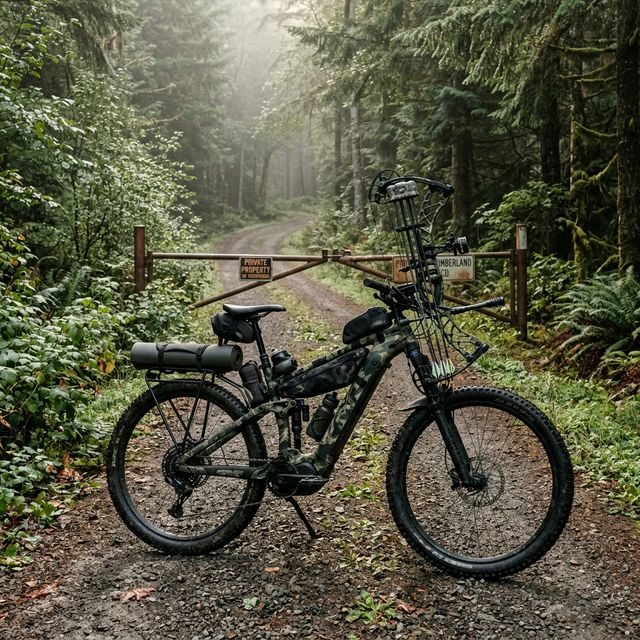
E-Bikes and Stealth Access: Revolutionizing Public Land Hunting
Fat-tire e-bikes cut sweat scent and boot tracks on public land. Learn motor class rules, quiet access tactics, battery safety, and legal ride limits.
In the last decade, camouflage fat-tire hunting e-bikes moved from novelty toys to serious tools for public-land hunters. The real advantage is not bragging about miles covered. It is arriving cool, quiet, and with almost no boot scent on the ground between the truck and your stand.
Most hunting pressure dies within the first half-mile of a parking lot. Mature bucks learn that pattern by October. An e-bike lets you ride past that zone—often 2 to 5 miles—without turning the walk-in into a sweat-soaked scent trail. Used legally and with discipline, it is one of the strongest access multipliers available to DIY hunters who refuse to compete for the same easy timber everyone else sits.
Why E-Bikes Beat a Long Walk-In
Traditional access means hiking steep hills or boot-sucking mud with a hang-on stand, sticks, and a daypack. By the time you reach the tree, your core temperature is up, you are sweating through base layers, and every step has crushed vegetation under rubber boots.
That combination hurts you twice:
- Sweat plume: Warm, wet fabric dumps human odor into still dawn air long after you stop moving.
- Ground trail: Boot prints mash leaf litter and soil. A buck crossing that path hours later often detours 40–80 yards downwind.
Throttle or high pedal-assist modes on a 750W–1000W mid-drive let the motor do most of the work. You arrive dry enough that scent-control clothing actually works. Rubber tires leave a far smaller scent signature than boots grinding mud for three miles. On humid 70°F September openers, that difference alone can decide whether a staging buck walks your trail or loops around it.
Pair this access mindset with low-impact scouting habits from summer velvet buck scouting so you are not burning daylight miles just to “look around.”
Mid-Drive Quiet vs Hub Motors
Not every e-bike is equally stealthy. Mid-drive motors (mounted at the crank) tend to run quieter and deliver torque where climbing matters. Hub motors can work, but many produce more high-frequency whine that carries in still timber—especially at low speeds when you are creeping.
Deer react hard to the stop-start cadence of a walking human—leaf crunch, pause, crunch. A continuous tire roll is closer to distant farm noise or highway hum. In practice, hunters routinely ride within 40–60 yards of bedded does that watch the bike pass without bolting, provided you keep speed moderate and avoid sudden braking on gravel.
Practical quiet tips:
- Drop tire pressure slightly on soft leaves (within sidewall limits) to cut slap and improve grip.
- Tape loose straps and hangers so nothing ticks against the frame on every pedal stroke.
- Walk the last 50–100 yards if the final approach crosses a known bedding edge.
- Avoid riding metal cattle guards and frozen puddles at dawn—those cracks carry farther than tire whir.
Legal Reality: Motorized Rules Still Apply
The biggest failure mode with hunting e-bikes is legal, not mechanical. Many federal and state managers classify e-bikes as motorized vehicles—same category as ATVs—especially Class 2 and Class 3 throttle or high-speed assist bikes.
That means:
- Locked gates and signed non-motorized trails are often off-limits.
- Some wilderness and wildlife areas ban e-bikes entirely.
- Fines can include confiscation of a multi-thousand-dollar bike plus license points.
Before you unload, call the local ranger district or check the current motorized-use map for that unit. Class labels matter:
- Class 1: pedal-assist only, typically capped near 20 mph
- Class 2: throttle assist, typically capped near 20 mph
- Class 3: pedal-assist to higher speeds (often ~28 mph)
Local rules change by forest, WMA, and county. Do not assume “quiet” equals “legal,” and do not trust last year’s forum post.
Water access remains another legal stealth option when bikes are restricted—see kayak and canoe access hunting.
Route Planning for Scent and Pressure
Ride like a hunter, not a tourist. Plan routes that keep you downwind of bedding when possible, and park the bike on the lee side of your stand tree so you are not walking a loop that blows scent across the trail.
Build a simple access plan:
- Truck to bike drop: Short, legal staging spot with cover from other hunters’ headlights.
- Bike corridor: Old logging road, designated trail, or open gas line where riding is allowed.
- Final stalk: Soft dirt or creek edge for the last silent yards.
- Exit: Same path in reverse unless wind flips; never cut new boot trails through bedding after dark.
On swamp or bottomland properties, combine bike miles on high ground with wading or boat segments where needed—tactics that overlap with swamp buck tactics and hunting river bottoms and creek crossings.
Time your rides. Arriving 70–90 minutes before legal light beats rolling in 20 minutes early and slamming a stand while deer are already on their feet.
Battery, Cold, and Fire Safety
Hunting e-bikes run large 48V or 52V lithium packs. Treat them like fuel, not phone batteries.
Key rules:
- Never leave a pack baking in a truck bed on a 95°F scouting day.
- Avoid cheap unattended trickle chargers for days at a time.
- Store packs around room temperature; charge on a non-flammable surface away from exits.
- In deep cold, keep the pack insulated against your body on the ride in, then remount it at the stand if your model allows easy removal.
- Carry the charger only if you overnight near the truck; do not cook a pack in a tent vestibule.
Thermal runaway fires are rare but severe. Water alone may not stop a lithium fire. Know your exit path at camp and never charge a damaged, swollen, or dropped pack.
Expect range loss of 20–40% in freezing weather and on steep climbs with a loaded rack. Plan round-trip miles plus a 30% reserve so you are not pushing a dead bike out at midnight.
Load-Out: Stand, Pack, and Bike Balance
A hunting e-bike only helps if it stays upright under gear. Mount stands and sticks low and centered. Soft bags beat swinging hard cases. Aim for a setup you can stop and stabilize with one foot on soft ground without the front wheel washing out.
Suggested field checklist:
- Spare tube or plug kit, mini pump, multi-tool
- Headlamp plus backup light (night exits are when most wrecks happen)
- Light tow strap for short drag assists on hardpack only
- Printed map/compass backup if you ride beyond cell coverage
- Small first-aid kit and a charged phone in an inner pocket
For deeper remote setups, keep a recovery plan that matches expert blood trailing tips—an e-bike can get you to a hit site fast, but you still mark blood carefully and avoid riding over the trail. If overnight recovery becomes necessary, know meat spoilage limits before you celebrate.
When to Leave the Bike Behind
E-bikes are not universal. Leave them when:
- Regulations ban motorized access on your approach
- The final 200 yards are too rooty or muddy to ride without noise
- You are hunting a micro sanctuary where any mechanical sound is a liability
- Ice, deep snow, or frozen ruts make crash risk higher than walking
- Other hunters are stacked on the same legal trail and your bike advertises a honey hole
In those cases, a shorter walk from a legal bike cache still beats a full hike from the lot. Cache the bike flat and covered so it is not a neon billboard for your stand.
Sharing Trails and Hunter Conflict
E-bikes create social friction on busy public land. Ride courteously: yield to hikers, keep speeds down near other hunters’ trucks at dark, and do not announce your remote pin by leaning a lit-up bike on the trail. If a corridor is already crowded, pick another ridge—your advantage is mobility, so use it to leave pressure behind instead of stacking on the same saddle.
When packing out, short bike-assist drags on hard roads are fine; riding through someone’s hunt at last light is not. Communicate if you share a parking lot with friends, and stagger exit times so headlights and motors do not educate every deer on the mountain at once.
Maintenance Between Hunts
Mud seasons destroy drivetrains. After wet rides, wipe the chain, check brake pads packed with grit, and inspect spokes before the next steep descent with a stand on the rack. A mechanical failure three miles deep turns a stealth tool into a liability. Keep a small parts kit in the truck: links, pads, and the specific multi-tool your bike needs so you are not inventing repairs with a skinning knife.
Frequently Asked Questions
How far should I ride past the parking lot?
On pressured public land, 1.5 to 3 miles past the main lot often clears day-hunter traffic. Beyond 5 miles, logistics (pack-out, daylight, battery reserve) start to dominate. Match distance to your recovery plan, not ego.
Are e-bikes quieter than walking?
Usually yes for continuous motion. Walking cadence is a predator cue. Keep speeds steady, avoid chain slap, and dismount before the last approach if deer bed tight to your stand.
Will tire tracks spook deer?
Tire tracks are less alarming than boot scent and crushed vegetation. Fresh mud ruts can still tip off other hunters. Use existing corridors when possible and avoid cutting new lines across soft meadows.
What battery range do I need?
Plan for round-trip plus 30% reserve. Cold weather and hills cut range hard. A 15–25 mile rated pack often becomes 8–12 real hunting miles with gear and elevation.
Can I drag a deer with an e-bike?
Short distances on firm roads, sometimes. Soft mud and steep grades tip bikes and damage packs. Prefer quartering and sleds; treat the bike as access first, recovery second.
Used legally, an e-bike is a sweat-and-scent mitigator that opens miles of overlooked timber. Glide past the parking-lot zone, walk the last quiet yards, and leave the sanctuary looking undisturbed.
Wildsnap • Open beta
Join Wildsnap and try the beta
In the open beta, you turn trail-cam data into actionable insights—free, fast, and simple.
No credit card