
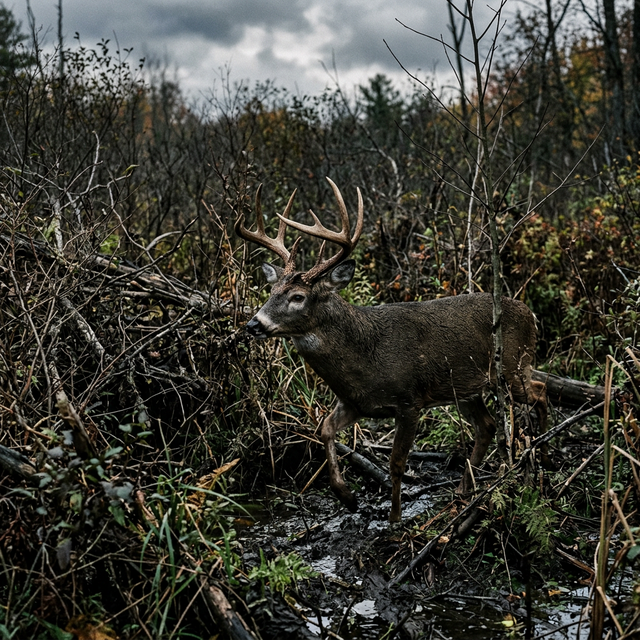
How to Hunt Persimmons and Soft Mast: The Early Season Sugar Rush
Hunt persimmons, apples, and soft mast when sugar peaks. Find homestead orchards, read drop sign, and set stands for the short early-season fruit window.
Early season, many hunters walk ridges hunting the mythical mother oak. Acorns matter—but mature whitetails also hammer soft mast: persimmons, wild apples, pears, plums, and pawpaws. These foods are short-lived and intense. A single heavy persimmon can outdraw a whole bean field for 7–14 days.
If you can find fruit that is actively dropping, you can sit a 20-yard kill zone while other hunters stare at empty field edges.
Soft Mast Biology: Why Deer Switch
Soft mast is high sugar and easy to digest. Compared with tannin-rich red oak acorns, ripe fruit is candy.
Persimmons lead the category across much of the South and Midwest:
- Unripe fruit is loaded with astringent tannins—deer avoid it
- A cold snap or light frost breaks down tannins and converts starches to sugars
- Fruit turns soft, wrinkled, and deep orange when ready
Once ripe fruit hits the ground, bucks often abandon soybeans to monopolize a productive tree. Apples and pears follow similar “drop windows,” sometimes staggered by variety.
For the broader mast calendar, pair this with locating fall food sources.
Where Soft Mast Actually Grows
Soft mast needs sun. It rarely thrives under closed big-timber canopy.
Pin these micro-habitats while e-scouting:
- Abandoned homesteads — stone foundations, old lanes, rusted equipment often mark buried orchards
- Fence rows and field edges — birds sow persimmons along sunny edges and logging roads
- Riparian strips — plums and pawpaws favor moist creek soils
- Old pastures reverting to timber — scattered apple survivors in mixed brush
Walk them in late summer before season. Mark trees that are loaded, not merely present. One heavy tree beats ten light ones.
Homestead edges overlap with hunting abandoned homesteads and orchards.
Reading the Drop: Sign That Means Hunt Now
Do not stare at leaves—read the dirt under the drip line.
Kill-zone evidence:
- Orange “splat” stains and mashed pulp
- Fresh tracks and turned leaves in a tight circle
- Scat packed with seeds and skins
- Coyote or fox scat full of fruit (predators key on the same buffet)
If pulp is brown, dried, and ignored while a tree 80 yards away is wet with fresh drop, move. Soft mast hunts are tree-specific and day-specific.
Stand Placement and Bedding Distance
Because food is concentrated under one canopy (~20-foot radius), bucks often bed close—sometimes within 60 yards—listening for the next fruit hit.
Stand rules:
- Hang 15–25 yards downwind of the drip line, not in the middle of the fruit
- Clear one quiet shooting lane; do not mow the whole understory
- Expect movement in afternoon/evening first; mornings can work if beds are close and wind is perfect
Staging ideas from early season whitetail tactics apply: intercept the buck before dark field exposure.
Entry and Exit Without Blowing the Tree
The classic failure is walking under the fruit tree at 2 p.m. on the way to the stand. You bump the daylight buck bedded just off the drop.
Do this instead:
- Approach from extreme downwind, looping wide of the drip line
- Use a creek, ditch, or raked path for the last 100 yards
- Never cross the feeding circle until after the hunt when extracting gear
- Limit sits—two carefully timed evenings beat five lazy ones
Quiet access mindset matches e-bikes and stealth access when legal roads get you near homestead edges without a long noisy hike.
Soft Mast vs Acorns: Timing the Hand-Off
Typical pattern in many regions:
- Late August–early October: soft mast peaks locally
- Mid-October: white oak drop often steals the show
- After white oaks taper: red oaks, leftover fruit, and crops
When cameras on your persimmon go quiet but oak flats light up, shift—do not romanticize last week’s hotspot. The October lull is often just this food transition.
Public Land Soft Mast Strategy
On public dirt, fruit trees near easy trails get pounded. Rank targets by access friction:
- Trees requiring a creek crossing or long ridge walk
- Homestead remnants off the main logging road
- Clusters of persimmons along unused right-of-ways
Scout midday midweek. Hunt the first cold front after a heavy overnight drop.
Camera and Observation Protocol for Fruit Trees
Soft mast windows are short, so intelligence must be fast and low-impact.
- Hang a cellular camera 10–15 yards off the drip line aimed at the trail, not the trunk
- Glass from a distance at last light before you commit a stand hang
- Recheck pulp color: wet orange means hunt; dry brown means move
- Log which nights bucks arrive relative to temperature drops
- Note competing foods within 200 yards that could steal deer overnight
If multiple fruit trees compete, rank them by sign freshness every 48 hours. Squirrels can strip a light crop overnight and leave you hunting a memory. When a cold front is forecast, prioritize the tree with the most unfallen ripe fruit still in the canopy—tonight’s drop will refresh the buffet.
Public Land Etiquette Around Homesteads
Abandoned homestead orchards attract hunters. Arrive midweek, hang discreet stands, and do not cut every sapling for lanes. Leave gates as you found them on leased edges, and never assume ruins equal free camping. If someone is already on the hottest tree, shift to the second-best fruit 200 yards away rather than stacking pressure and educating every buck on the farm.
Carry out trash others leave near foundations. Clean orchards stay quieter and draw less non-hunting traffic. A little stewardship keeps soft-mast spots huntable longer than any camo pattern will.
Timing Cold Snaps and Overnight Drops
Soft mast hunts are weather hunts. A 15–20°F overnight drop after warm days often triggers heavy fruit fall. Be ready to hang or hunt within 24 hours of that event. If you wait a week, squirrels and early pressure may empty the circle.
Build a short list of three trees ranked by crop load in August. When the front hits, start at number one only if wind and access are clean; otherwise jump to number two without mourning. The hunters who fill early season tags on fruit are decisive, not sentimental.
Also watch competing attractants. A neighbor’s apple orchard or a honey locust flat can steal your buck on alternate nights. Cameras on both features for three nights will tell you which buffet is winning. Hunt the winner; scout the loser for next front.
Shot opportunities under fruit are often 12–25 yards and quick. Practice kneeling and seated shots. Bucks feed with heads down; wait for the quartering-away angle and a clear rib window through brush. A rushed frontal poke under a tree is how early season turns into a long blood trail.
Gear Tweaks for Fruit Hunts
Early fruit sits are warm, buggy, and short-range. Lightweight stands, short sticks, and a quiet release matter more than late-season arctic gear. Treat clothes for ticks, pack electrolytes, and keep a small pruning saw for one shooting lane only.
Rangefind the drip line and primary trail before the hunt so you are not fumbling when a buck appears at 18 yards with his head behind a branch. Set a mental floor: no shots through fruit clusters that deflect arrows. Wait for the clear rib window even if he is “right there.”
After a kill under soft mast, move the carcass before night scavengers concentrate on the same sugar smell. Coyotes already know the tree.
Frequently Asked Questions
How long does a persimmon stay hot?
Often 1–2 weeks of peak use, sometimes only a few heavy nights if squirrels and deer finish the drop fast. Check pulp freshness every sit decision.
Do I need a frost before deer eat persimmons?
Frost helps many wild trees, but some fruit ripens and drops with cool nights alone. Trust ground splat and feeding sign over the calendar.
Can I hunt soft mast in the morning?
Yes if beds sit tight to the tree and you can enter without crossing the drop. Many hunters still favor evenings when bucks stage into fruit before dark.
Are cultivated apples as good as wild persimmons?
A loaded abandoned apple can be just as magnetic. Variety and ripeness matter more than “wild vs planted.”
Should I trim shooting lanes in August?
Trim minimally and early so deer habituate. Heavy cutting the day before season educates the exact buck you want.
Acorns build winter fat. Soft mast builds early-season action. Find the sugar, smell the wind, and never walk through the buffet on your way to the stand.
Wildsnap • Open beta
Join Wildsnap and try the beta
In the open beta, you turn trail-cam data into actionable insights—free, fast, and simple.
No credit card