
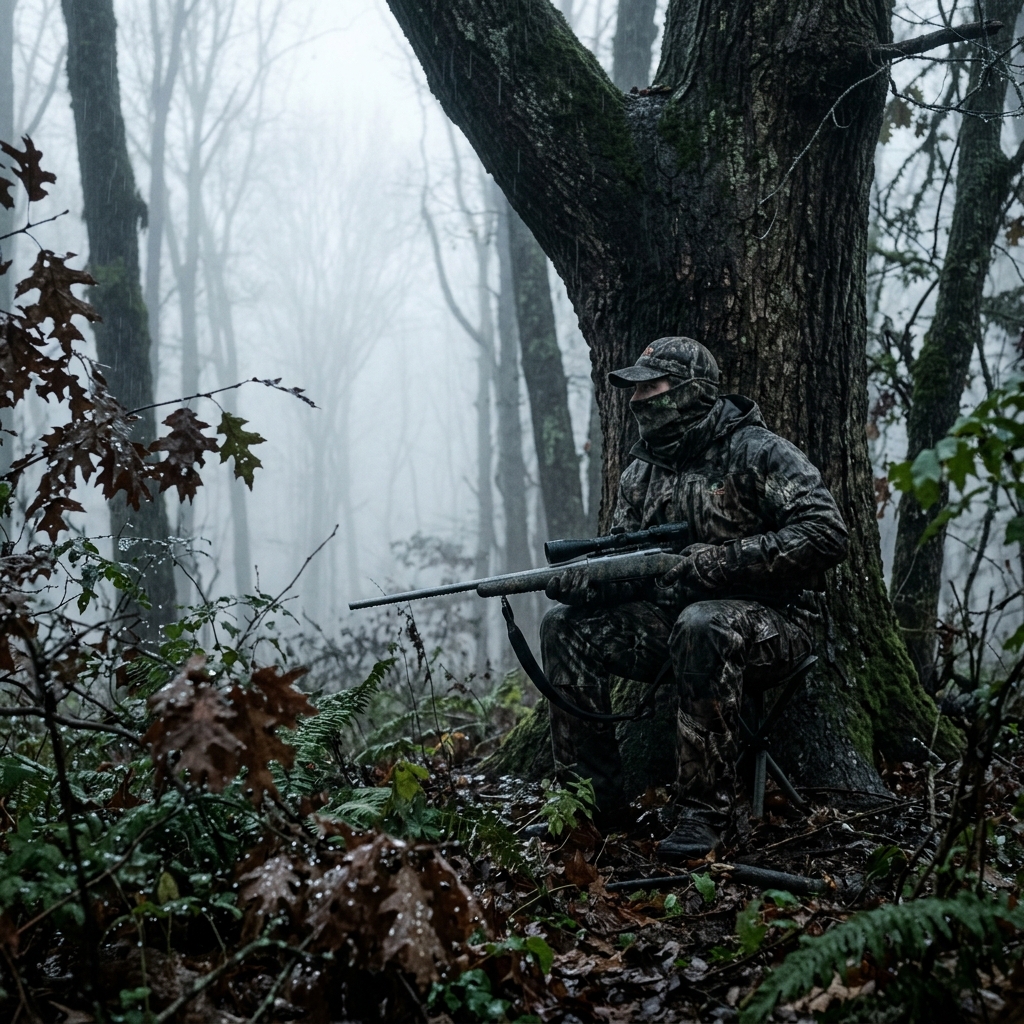
Hunting in Fog and Drizzle: The Ultimate Stealth Advantage
Fog and light drizzle quiet leaves, shrink scent cones, and extend daylight security. Learn stalking tactics, sit timing, gear, and hypothermia prevention.
When mist settles and a cold drizzle starts, many hunters retreat to the truck. That is often when woods go quiet enough to close distance. Fog and light drizzle dampen sound, soften outlines, and change how scent moves—advantages for disciplined still-hunters and stand hunters willing to stay comfortable and safe.
Moisture, Scent, and the “Short Radius”
In dry, breezy air, scent stream downwind in a long cone. In heavy fog and damp stillness, moisture helps odor pool low and cling to wet brush and soil.
Practical meaning:
- Your track may be hot for a dog-like nose on the ground
- Horizontal scent travel can shrink—deer 60–80 yards sideways may never catch you
- A direct downwind deer still wins—fog is not scent-proof
Play wind anyway. Treat fog as a smaller mistake margin, not a free pass. Broader weather strategy: deer activity and weather.
Heavy fog with near-zero wind creates the most compressed scent environment you will hunt in. A buck 40 yards crosswind may not detect you if you move slowly and stay low. But a buck 40 yards downwind still catches you—the moisture does not eliminate scent, it shortens the detection radius.
Thermals still operate in fog, just more subtly. In creek bottoms, cool air pools and holds scent low. On ridges, fog may lift slightly by midmorning and restart normal scent flow.
Acoustic Dampening: Quiet Leaves
November oak leaves sound like amplifiers when dry. Drizzle soaks them into a muffler.
- Footsteps become soft squelches instead of crunch detonations
- Still-hunting through thick cover becomes realistic
- Entry to stands leaves less acoustic wake
Move with deliberate pauses. Wet woods forgive volume more than careless silhouettes on skyline trails. Skill deep-dive: still-hunting and spot-and-stalk.
The acoustic advantage is real but easy to overestimate. Wet leaves are quieter, but snapping a dead branch still sounds like a gunshot in a silent fog pocket. Wet pine needles are nearly silent; wet oak litter is merely quieter—not silent.
Use the acoustic cover for entry and still-hunting, not for careless movement in sight of deer. A buck that cannot hear you may still see your silhouette on a field edge if you rush.
Visual Softening and Shot Timing
Fog rounds hard edges. Your outline in a stand is harder to read. You can sometimes draw or shift with less punch than on a bright bluebird morning—still move slowly.
Challenges:
- Rangefinding through mist can fail or misread
- Depth perception drops; know landmarks at 20, 30, 40 yards before the sit
- Rain covers on optics fog—keep lenses dry and usable
Bowhunters: pick closer maximum yardages in thick fog. Rifle hunters: skip marginal long shots into gray soup.
Pre-range landmarks before the fog rolls in if you can— a distinct stump at 22 yards, a forked sapling at 31 yards. When the rangefinder returns nothing but gray, those landmarks become your shooting references.
Scope covers and bow sights fog from breath and temperature differentials. Anti-fog lens cloths help, but the real fix is lifting covers only when a deer is present. Practice drawing and settling pins with fogged lenses at home so you are not fumbling during the moment.
Delayed Daylight Use of Open Edges
Deer feel safer in fog that mimics visual cover. Bucks may linger on fields, clearings, and hard edges 1–3 hours later into morning than on sunny high-pressure days.
Tactics:
- Stay longer on staging/edge sits after sunrise
- Midmorning still-hunts along timbered field edges can catch late returners
- Evening fog banks often pull early movement into openings
Match this with transition thinking in habitat transition zones.
On high-pressure mornings with dense fog, mature bucks sometimes remain visible on field edges until 9:00 or 10:00 a.m.—long after they would have retreated on a clear day. The visual security of fog overrides the daylight exposure instinct temporarily.
Camera data from foggy mornings often shows this delayed retreat pattern. If your cameras capture bucks on a field edge at 8:30 a.m. during fog events but never past 7:15 a.m. on clear days, adjust your sit duration accordingly.
Evening fog works in reverse: deer may enter fields 30–45 minutes earlier than on clear evenings because the fog bank reduces their perceived exposure. A stand that produces nothing at 5:30 p.m. on bluebird days may see action at 4:45 p.m. when fog rolls in.
Stand vs Stalk: Choosing the Mode
| Condition | Better mode | Why |
|---|---|---|
| Light drizzle + light wind | Either | Quiet access; scent still directional |
| Dense fog + near calm | Still-hunt bedding fringes | Close the distance while sound is dead |
| Fog + strong wind | Leeward stands or cancel | Swirls + poor visibility |
| Hard rain / lightning | Safety first | Wait for the break |
If you cannot see 40 yards, stalking into unknown bedding is how surprise close-range chaos starts. Slow down or sit known funnels instead.
High wind contrasts: high wind whitetail tactics.
The worst combination is dense fog plus gusty wind. Scent swirls unpredictably and you cannot see far enough to stalk safely. On those days, pick a leeward stand on a known funnel and wait—or stay home if visibility drops below 30 yards.
The best combination is light drizzle, light wind, and visibility of 60–100 yards. You can still-hunt with acoustic cover, see far enough to avoid bumping bedded deer, and scent cones stay compressed enough to forgive minor wind mistakes.
Gear That Keeps You Hunting (Not Shivering)
Wet 45°F weather refrigerates you faster than dry 15°F if cotton and leaky shells are involved.
- Waterproof quiet rain shell (face fabric that does not roar)
- Merino or synthetic baselayers—no cotton
- Waterproof boots with spare socks in a dry bag
- Gloves you can shoot in; pack a dry pair
- Lens cloths sealed from rain
Layering systems: cold weather layering.
Hypothermia signs—uncontrollable shivering, confusion, fumbling—mean end the hunt. Pride is a poor insulator.
The 35–55°F wet band is the danger zone most hunters underestimate. You feel comfortable walking in at dawn, then sit still for three hours in drizzle and wind. Core temperature drops because wet fabric conducts heat away from your body five times faster than dry air.
Build a fog-specific kit: quiet rain pants with soft face fabric, a merino base layer you can sit in for hours, and a packable insulating midlayer for when the drizzle stops and wind picks up. Keep one dry base layer in a sealed bag in your pack—swapping a soaked shirt for dry merino at midday can save a hunt.
Hand warmers in jacket pockets keep fingers functional for bow releases and trigger work. Toe warmers inside waterproof boots help on long sits, but only if your boots are truly waterproof—warmers in wet socks do nothing.
Safety Specifics for Fog Hunts
- Mark entry/exit with GPS breadcrumbs; fog erases landmarks
- Wear required blaze where law demands—fog is when other hunters also creep
- On public land, call out if you hear close footsteps; do not assume every crunch is a deer
- Metal stands in electrical storms: climb down early
- Creek crossings swell in prolonged drizzle—plan alternate exits
Fog disorients even experienced hunters. A creek bottom you have walked fifty times becomes unfamiliar when visibility drops to 40 yards. Drop GPS breadcrumbs at every trail junction on the way in, and follow them out even if you think you know the route.
On public land, fog increases encounter risk with other hunters. Everyone is still-hunting because conditions are perfect for it. Wear blaze orange where required, and verbally identify yourself if you hear nearby movement. “Hunter here” beats a snap shot at a gray silhouette.
Tree stands and metal climbing sticks conduct electricity. If thunder accompanies the drizzle, climb down immediately and wait in a low ground location—not under the tallest tree on the ridge.
Frequently Asked Questions
Is heavy rain as good as drizzle? Usually not. Hard rain suppresses movement; light drizzle often enhances stealth and keeps deer on their feet.
Do I need different camo in fog? Pattern matters less than outline and movement. Break your shape; avoid skyline silhouettes.
Will fog ruin my trail cameras? Moisture can cause false triggers and lens droplets. Aim cameras slightly down, use good battery seals, and expect more empty frames.
Can I rattle in thick fog? Yes, but other hunters may close on the sound. Elevate when possible and wear blaze orange as required.
How long should I sit past sunrise in fog? Often an extra 1–3 hours versus a clear day if deer use nearby open edges. Let cameras and past observations guide you.
What temperature is most dangerous with drizzle? The 35–55°F wet band with wind is classic hypothermia weather for underdressed hunters.
Fog and drizzle are not excuses—they are tools. Stay dry enough to think, move quietly enough to close, and use the soft light while fair-weather hunters wait for sunshine.
Know which conditions actually trigger daytime activity
Connect your cameras and see which conditions really trigger movement — not guesswork.
No credit card
Wildsnap • Open beta
Know which conditions actually trigger daytime activity
Connect your cameras and see which conditions really trigger movement — not guesswork.
No credit card