
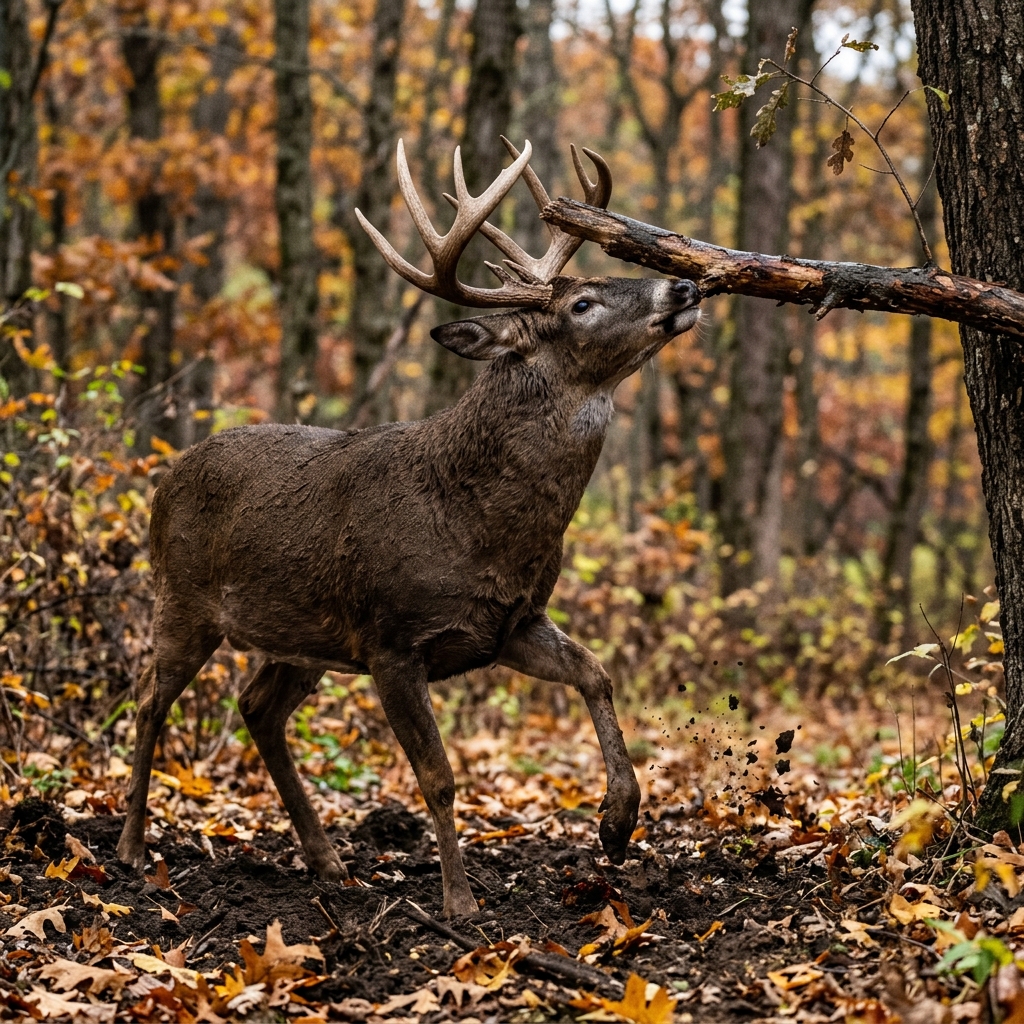
The Pre-Rut Seeking Phase: The Ultimate Hunter's Golden Window
Hunt the pre-rut seeking phase: daylight cruising, rattling, scrape lines, doe-bedding edges, and all-day sits when mature bucks search hard.
Ask serious whitetail hunters their favorite week and many will not say peak November chaos. They will name the pre-rut seeking phase—often a roughly week-long window in late October (timing shifts by latitude) when testosterone surges but most does are not ready.
Bucks are swollen, frustrated, and covering ground in daylight. Patterns from the October lull break. This is when giants make mistakes.
What the Seeking Phase Is
Seeking sits between the cautious October lull and lockup breeding.
- Bucks leave beds earlier and cruise longer after sunrise.
- Scrapes and rub lines freshen daily.
- Midday movement between 10:00 a.m. and 1:00 p.m. is real—pack a lunch.
- Does are still mostly in feeding/bedding routines; bucks check them constantly.
Exact calendar dates vary: farther north runs earlier than deep South. Watch cameras for sudden daylight cruising and fresh scrape activity rather than the box alone.
Calling and Rattling When Bucks Are Feisty
Seeking is the best vocal window of the year for many properties.
- Rattling: Simulate a real fight—break brush, grind, pause. Seeking bucks often investigate; locked bucks with does often ignore fights later.
- Grunts: Tending or social grunts to stop a cruiser in your lane.
- Snort-wheeze: Nuclear challenge. Use rarely, only on a mature buck ignoring softer calls as he leaves.
- Decoys: Optional visual on open edges; see aggressive posturing guides if you run them.
Call less on pressured public land; call more when you need to pull a buck one ridge over. Always stop calling if a buck is inside 60 yards and coming.
Stand Placement for Cruisers
Hunt travel, not static snack bars.
- Terrain pinches: Fence gaps, timber strips, creek fords, saddles—see pinch points and funnels.
- Community scrapes: Fresh, stinking hubs between bedding blocks deserve all-day sits. Build extras with mock scrapes.
- Downwind doe-bedding edges: Bucks vacuum scent without barging into thickets. Hang on the perimeter trail.
- Staging cover: 60 to 120 yards off food, not only the field edge.
Wind and thermals first. A perfect funnel on the wrong wind educates the buck you waited all year to hunt.
All-Day Sit Protocol
Seeking rewards endurance.
- Enter early without cutting primary trails.
- Stay through midday lull hours.
- Have food, pee bottle, quiet layers, and a plan for cold fronts.
- Glass constantly; cruisers appear fast and gone faster.
- If nothing by 2 p.m. on a dead wind, a careful relocate to a hotter camera scrape can be smart—don’t wander bedding.
Mobile saddle hunters can jump to smoking-fresh sign found at lunch without hauling a full climber.
Weather and Timing Nuances
- First sharp cold front of late October often lights seeking up.
- Big moon myths matter less than sudden scrape freshening and camera daylight.
- After a warm lull, a 10–15°F drop can pull bucks onto their feet early.
- Rain the night before can freshen tracks into your funnel by dawn.
Cross-check activity with your cameras; rut camera placement helps catch the switch into seeking.
Safety During Stand-Hopping Season
Hunters move gear more in the dark during this window.
- Wear blaze when walking timber—even in archery—if others are afield (check laws).
- Stay connected with a lineman’s belt and full-body harness on every climb—see tree stand safety.
- Adrenaline from a cruising giant causes rushed climbs; slow down on sticks.
Mistakes That Blow the Magic Window
- Hunting only evenings on food plots
- Sleeping in because “rut is next week”
- Overrattling every 10 minutes on public land
- Ignoring doe bedding and sitting random oak flats
- Burning your best scrape the first warm evening with swirling wind
- Quitting at 10 a.m.
Seeking-Phase Checklist
- Cameras on scrapes and bedding edges reviewed every few days
- Two funnel stands prepped for opposite winds
- Rattle bag / antlers practiced before season
- All-day kit packed (food, bladder bottle, layers)
- Safety tether habit locked in
- Plan for the quiet lockdown week that follows
Building a Seeking-Week Hit List
Three days before the window historically opens in your county:
- Pull camera cards or cellular alerts on scrapes and bedding edges.
- Rank bucks by daylight frequency, not just antler size.
- Assign each target a primary funnel and a backup for opposite wind.
- Pre-hang or mark saddle trees so dark morning setups are quiet.
- Clear tiny shooting lanes at midday, not the evening you hunt.
Print a one-page plan and stick it in your pack. When adrenaline hits, you will not invent strategy in the dark.
Day-by-Day Adjustments
- Day 1–2: Hunt best wind on top scrape/funnel; note observed travel times.
- Day 3–4: Shift tighter to doe bedding if bucks are scent-checking edges.
- Warm spike: Favor morning timber and midday water; evenings can die.
- Cold front arrival: Be in the best pinch at first light—do not sleep in.
- Sudden quiet: Transition toward lockdown thickets rather than quitting the season mentally.
Seeking week is short. Treat vacation days like a finite resource and hunt the hours data supports.
Field Notes and Practical Numbers Use these benchmarks to keep decisions concrete rather than vague:
- Log every sit with date, wind direction, temperature, and deer observations—patterns appear after 8 to 12 recorded hunts on the same property.
- Limit first-time pressure on a hot pin to one quality sit, then rest at least 24 to 48 hours unless the rut calendar demands otherwise.
- Carry a short checklist in your phone notes so gear and safety steps do not depend on memory at 4:30 a.m.
- Revisit your plan weekly during the season; crops, pressure, and breeding phases change the right answer.
- When in doubt, choose the option that leaves mature deer less educated for the next sit—longevity beats one burned encounter.
These habits compound across a season and across years on the same ground.
Successful hunters treat preparation as part of the hunt itself. Write down what worked, what failed, and what you will change next time. Small improvements in access, timing, and patience usually matter more than buying another gadget. Stay flexible after weather swings, keep safety non-negotiable, and measure success by clean opportunities and ethical recoveries—not only by antlers on the wall. Over a full season, disciplined routines outperform random hard hunting.
Gear Staging for All-Day Sits Seeking week all-day sits fail when comfort fails:
- Quiet insulation layers, not cotton sweat layers.
- High-calorie food that does not crinkle endlessly.
- Hydration without climbing down.
- Backup gloves and a beanie in the pack.
- A written wind forecast for morning and afternoon—thermals flip.
Practice sitting six hours in the backyard or garage in full kit once before season. Discover squeaks and hotspots when a buck is not at 30 yards.
Keep refining your approach with honest notes after every outing. Track winds that worked, access mistakes, and timing windows that produced daylight movement. Share lessons with your hunting partners so the whole group improves pressure management. Small, consistent upgrades in planning usually add more encounters than a single new piece of equipment. Stay patient through slow sits, stay aggressive when sign and weather align, and protect the long-term health of the places you hunt.
Frequently Asked Questions
How long does the seeking phase last?
Often about 5 to 10 days locally before lockdown pairs dominate. It can stutter with weather. Use deer behavior, not just the calendar.
Is rattling better in the morning or afternoon?
Both. Midmorning through early afternoon can be excellent when bucks are up checking cover. Avoid calling blindly at dark-thirty if it will pull deer into your entry scent.
Should I hunt the same stand all seeking week?
Rotate with wind. One A-stand on perfect wind beats five sits on hope.
Do young bucks ruin rattling?
Sometimes they come first. Stay ready; mature bucks may follow or hang back. Do not train movement on every 1.5-year-old if a target animal is possible behind him—use judgment.
What if my woods stay dead?
Shift tighter to doe bedding and thicker security, or pressure may already be high. Try a low-impact midday still-hunt between pins.
The seeking phase is crisp air, electric timber, and daylight cruisers. Trust travel corridors, use calls with purpose, and stay seated when others head to brunch—you will be hanging when the buck of the year checks one more scrape.
Know which conditions actually trigger daytime activity
Connect your cameras and see which conditions really trigger movement — not guesswork.
No credit card
Wildsnap • Open beta
Know which conditions actually trigger daytime activity
Connect your cameras and see which conditions really trigger movement — not guesswork.
No credit card