
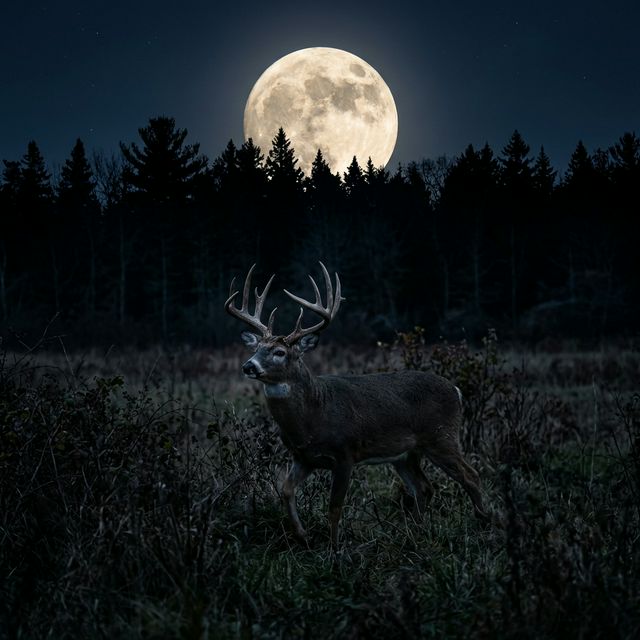
The Solunar Theory: Do Mathematical Moon Phases Actually Affect Deer Movement?
Solunar majors, full-moon midday moves, and why cold fronts still beat moon apps—use lunar timing as a tie-breaker backed by your own camera data.
Few whitetail topics spark louder camp debate than the moon. Old-timers swear a full moon ruins mornings; app users live by solunar majors. Trail-camera timestamps and GPS collar studies paint a more nuanced picture: the moon rarely creates movement from nothing—it often shifts timing.
Use solunar data as a tie-breaker, not a religion.
The Full Moon Myth vs. What Data Shows
Classic folklore says a bright full moon lets deer feed all night, so they bed early and “ruin” the morning sit.
Modern tracking and large camera samples often show something else: bucks do not simply move more on a given phase—they move at different hours. Night feeding can increase under bright moons, but daylight activity may redistribute toward midday rather than vanish.
Practical takeaway: do not cancel a hunt solely because the moon is full. Instead, prepare for a longer sit and watch the midday window.
Major and Minor Solunar Periods Explained
John Alden Knight’s solunar framework focuses on lunar position and gravitational timing.
Major periods: roughly when the moon is overhead or underfoot—commonly treated as ~2-hour peak windows.
Minor periods: associated with moonrise and moonset—typically shorter secondary windows.
Hunters get the most value when a major overlaps legal shooting light—first and last hour—or when a major lands late morning on a full-moon day. A major at 2:00 AM while you sleep does nothing for your stand.
Midday Magic: The Overhead Effect
Many camera libraries show a daylight bump roughly 11:00 AM–2:00 PM when a major period falls near midday—especially around brighter moon phases.
Why it matters on pressured land:
- Morning hunters leave
- Woods go quiet
- A buck stands to stretch, browse, or cruise briefly
If your vacation day coincides with an overhead major near noon, pack lunch and stay put. That habit alone outperforms leaving at 9:00 AM because “nothing happened.”
Public-land patterning tactics that pair well with midday sits are covered in patterning a buck on public land.
Weather Still Beats the Moon
Should you plan an entire vacation only around moon phase? No. Severe weather is king.
Forces that routinely override solunar nuance:
- 15–20°F temperature drops
- Rising or falling barometric trends into a front
- First lasting snow
- Wind shifts that unlock a sanctuary funnel
Use the moon as a tie-breaker: if wind and temperature already favor your best stand, a overlapping major is a bonus—not a requirement. Dig deeper into weather triggers in white-tailed deer activity and weather and barometric pressure and deer movement.
Building a Simple Moon-Informed Hunt Plan
Keep a one-page log for 30–45 days:
| Date | Moon phase | Major in daylight? | Weather | Deer seen / cam hits |
|---|---|---|---|---|
| … | … | Y/N + time | Temp/wind/pressure | Count / notes |
After a month you will know whether your property shows midday bumps, evening spikes, or little lunar signal. Local food, pressure, and cover often drown weak moon effects.
Camera discipline helps you test claims without burning ground—see managing trail camera data.
New Moon, Crescent, and “Dark Moon” Sits
Darker nights sometimes concentrate feeding nearer dawn and dusk because night visibility drops. That can produce classic prime-time movement—exactly when most hunters already sit.
Do not assume new moons are automatically “best.” Assume:
- Dawn/dusk may be busier
- Midday majors may matter less than on full moons
- Wind and fronts still decide whether mature bucks daylight
Hunt the forecast first, phase second.
Common Solunar Mistakes
Avoid these traps:
- Skipping perfect-wind days because an app shows a “poor” day
- Climbing down at 8:30 AM on a midday-major forecast
- Blaming the moon for pressure, heat, or swirling thermals
- Treating every minor period as a guaranteed flurry
- Ignoring your own camera timestamps in favor of national blog charts
Solunar charts are maps of possibility. Your timber is the territory.
How to Use Apps Without Becoming a Slave to Them
If you use a solunar app:
- Enable location-accurate major/minor times
- Overlay weather, don’t replace it
- Set calendar reminders only for majors that hit legal light or midday
- Review weekly: did predicted windows produce on your cams?
Technology should schedule patience, not panic entries. That same restraint shows up in smart-hunting ethics—see ethics of smart hunting.
Combining Moon, Wind, and Food in One Decision
Real decisions stack filters. A workable order:
- Is the wind right for a stand that protects bedding?
- Is temperature trending in a direction that historically moves deer on your farm?
- Is food still concentrated enough that evening staging makes sense?
- Does a solunar major overlap your sit window?
If you fail filters 1–3, skip the hunt even if the app glows green. If you pass 1–3 and a major overlaps midday, pack lunch. That hierarchy keeps solunar theory in its lane.
Food source shifts can erase moon effects entirely. An oak flat that drops overnight will move deer on a “poor” moon because calories override folklore. Scout with your nose and binoculars, not only with lunar tables.
Case-Style Sit Templates
Use these as starting templates, then rewrite with your camera log:
- Full moon + major at noon + cold front: all-day timber sit near bedding fringes
- New moon + major at dusk + stable cool weather: prime evening staging edge
- Any moon + swirling wind: stay home or hunt a blow-off fringe only
- Major at 2 AM only: ignore; sleep and hunt weather the next legal window
Templates prevent magical thinking. They also stop you from inventing a story after every blank sit—“must have been the moon”—when access noise was the real culprit.
Regional and Latitude Caveats
Solunar chatter online often comes from a different latitude and deer density than yours. Deep South suburban herds, Midwestern ag deer, and big-woods Northern bucks do not share identical moon responses.
Adjust expectations:
- High-pressure suburban deer may night-feed under lights regardless of phase
- Ag deer locked on beans may ignore majors until food shifts
- Northern November cold fronts can swamp any lunar signal for days
Build local evidence for two seasons before you let national influencers schedule your vacation. Your cameras and sit log are the only peer-reviewed study that matters for your tag.
Hunting Pressure as a Hidden Variable
A “bad moon” weekend is often just a crowded woods. If your property or public tract sees a surge of hunters on Friday nights, mature bucks go nocturnal whether the moon is full or new.
Control what you can: hunt off-peak days, enter carefully, and do not blame the sky for human traffic. When you finally get a quiet Tuesday with a overlapping major and a cold front, you will understand why the variables have to stack. Add one more filter many hunters skip: if your best camera buck only daylights on midweek northwest winds, no solunar app can invent a Saturday east-wind miracle. Trust the pattern you measured.
Write one honest post-season page: which moon windows produced deer on your ground, and which busts were explained better by wind, heat, or weekend pressure. That single page is worth more than any national solunar ranking, and it prevents you from repeating last year’s superstitions with this year’s vacation days.
Frequently Asked Questions
Does a full moon ruin morning hunts? Not reliably. It may shift some activity later into the day—so stay longer.
What is a solunar major period? A peak window tied to the moon being roughly overhead or underfoot, often about two hours.
Should I take off work only for major periods? Take off for cold fronts and perfect winds first. Use majors to choose among already-good days.
Do does and bucks respond the same? Broad movement may rise for both; mature bucks still filter through pressure and wind more carefully.
Is solunar science settled? No. Studies and hunter datasets disagree in strength. Treat it as a secondary predictor you verify locally.
Can I use solunar apps for public land? Yes, but pressure and access usually outweigh moon timing. Use majors to choose among already-good midweek days with matching wind.
The moon is one puzzle piece—not the box cover. Do not let a “poor” phase keep you home, and do not ignore midday magic when the moon is overhead. Stack wind, weather, and local camera history first—then let solunar timing break ties between otherwise equal hunt days.
Know which conditions actually trigger daytime activity
Connect your cameras and see which conditions really trigger movement — not guesswork.
No credit card
Wildsnap • Open beta
Know which conditions actually trigger daytime activity
Connect your cameras and see which conditions really trigger movement — not guesswork.
No credit card