
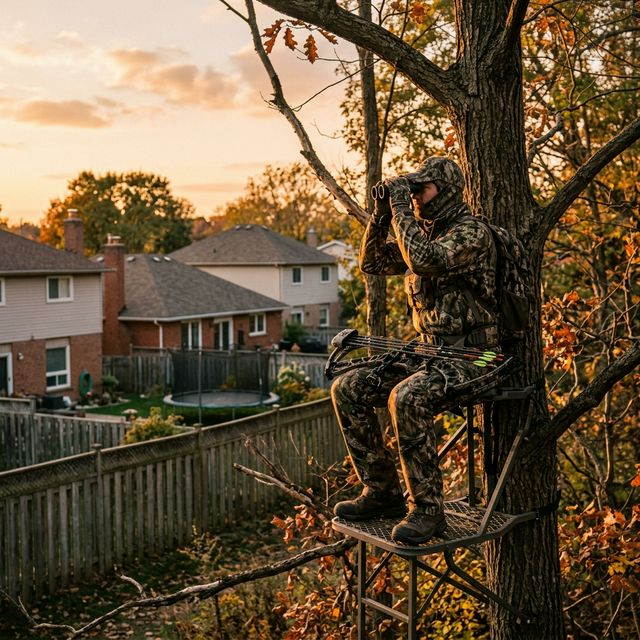
Suburban Bowhunting: Tactical Operations for High-Pressure Urban Deer
Hunt suburban whitetails ethically: discreet access, micro-bedding cover, wind quirks near houses, high-odds shots, and quiet recovery work.
Some of the hardest bucks in North America live between cul-de-sacs, school greenbelts, and half-acre honeysuckle patches. Suburban whitetails know lawnmowers, dogs, and garage doors. They also know what a camo-clad stranger means at 5:00 a.m. Hunt them like deep-woods deer and they vanish onto ground you cannot access.
Success here is discretion, micro-terrain, perfect shot selection, and neighbor respect. This guide covers access tradecraft, bedding, wind quirks, shot standards, and recovery optics.
Know the Rules Before You Climb
Municipalities layer rules on top of state seasons: weapon restrictions, discharge setbacks from dwellings, bait bans, and hours. Some towns ban hunting entirely even if the state season is open. Get written permission on every parcel. Verbal “sure, buddy” evaporates after a deer runs through a patio.
Confirm:
- Legal weapons (often archery/crossbow only)
- Minimum distances from buildings and roads
- Tagging and transportation rules
- Whether you may leave a stand overnight
Low-Visibility Access: The Gray-Man Entry
Your biggest threat is often human eyes, not deer eyes.
- Wear neutral street layers over hunting clothes while walking from the vehicle
- Soft-case the bow until you are inside cover
- Avoid theatrical gear displays in driveways at dawn
- Use neighborhood noise (trucks, aircraft) to mask climbing sounds
- Never shortcut across unmarked lawns
Suburban bucks pattern human schedules. A slamming truck door at an odd hour stands out more than the same sound at school-bus time. Blend into the rhythm when you can.
Micro-Bedding and Travel
A mature buck may bed in a thorn thicket behind a retention pond, fifty yards from a trampoline. Security cover is stem density and human avoidance—not acreage.
Hunt the junk. Multiflora, honeysuckle, and greenbrier edges beat manicured timber strips everyone walks.
Man-made funnels. Powerline edges, fence corridors, creek ditches between developments, and narrow timber belts between subdivisions concentrate movement.
Food is everywhere. Acorns, hostas, scrap feeders on adjacent land you cannot hunt, and golf-course edges. Pattern daylight movement on your legal dirt, not the buffet next door.
Bedding principles still apply at miniature scale—understanding whitetail bedding areas.
Wind and Thermal Chaos Near Houses
Weather apps lie near two-story homes, asphalt, and open lawns. Heat sinks reverse or deflect wind. A “perfect” north wind may curl around a garage into your stand.
Walk potential stands on multiple wind days before season. Use powder or milkweed constantly. Thermals in ditch systems still matter—understanding thermals.
Scent discipline is mandatory at 15 yards from a bed—whitetail scent control.
Shot Standards: No PR Disasters
A marginal hit that dies under a swing set is a community crisis. Suburban ethics demand higher shot filters than remote timber.
- Broadside or slight quartering-away only
- Conservative maximum distance (often 25 yards or less)
- Dead-quiet bow—no clanking accessories at full draw
- Clear shooting lanes without hoping the arrow “finds a hole”
- Pass if the deer is about to step onto unpermitted property
Know anatomy cold—whitetail anatomy and shot placement—and your trailing plan—expert blood trailing tips.
Neighbor Relations and Permission Craft
Hunt access is a reputation economy.
- Introduce yourself before season; don’t be a stranger with a bow
- Share meat when appropriate
- Keep stands neat; remove trash
- Text updates if you will track near their line
- Say thank you after the season whether you tagged or not
One disrespectful hunter can close a whole HOA greenbelt for everyone.
Recovery Discretion
If the deer expires in view of roads or homes:
- Cover with a tarp before field work when needed
- Avoid open-bed truck displays through town
- Field dress in low-visibility spots when legal and sanitary
- If the deer crosses a property line, stop, leave the weapon if required by custom/law, and ask permission before entering
Carry extra light, flagging, and a calm plan. Night tracking in yards requires professionalism.
Suburban Season Timeline Tips
- Early season: pattern summer feeding on edges; heat and leaf cover help concealment
- Rut: bucks cruise ditch lines and doe bedding pockets; stay ready midday
- Late season: food stress shows in yards—only hunt where legal and welcome
Pressure spikes after the first shot heard in the neighborhood. Have a backup micro-stand.
Mistakes That End Access
- Trespass “just one step” for a better angle
- Leaving gut piles visible to trails and kids
- Arguing with non-hunters in comment threads or driveways
- Taking low-odds shots toward houses
- Overhunting the same 3-acre strip daily
Mapping a Micro-Parcel Like a Tactical Grid
Print or screenshot the parcel boundaries and mark every legal tree that offers a shot into a funnel without violating setbacks. Note dog-kennel locations, porch lights, and motion lights that will silhouette you on evening climbs. Identify two entry routes: one for north winds, one for south, both ending in cover before you become a driveway spectacle.
Walk the property once in summer clothes with the landowner if possible. Ask where kids play, where they want you to avoid gut piles, and where vehicles should park. Write it down. Assumptions create conflict.
On multi-parcel neighborhood hunts, understand which fences are hard boundaries. A buck bedded on Parcel A may feed on Parcel B—you only get the shot when he is legal on your dirt. Pattern daylight use on your acres; do not invent chase scenes across yards.
Stand and Blind Choices for Tiny Timber
Hang-on stands and saddles let you use skinny trees along ditch lines. Keep stands modest in height when neighbors can see them—sometimes 12–15 feet is plenty and less theatrical. Removable sticks reduce off-season complaints. Ground blinds work if brushed in weeks early and colored like the junk pile behind the shed, not a neon hub.
Clear only the shooting lanes you need. A suburban clear-cut aesthetic angers landowners and removes the security cover that keeps bucks daylighting. One quiet lane to 20 yards beats a 40-yard boulevard.
Practice shooting seated and kneeling from the exact blind or stand geometry. A perfect backyard opportunity dies when your sight hits the window frame at full draw.
Pressure Calendar Inside the Neighborhood
The first legal week educates deer fast. After nearby shots or a loud recovery, expect nocturnal shifts. Rotate stands and take days off. Midweek evenings often beat Saturday mornings when every hobby hunter walks the greenbelt.
Rut windows still matter: bucks cruise ditch lines checking doe bedding pockets between houses. Midday sits on warm November days can be gold while residents are at work and the timber strip goes quiet. Keep phone on silent. A ringtone in a half-acre woodlot ends more than one sit.
Late season food stress shows on ornamental plantings. Only hunt those edges if you are welcome and legal—hungry deer in flowerbeds are a politics problem as much as a hunting opportunity.
Communication Scripts That Keep Ground Open
Before season: introduce yourself, explain weapon type, share approximate sit times, and offer a text when you arrive/leave if the owner wants it.
After a shot: text a brief status—“arrowed a deer, waiting before tracking, will knock if I need to cross east fence.” People fear silence more than honesty.
After recovery: thank them, share meat if appropriate, and leave the place cleaner than you found it. A small gesture (smokehouse sticks, a card) beats a blood-smeared truck story on social media tagged with their street name.
Social Media and Opsec
Geotagging a suburban buck on the same morning you recovered him can burn access. Keep locations vague, delay posts, and never shame non-hunting neighbors online. The privilege of hunting inside the human footprint depends on quiet professionalism more than on viral photos.
If a neighbor asks questions, answer plainly about seasons, safety, and why deer need management. Ambassadorship is part of the suburban kit list—right next to the rangefinder and the tarp.
Frequently Asked Questions
Are suburban bucks easier because they see people? They tolerate people in predictable contexts. They are often harder to hunt because they know hunting-shaped behavior and use fragmented private cover.
Can I use a ground blind in a backyard edge? Sometimes, with permission and setback compliance. Brush it in early. Pop-up blinds appearing overnight educate deer and neighbors.
What about trail cameras? Ask first. Point them away from windows and private spaces. Theft and privacy complaints are real.
Is rattling smart in town? Often too theatrical. Soft contacts and grunts can work; blasting sequences next to bedrooms burns goodwill.
How do I practice without a farm range? Indoor/club ranges, backyard bag targets where legal, and 3D leagues. Practice the exact distances you will shoot.
What if I hit a deer and lose the trail at a fence? Mark last blood, seek permission immediately, and consider a tracking dog service where legal. Do not abandon effort because it is awkward— ethially finish the job.
Suburban bowhunting is special-ops woodsmanship: quiet gear, perfect angles, and absolute respect for the people who make access possible. Do it right and you earn both deer and long-term ground.
Wildsnap • Open beta
Join Wildsnap and try the beta
In the open beta, you turn trail-cam data into actionable insights—free, fast, and simple.
No credit card