
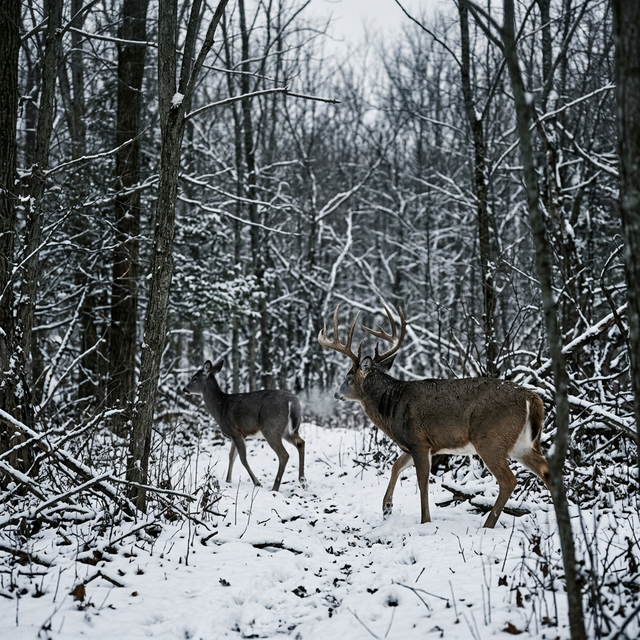
Deciphering The Second Rut: Maximizing Your Brutal Late-December Hunts
Hunt the second rut with biology-backed timing, food-source setups, cold-weather gear tactics, and mistakes that waste December bucks Practical tips for.
By mid-December many hunters hang it up. Cold, fatigue, and the belief that “the rut is over” empty the woods. That surrender leaves a real biological window on the table: the second rut.
Unlike the chaotic mid-November seeking phase—when bucks cruise widely—the December breeding pulse is narrower and more predictable. Fewer receptive does mean less random mileage and more concentrated daylight activity around food. If you understand the roughly 28-day recycle clock and late-season energy math, late December can produce some of the year’s best mature-buck sightings.
The Biology Behind the Second Rut
Two mechanisms drive late breeding activity:
1. Recycled adult does. Peak estrus lasts roughly 24–36 hours. Does not bred in the primary rut often recycle about 28 days later. In herds with skewed buck-to-doe ratios or disrupted November weather, that recycle cohort can be meaningful.
2. Doe fawns hitting weight threshold. In high-nutrition ag country, early-born doe fawns may reach roughly 70–80 pounds live weight by mid-to-late December and cycle for the first time. One hot fawn can pull a mature buck into daylight on a bean edge.
Because receptive females are scarce compared with November, competition among surviving dominant bucks is intense—but travel is more surgical. They check doe groups near food rather than burning miles across the county.
Food-Source Lockdown Beats Blind Cruising
A late-December buck is worn down. Many have lost a large share of body weight from the November rut and hunting pressure. They cannot afford aimless cruising.
November pattern: timber funnels, saddles, and random scrapes.
December pattern: primary food with a downwind scent-check perch.
Standing soybeans, waste grain in cut corn, brassicas, and winter wheat become meeting points. Bucks often sit just inside timber, scent-checking the herd as does feed. Your job is not to invent movement—it is to intercept the shortest secure line between bedding thermal cover and that food.
Layer this with broader late-season whitetail tactics and weather reading from white-tailed deer activity and weather.
Timing the Daylight Intercept
Second-rut daylight happens when caloric need and breeding overlap.
- First clear afternoon after a hard cold snap — deer feed early.
- All-day sits on the fringe of food when a target buck is daylighting on camera.
- Midday is not dead if a buck is locked on a doe; stay put.
If a cellular camera shows a known buck with a doe at 3:30 p.m., treat that micro-area as hot for the next 24–48 hours. In bitter cold he will not abandon a receptive doe to roam.
Avoid burning that spot on a swirling wind. One bad entry can push him nocturnal on the only food for miles.
Stand Placement Around Doe Groups
Downwind timber edge. Sit where you can see the field edge but keep scent blowing into open ground deer will not enter, or into a barrier (river, steep cutbank).
Transition trails. Hunt the first funnel inside cover—brushy ditch, hedgerow gap, creek crossing—rather than the middle of the food plot where every truck can glass you.
Access last. Use the back door. Cross open ground after legal light only if you must; better to enter from the dark timber side with the wind in your face and thermals understood. Review understanding thermals before committing to a valley food source.
Decoy caution. A doe decoy can help on a field edge in the second rut, but only with perfect wind and safety protocols—see decoying whitetails.
Gear and Hypothermia Reality
Late-December sits are endurance tests.
Silent hypothermia. Core temperature can drop while you still “feel fine,” then confusion and poor motor skills arrive suddenly. Set a hard check-in time with someone who knows your stand location.
Insulation strategy. Enclosed blind with a safe heater, or a high-loft late-season suit in a stand. Sweat on the hike in is a liability—vent, then button up once settled.
Batteries. Phones, headlamps, and GPS units die in single digits. Keep spares in an inside pocket against your body.
Food and water. Hot calories in a thermos beat a candy bar. Dehydration still happens in cold air.
Mistakes That Kill Second-Rut Odds
- Quitting after Thanksgiving because “rut’s over”
- Hunting random timber instead of the best food
- Overhunting one field edge on marginal winds
- Leaving at 10 a.m. when doe groups still feed midday in deep cold
- Educating the food source with midday camera checks on foot
- Underdressing and cutting sits short
Second-Rut Scouting Checklist
- Confirm primary winter food on maps and glassing.
- Find thermal cover within a short walk of that food (cedars, pines, CRP, thickets).
- Place cameras on edges—not deep in beds.
- Log wind directions that make the edge hunt-able.
- Pre-hang or stage a quiet entry for a same-day move when a buck daylights.
- Have a backup food source if pressure spikes.
E-scouting and pressure mapping still matter; e-scouting whitetails helps you find overlooked winter pockets on public land.
How This Differs From the Primary Rut
| Factor | Primary rut | Second rut |
|---|---|---|
| Doe availability | High | Low |
| Buck travel | Wide cruising | Food-focused checks |
| Best setups | Funnels, scrapes | Food edges, doe groups |
| Hunter traffic | Heavy | Lighter (advantage) |
| Physical buck condition | Peak aggression | Exhausted, calorie-driven |
You are hunting fewer events with higher predictability. Patience on the right acre beats covering five mediocre spots.
Camera Strategy Without Spooking Winter Food
Winter food sources are fragile. Checking cards at noon on the only bean field for miles trains deer to wait until pitch dark. Use cellular cameras on field edges, set to conservative upload schedules, and resist “just walking in to look.” If you lack cellular service, check cards during midday on a howling wind after a fresh snow—when your tracks are obvious and deer are bedded in cover—then leave for a full day before hunting it.
Build a simple log: date, wind, temperature, buck ID, doe density. Patterns jump out when you stop relying on memory after freezing sits.
Calling and Decoying in the Second Rut
Blind aggressive rattling is usually the wrong tool for exhausted December bucks. Soft tending grunts near a doe group, or a single doe bleat when a buck is stuck just out of range, can help. A doe decoy on a field edge works if wind and safety allow—especially when cameras show a buck circling out of range. Keep expectations modest; food and doe location do more than plastic.
If a buck is locked on a hot doe, you may get only a short window. Climb quietly, hunt that pocket hard for a day or two on fair winds, then back off so the group does not abandon the food entirely.
Body Condition and Shot Selection
Late-season bucks look smaller in the body and can seem “tired” in their movement. That does not make risky angles okay. Cold, bulky clothing already challenges form—take high-percentage shots only. Practice in your December suit before the freeze so the bowstring does not slap a new puffy layer.
After the shot, remember meat care in single-digit air is easy, but trailing in deep snow is not. Prepare lights, flagging, and a sled. A second-rut success can turn into an all-night ordeal if you are not staged for recovery.
Weather Fronts Worth Burning Vacation Days
Not every cold day is equal. The first sharp temperature drop after a mild stretch often triggers the best daylight feeding and doe-checking of late December. Rising barometers after snow squalls concentrate deer on the first open food they trust. Marginal, windy swirl days are for rest and gear drying—not for educating the only standing beans in the township.
If you can take only two sits, stack them on the best forecast combo of cold, clear, and hunt-able wind at your primary food edge. Quality beats quantity in the second rut. Keep a short list of alternate foods—cut corn versus brassicas versus waste beans—so a single spooked field does not end your week. Glass from afar at midday to confirm doe density before you commit a precious evening sit. When cameras show a known buck locked on a doe, treat the next 24 hours as priority one and cancel casual stands elsewhere.
Frequently Asked Questions
Is the second rut real or a hunting myth? It is real biology—recycled does and late-cycling fawns—though intensity varies by herd structure, latitude, and nutrition. Some years are subtle; others are obvious.
When does it usually peak? Often mid-to-late December relative to a mid-November primary peak, but watch local breeding dates and camera data rather than a national calendar alone.
Should I rattle aggressively in late December? Softer contact and tending grunts near food can work. Blind marathon rattling like early November is less reliable when bucks conserve energy.
Are mornings or evenings better? Evenings near food dominate. Mornings can work on return trails to thermal cover after an all-night feed, especially after storms.
What if my cameras go quiet? Shift to the next best food, reduce intrusion, and hunt weather breaks. Quiet cameras often mean pressure or a food switch—not that deer vanished from the county.
Can I still bowhunt effectively in deep cold? Yes if you can shoot accurately bundled up. Practice in full late-season clothing. Otherwise consider legal muzzleloader or firearm seasons where applicable.
Trust the calendar biology, hunt the food, and dress for a long sit. The bucks still moving in daylight in late December are often the ones worth waiting for—and fewer rivals are waiting with you.
Confirm seasonal patterns from your cameras
Find patterns and time your hunts right when your camera history tells you what happened — and when.
No credit card
Wildsnap • Open beta
Confirm seasonal patterns from your cameras
Find patterns and time your hunts right when your camera history tells you what happened — and when.
No credit card