
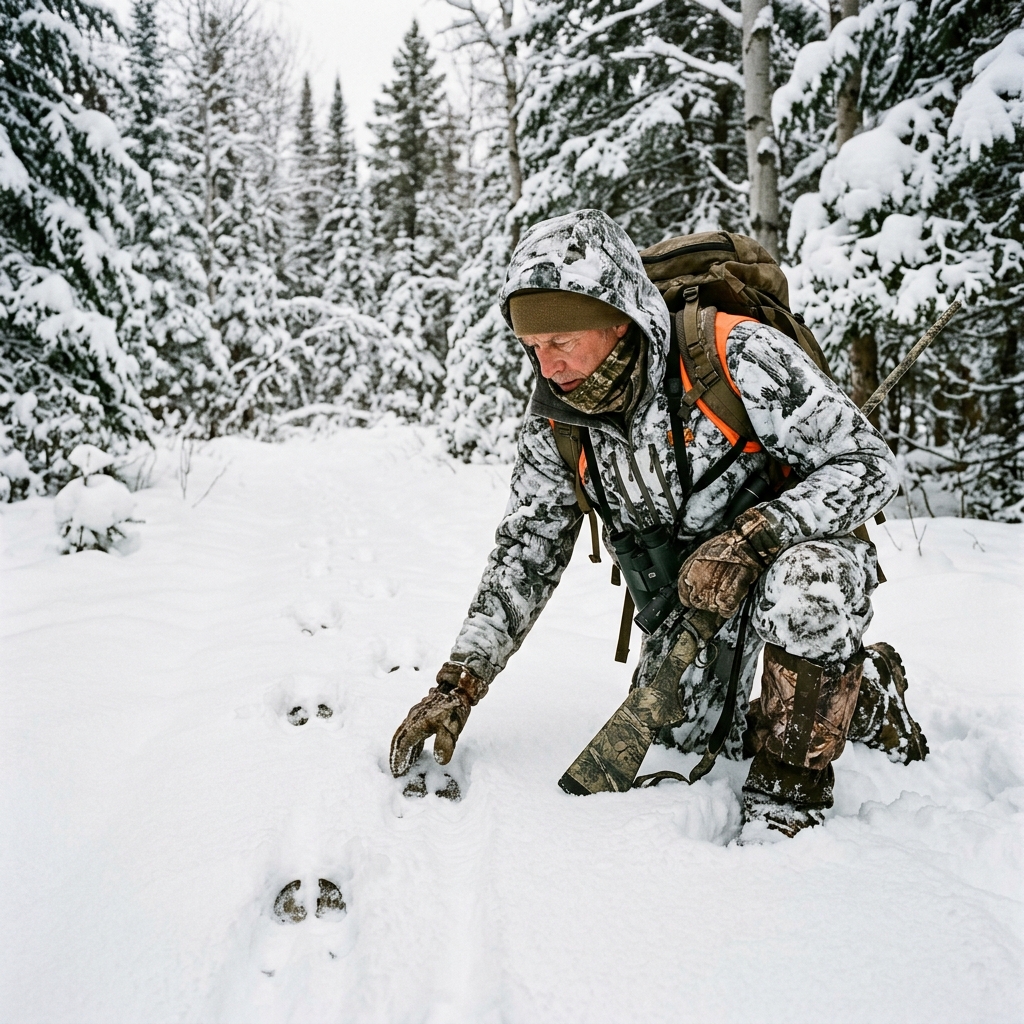
Tracking and Hunting Whitetails in the Snow: A Masterclass
Hunt deer in fresh snow: post-storm timing, track reading, J-hook counters, winter food sources, safety gear, and late-season stand tactics.
Snow turns guesswork into evidence. Fresh tracks show direction, gait, and how recently a buck passed. For hunters willing to stay cold, snowfall is the best teacher of late-season behavior—and a lethal hunting advantage when timed right.
This guide covers post-storm feeding windows, track reading, still-hunting tactics, winter food shifts, stand hunting in white woods, and cold-weather safety.
The Post-Storm Feeding Window
Hard storms drive deer into thermal cover—conifers, cedar swamps, dense pines. When the front clears and pressure rises, caloric debt forces daylight feeding, often earlier in the afternoon than on stable mild days.
Prime time: the first clear afternoon and evening after a pinning storm, especially over standing corn, beans, brassicas, or other high-energy food.
By day two or three, deer may slide back toward night feeding if pressure and cold allow. Hunt the break hard—then adjust. Pair with late-season whitetail tactics and deer activity vs weather.
Reading Tracks: Freshness and Intent
Freshness. Soft, powdery edges mean recent. Iced crust, debris in the print, or new snow inside the track means older. Do not spend two hours following a midnight stroll.
The march. Straight, purposeful spacing often means travel between food and bed—keep moving carefully or leapfrog to a intercept.
The meander. Zigzags, browse nips, rubs, and pawing mean the deer is secure and likely near bedding. Slow down.
Track size myths. Big tracks can mean big deer—or melting enlargement. Use stride, impressions, and behavior together, not one print as gospel.
The J-Hook and How to Beat It
Mature bucks rarely walk straight into a bed. They J-hook: travel, then curve to bed facing their backtrail so they see or smell anything following.
Counter: when signs say bedding is close, stop following the exact track. Loop downwind of the expected bed and hunt with your eyes, or set up on the fringe. Walking the track into his face is how trackers educate giants.
Bedding theory still applies under snow—understanding whitetail bedding areas.
Still-Hunting vs Stand Hunting in Snow
Still-hunting shines with soft new snow that quiets leaves and shows tracks. Move a few steps, glass, repeat. Keep the wind in your favor. Review still-hunting and spot-and-stalk.
Stand hunting shines on known food edges after storms and on funnels into thermal cover. Snow reveals whether deer used your trail network last night—adjust stands based on fresh evidence, not October memory.
Combine methods: still-hunt into a mid-morning observation point, then sit the evening food.
Winter Food: Ag Edges and Woody Browse
When snow buries mast and waste grain gets scarce, deer shift toward woody browse—maple tips, cedar, dogwood, and regenerating clearcuts where buds sit at mouth level.
If you lack ag fields, hunt 2–5-year-old cuts and browse lines on the sunny edges of conifer cover. Tracks between cedar bedding and browse patches tell you where to sit.
Second-rut and late breeding pulses can still pull bucks to doe groups on food—deciphering the second rut.
Snow Camo and Movement
Deer key on contrast and motion. Dark woodland camo against bright snow blobs. Use snow patterns or lighter broken grays. Move only when heads are down. Sun on a bare face and hands flashes—cover skin.
Gear and Hypothermia Prevention
Sweat on the track, then stop, and cold hits hard.
- Merino or synthetic base layers—no cotton
- Vent while moving; add loft when still
- Fire kit, space blanket, high-calorie food
- Spare gloves and socks in a dry bag
- Headlamp and navigation for short days
- Tell someone your route and return time
Ice. Do not blindly follow tracks onto lakes, rivers, or flooded timber. Verify ice thickness yourself—often 4 inches minimum for a single walker on clear ice, more for uncertainty. If unsure, loop around.
Blood Trailing on Snow
Snow can make blood obvious—or hide sparse high hits under fresh flurries. Mark last blood with flagging, look on the underside of snow-loaded brush, and avoid trampling the trail. Standard wait times still apply—expert blood trailing tips.
Common Snow-Hunting Mistakes
- Following stale tracks for miles
- Walking straight into a J-hook bed
- Ignoring the first afternoon after a storm
- Underdressing for stand sits after a sweaty hike
- Wearing dark blobs of camo on bright crust
- Crossing sketchy ice because “the deer did”
Field Checklist After a Fresh Dusting
- Glass or drive to find which food shows fresh tracks
- Determine track age before committing
- Choose still-hunt vs stand based on cover and wind
- Watch for meandering near suspected beds
- Be on food for the first post-storm evening
- Carry safety layers for a long, cold drag
Leapfrogging Tracks Without Educating the Buck
Blindly walking every step of a track puts you in the J-hook’s kill zone. Experienced trackers leapfrog: follow until the track ages or terrain suggests bedding, then parallel downwind 80–150 yards, cut back to the trail, and confirm he still passed. If tracks suddenly shorten, meander, or circle, assume you are close—glass, listen, and hunt with your feet still.
When you jump a buck and see only a flag, mark the flush point, give him time if you did not shoot, and decide whether a second stalk is ethical. A bumped late-season buck may run a half mile to the next conifer patch and bed again. Frenzied pursuit across crust often ends with him in the next township and you soaked in sweat.
If you do shoot, switch immediately to blood-trailing protocol. Snow helps, but excitement still causes hunters to walk over sparse drops. Flag last blood the same way you would in dirt.
Stand Hunting the White Woods
Snow reveals overnight traffic to your food plot. If the plot is stamped flat at 8 a.m. and empty, hunt the first timber choke leading back to cedar cover the next morning, or switch to the field that still shows single-file dusk trails. Let the snow tell you which “best” stand is actually cold.
On bright crust days, deer may delay movement until shadows lengthen. Be patient through the glare hours. On soft, falling snow, visibility drops and deer sometimes move midday—ideal for a quiet still-hunt between bedding pockets.
Keep decoys and calls conservative in deep winter unless second-rut sign is obvious. Calories rule; theater often fails.
Dragging and Meat Care in Freezing Weather
Cold is your friend for meat, your enemy for fingers. Stage a sled or easy exit before you hunt remote tracks. A long drag in waist-deep snow after dark is a hypothermia scenario—shorten the hunt radius if you are solo. Quarter in the field when the drag is unrealistic, bag meat clean of snow meltwater, and get it elevated out of blood pools.
Tag and register per local rules even when your hands barely work. Practice with gloves on at home so the first giant of January is not also your first attempt at paperwork in mittens.
Partner Tracking Roles
Two hunters beat one when leapfrogging: one watches ahead with binoculars while the other confirms track age. Stay staggered so a sudden flush offers a safe shooting lane only for the designated shooter. Agree on who shoots before you move—snow tracking is how friendly fire stories start when roles are unclear.
Use hand signals. Keep muzzles pointed at dirt during approaches. If you jump a buck and both of you are startled, the first job is safety, not a snap shot into brush. The second job is marking the flush for a patient follow.
Crust Nightmares and Midday Movement
Loud crust can shut down dawn movement and push deer to move when sun softens the top layer. Be ready for late-morning sits near thermal cover edges. If every step you take sounds like breaking glass, switch to stand hunting on known trails rather than forcing a still-hunt that advertises you for 200 yards.
Frequently Asked Questions
Can deer see me easier in snow? They see contrast. Match the backdrop and minimize motion.
Do bucks yard with does in deep winter? Survival groups form; mature bucks may yard with other bucks in thermal cover. Breeding interest fades as winter deepens except during late estrus events.
How deep is too deep for deer movement? Past roughly mid-shin to belly-deep snow (often 15–20+ inches depending on deer size and crust), movement shrinks to short trips between cover and nearby food. Hunt tighter core areas.
Is crusted snow good or bad? Loud crust hurts still-hunting; it can also make deer move less except at peak need. Soft new snow is the tracker’s friend.
Should I use calls in snow? Soft contact calls near doe groups can help during late estrus; random aggressive rattling in deep winter often fails when energy conservation rules.
What caliber or bow setup for late cold? Use what you shoot accurately with heavy clothing. Practice bundled up before you freeze on a 30-yard chip shot.
Snow is a map key. Read freshness, respect the J-hook, hunt the storm break, and dress for the stop—not just the walk. The buck at the end of a fresh track earned his caution; earn the shot the same way.
Know which conditions actually trigger daytime activity
Connect your cameras and see which conditions really trigger movement — not guesswork.
No credit card
Wildsnap • Open beta
Know which conditions actually trigger daytime activity
Connect your cameras and see which conditions really trigger movement — not guesswork.
No credit card