
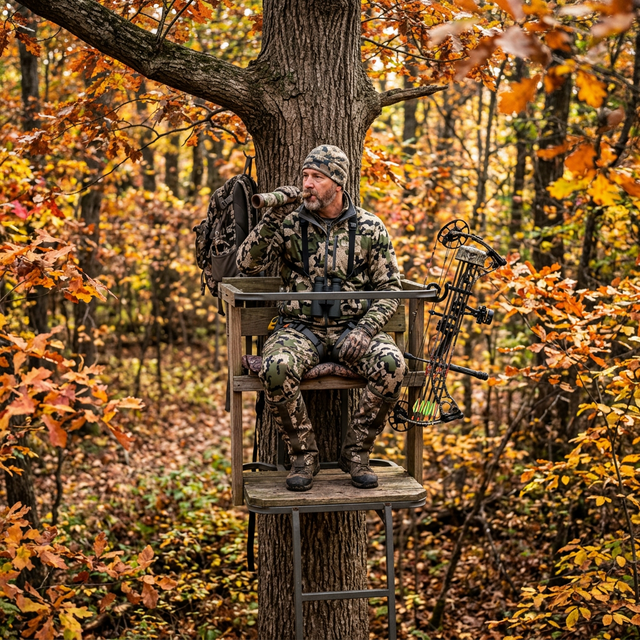
Mastering Deer Calls: Precisely When to Grunt, Bleat, and Rattle
Learn when to grunt, bleat, snort-wheeze, and rattle. Contact vs challenge calling, rattling setups, downwind barriers, and public-land safety rules.
Silence is usually safe. Calling is storytelling. A grunt tube or rattle bag is not a magic deer magnet—it is a tool that works only when the hormonal season, volume, and setup geometry make the story believable to a buck that has heard bad calling before and survived.
Call less than you think. Call with a reason. Stop calling when the buck is already committed to your location. Every unnecessary sound is a coin flip that educates mature deer or attracts the wrong audience—including other hunters on public land.
Contact Grunts vs Challenge Calls
Understanding call types prevents the most common mistake: using aggressive sounds when a soft contact would have stopped a buck cold.
Contact grunt: Short, soft “urp” or “eh” sound. Social location talk—“deer here, nothing threatening.” Best universal use: stop a walking buck for a shot opportunity. One or two soft grunts beat a marching-band sequence every time.
Tending grunt: Longer, rhythmic grunts suggesting a buck with a doe or trailing an estrous doe. Useful in seeking and chasing phases when you want to pull a cruiser off a parallel trail. Keep volume realistic for timber distance—if you can hear yourself echo, you are too loud.
Snort-wheeze: Aggressive challenge—rapid snort bursts followed by a long wheezing hiss. Nuclear option for a mature buck leaving and ignoring softer calls. Overuse educates the herd and can scare younger deer off the property entirely.
If he is coming, put the call down and freeze. If he is parallel or leaving, one calculated sequence can turn him—but watch his ears and body angle before you commit. Season framing: pre-rut seeking and rut lockdown explain when testosterone makes bucks responsive vs when they ignore everything except live does.
Volume discipline separates hunters who call successfully from those who “educate” their property by noon. Start softer than you think necessary; escalate only when a buck shows disinterest at distance.
Doe Bleats: Helpful or Hype?
Estrus bleats can pull bucks during seeking and chasing, especially when paired with scent or a decoy visible from the buck’s approach line. They also pull curious does that can bust you by circling downwind or staring at your stand for ten minutes.
Guidelines for bleat use:
- Soft and sparse—one or two bleats, then silence for 15–20 minutes minimum
- Best when you can see a buck scanning but not committing to your setup
- Avoid nonstop bleating every 60 seconds for an entire sit; that is how pressured bucks learn to avoid bleat sources
- Match bleat type to phase: estrus bleats during peak seeking; fawn distress rarely for whitetails in rut context
Decoy pairings amplify believable setups: decoying whitetails and pre-rut decoy posturing. A bleat without visual or scent confirmation often gets a downwind circle instead of a direct approach.
Can calls and mouth bleats differ in tone. Practice both at home until you can produce consistent, realistic sounds without gasping, coughing, or flapping your free hand on the stand.
Rattling That Sounds Like a Fight
Polite clicking rarely pulls pressured mature bucks. Real fights include escalation, pauses, and environmental noise—not two minutes of gentle tick-tick and silence.
Realistic rattling sequence:
- Soft tick-tick sparring for 10–15 seconds to start
- Escalation into 20–40 seconds of grinding, clashing, and overlapping antler contact
- Pause 30–60 seconds while you watch downwind edges
- Second burst if nothing responds—harder and longer than the first
- Optional hoof stomps or brush thrashing for realism (within safety and sanity limits)
Start soft; if nothing responds in 5–10 minutes, escalate once. Then go quiet and watch downwind for 20–30 minutes before rattling again. Bucks often circle wide before committing; premature second sequences pull them off the circle.
Geometry: Most mature bucks circle downwind to scent-check the fight before committing. Place a barrier on the downwind side—cliff, water, open field you can see, thick nasty blowdown—so he must swing into your shooting lane before smelling the lie.
Rattling on the ground in open hardwoods carries far. Elevated rattling from a stand changes sound projection and keeps your hands closer to your bow or rifle when a buck commits.
Seasonal Calling Calendar
Calling effectiveness tracks hormones and competition—not your boredom at 2 p.m. on a slow sit.
| Phase | What works | Volume |
|---|---|---|
| Early season | Rare contact grunts to stop deer | Very soft |
| Seeking / pre-rut | Grunts, bleats, rattling | Moderate → aggressive |
| Peak chase | Short tending sequences; rattling near doe groups | Situational |
| Lockdown | Sparse calling; hunt does and travel corridors | Soft or silent |
| Post-rut | Minimal; food focus returns | Soft or silent |
During lockdown when mature bucks are glued to estrous does, calling at a buck bedded with a live doe is wasted air. Hunt doe travel routes and wait for the doe to exit the picture. Mock scrape activity may outperform calling in some setups: mock scrapes and communication hubs.
Late season calling is mostly contact grunts to stop a deer for a shot—not rattling sequences that sound like July sparring to a calorie-starved buck focused on food.
Setup Checklist Before You Blow a Call
Calling without setup geometry is noise. Run this checklist before every sequence:
- Wind direction confirmed with a powder puff or milkweed—not guesswork
- Shooting lanes clear for the likely approach angle and downwind circle
- Decoy (if used) visible at the correct quartering angle from expected approach
- Call within reach without waving arms above the skyline
- On public land: blaze orange worn as required; elevated position preferred when rattling
- Downwind barrier identified so you know where the buck should appear before smelling you
Blind rattling on the ground in crowded public timber is how human-on-human close calls happen every November. If you cannot see 80 yards downwind, you should not rattle loudly.
Scent control still matters when calling. A buck circling downwind will smell you before he sees the decoy. Minimize human odor on the downwind arc even when geography blocks the final approach: whitetail scent control.
Volume, Cover, and Terrain
Sound dies in thick fog and roaring wind; it carries on crisp cold mornings across open hardwoods for hundreds of yards.
Terrain adjustments:
- Hardwoods / cold calm: start softer than you think—you are louder than you feel inside a stand
- Wind / dense pine: you may need more volume or expect response from closer range only
- Creek bottoms and draws: sound funnels unpredictably; call sparingly and watch multiple approach angles
- Never call with your face pointed at a deer inside 40 yards—movement and visible breath give you away instantly
Practice sequences at home until muscle memory is quiet and smooth. Grunt tubes should not require a wind sprint to produce sound. Rattle bags should not rustle like a grocery sack.
Time of day matters. Dawn and dusk calling aligns with natural deer vocal activity. Midday rattling on pressured public land often attracts hunters and squirrels, not mature bucks.
Public-Land Calling Safety
Realistic deer sounds attract hunters as well as deer—especially rattling sequences that mimic a fight worth investigating.
Safety rules:
- Wear required blaze orange visible from all angles when calling
- Prefer elevated positions when rattling so ground hunters do not stalk toward your hide at eye level
- If a hunter approaches, speak human words loudly and wave orange—never mimic deer sounds to “alert” them
- Know your backdrop before any shot after a calling sequence pulls movement from multiple directions
- Never assume movement in brush is a deer until you confirm antlers, eyes, or legal target identification
Identify your target and what is beyond it. Calling sequences that pull multiple deer—or multiple hunters—into the same funnel create the highest-risk shot scenarios of the season.
On crowded WMAs, consider calling only with a decoy visible and from a stand with clear sight lines in all directions. Silence may kill more deer than hero rattling on opening weekend.
Frequently Asked Questions
How often should I grunt during a sit? Often one soft contact sequence every 20–30 minutes is plenty in pre-rut—and many sits need fewer or none at all. Quality over chatter every time.
Can over-calling educate bucks? Yes. Unrealistic volume and constant challenge calls teach mature deer to avoid the source. Pressured properties need restraint; one perfect sequence beats an hour of noise.
Is rattling dead on pressured public land? Not dead—just harder. Hunt weekdays, rattle near downwind barriers, and expect wide circles rather than head-on charges across open ground.
Should I call to a buck already coming in? No. Silence and slow movement to shooting posture. Calling now risks a stare-down you lose when he pins your location by sound.
Doe bleat or grunt to stop a walker? Soft contact grunt is the classic stopper for any deer at moderate range. Bleats can work on bucks in rut; keep them subtle and single-note.
Do electronic calls make sense for whitetails? Where legal, they can produce consistent volume—but many states restrict electronic calls for big game. Verify regulations. Skill with a mouth call still matters when batteries die or laws change.
Speak sparingly and with a plot: stop walkers with soft contacts, challenge leavers only when needed, and rattle into geography that funnels downwind checkers into your lane. Discipline kills more bucks than lung power.
Wildsnap • Open beta
Join Wildsnap and try the beta
In the open beta, you turn trail-cam data into actionable insights—free, fast, and simple.
No credit card