
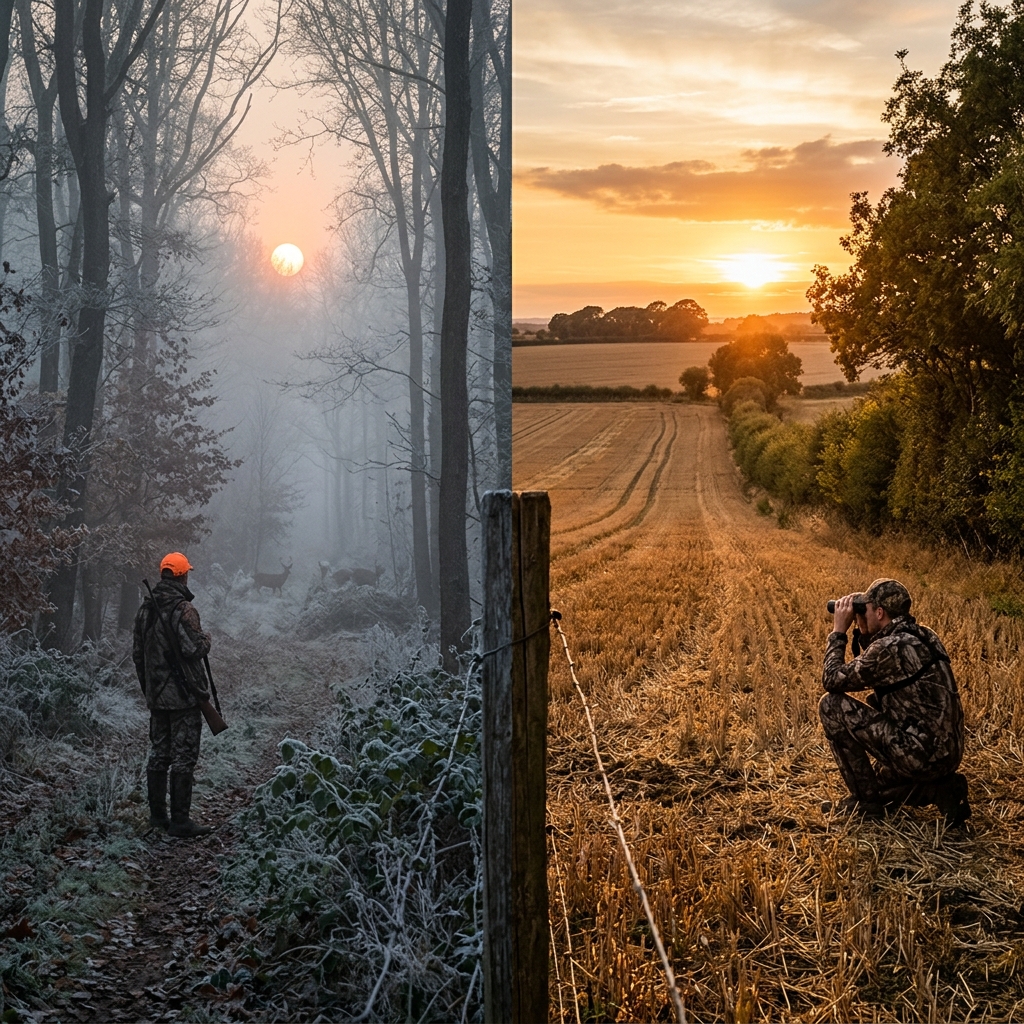
Morning vs. Evening Hunts: The Biological Mathematics of Time
Morning hunts for rut funnels and bedding returns; evening hunts for staging and food edges—match access, thermals, and stand sets to the clock.
Harvest photos and camera logs often show a split personality: many mature bucks hit the ground mid-morning, while sheer movement volume peaks near last light. Choosing a freezing dawn sit versus a mild evening ambush is not about your sleep schedule—it is about matching the whitetail’s biological clock to thermals, food, and access.
You cannot hunt the same tree the same way at both ends of the day and expect equal odds.
What Morning Hunts Are For
Morning sits excel when you intercept deer moving from nighttime food back to bedding—or when rutting bucks cruise timber after does bed.
Interception goal: catch a buck leaving ag, oak flats, or plots and slipping into thick daylight cover.
Best morning scenarios:
- Pre-rut and rut timber funnels between food and beds
- Cold, calm dawns after a temperature drop
- Known scrape lines inside cover (not open field edges)
- Midmorning rut cruising (9:00–11:30 AM)
Stay late. Climbing down at 8:30 AM is how you miss giants that stand up after the woods settle.
The Morning Access Problem
Roughly most blown morning hunts fail on the walk in. Hunters cut the food source in the dark, bump feeders, and sit over empty trails.
Perimeter / backside entry: approach from behind bedding or along a non-deer route—road, ditch, creek—so you never walk the living room.
Morning access checklist:
- Map a route that stays downwind of beds
- Arrive early enough to settle before civil light
- Use red/low light only when needed; move slow
- If you must cross a trail, cross it once, far from the stand, and get still
Small parcels make this even harder—see strategies for hunting small woodlots.
What Evening Hunts Are For
Evenings are more consistent for food-oriented movement and easier on access because you walk in while deer are bedded.
Staging-area concept: find brushy pockets 50–100 yards inside the timber edge. Mature deer linger there—browsing and scent-checking—until dark before committing to open fields.
Evening strengths:
- Higher odds of seeing multiple deer
- Lower bump risk on entry
- Ideal for youth hunts and short after-work sits
- Great for patterning with cameras on field edges
Evenings weaken when you only hunt the wide-open field edge without a staging setup, or when swirling winds dump scent into the crop.
Thermals: Morning Climb vs. Evening Dump
Air moves like water when temperatures change.
Morning: as sun hits slopes, thermals begin rising. Scent can lift out of hollows—sometimes helping, sometimes carrying odor onto benches above you. Know your hollows.
Evening: cooling air sinks downhill. A ridge sit can send scent over deer entering fields below; a creek-bottom sit can bathe the entire drainage in your odor.
Rule of thumb:
- Evening ridge edges often shed scent downhill helpfully
- Evening bottoms need steady horizontal wind or you soak the funnel
- Morning creek crossings need careful timing before thermals turn
Wind forecasts plus thermal literacy beat generic “hunt the north wind” advice. Weather context: white-tailed deer activity and weather.
Rut vs. Early Season Timing
| Season phase | Lean morning when… | Lean evening when… |
|---|---|---|
| Early season | Cool fronts, short timber sits near beds | Food edges, beans, soft mast |
| October lull | Rare—pressure sensitive | Staging if patterns hold |
| Pre-rut / rut | All-day or late-morning timber | Doe feeding lines at dusk |
| Late season | Destination food after bitter nights | Primary food remaining |
All-day sits on cold November fronts combine both worlds: morning bedding returns plus midday cruising plus evening feed.
Building Separate Stand Sets
Stop forcing one stand to do both jobs.
Morning trees: inside cover, covering return trails and rut funnels, accessible from the backside.
Evening trees: staging cover near food, accessible without skyline exposure, wind blowing into non-deer voids.
If cameras show a buck daylighting a scrape at 7:15 AM on northwest winds only, that is a morning-only prescription. If the same buck stages at 5:40 PM on a bean edge, hang a different evening set. Scrapes and staging: scrape hunting strategies.
Safety After Dark
Many non-fall accidents happen walking in or out in darkness.
- Carry a capable headlamp and spare batteries
- Flag blood trails with reflective tape
- Know fence lines and creek banks before you hunt them
- Tell someone your stand location and exit time
Excited exits after a shot are when people hurry, trip, and get lost 400 yards from the truck.
How to Decide Tomorrow Morning
Ask four questions the night before:
- Is the wind right for a bedding-side entry?
- Are we in a rut window where late morning matters?
- Did cameras show daylight near cover or only field edges?
- Will thermals help or wreck the sit by 8:00 AM?
If three answers favor timber interception, set the alarm. If not, sleep in and own the evening staging sit.
Camera history makes these calls sharper—cellular trail cameras for deer hunting and managing trail camera data.
Youth, Work Schedules, and Realistic Time Choices
Not every hunter can take all-day November vacations. Match ambition to life:
- After-work evenings: lean staging edges within a 10–15 minute walk
- Weekend mornings in the rut: commit past 10:30 AM or do not bother
- Half-day vacation blocks: spend them on the highest-odds wind + time pairing your cams show
Parents mentoring kids should default to evenings more often—easier morale, warmer temps, simpler access. Save hardcore dawn timber interception for solo or adult partners.
Common Timing Mistakes That Empty Stands
Watch for these patterns in your own season:
- Hunting field edges at dawn and bumping the entire feed pattern
- Leaving timber at 8:45 AM during peak rut
- Sitting evenings on a morning-only wind
- Using one stand for both ends of the day with impossible access
- Ignoring thermal dumps in creek bottoms at dusk
Fixing timing mistakes often adds more deer sightings than buying new camo. Audit last season’s sit log for when you saw mature bucks versus when you sat—then schedule next year against that evidence.
Thermal Micro-Drills on Your Property
Generic advice fails on weird topography. Spend one off-day mapping thermals with milkweed silk, a powder bottle, or a simple wind checker at dawn and dusk on your best two stands.
Record:
- When rising thermals begin on east vs. west slopes
- Whether evening dumps foul a creek crossing by legal light
- How long after sunrise a hollow stays “right”
Fifteen minutes of milkweed intel can save ten blown sits. Combine that map with weather forecasts and you will stop treating morning vs. evening as a personality preference—it becomes an engineering choice. Food-source timing still matters too; when soft mast or ag peaks, evenings gain even more leverage, and when rut cruising dominates, late mornings in timber deserve the vacation day. Re-check your cameras weekly so you are not hunting last year’s clock on this year’s beans.
Also note legal shooting light changes through autumn. An evening sit that felt “early” in September can put you climbing down in true dark by late November—pack lights and plan exits accordingly so safety keeps pace with strategy.
If you only remember one rule, make it this: never let a convenient schedule force a stand into the wrong half of the day. Change the stand—or change the time—but do not pretend they are interchangeable. Mature bucks punish that shortcut more reliably than any moon phase or food plot brand ever will.
Frequently Asked Questions
Are mornings better for big bucks? During the rut, midmorning timber often produces mature bucks. Outside the rut, evenings may show more deer overall.
Why do I see deer at dark but never shoot? You are probably on the field edge instead of the staging area inside the timber.
Should I hunt all day? On cold fronts and peak rut days, yes. On warm, slow early-season days, quality evenings beat miserable blank middays.
Can I hunt the same stand morning and evening? Sometimes, but access and thermals usually favor dedicated sets.
What time should I stop morning sits in November? Stay until at least 11:00–11:30 AM unless wind collapses or you must move for a better window.
Mornings deliver timber interception and rut cruising; evenings deliver staging and food. Play the thermals, split your stands, and let the clock work for you.
Know which conditions actually trigger daytime activity
Connect your cameras and see which conditions really trigger movement — not guesswork.
No credit card
Wildsnap • Open beta
Know which conditions actually trigger daytime activity
Connect your cameras and see which conditions really trigger movement — not guesswork.
No credit card