
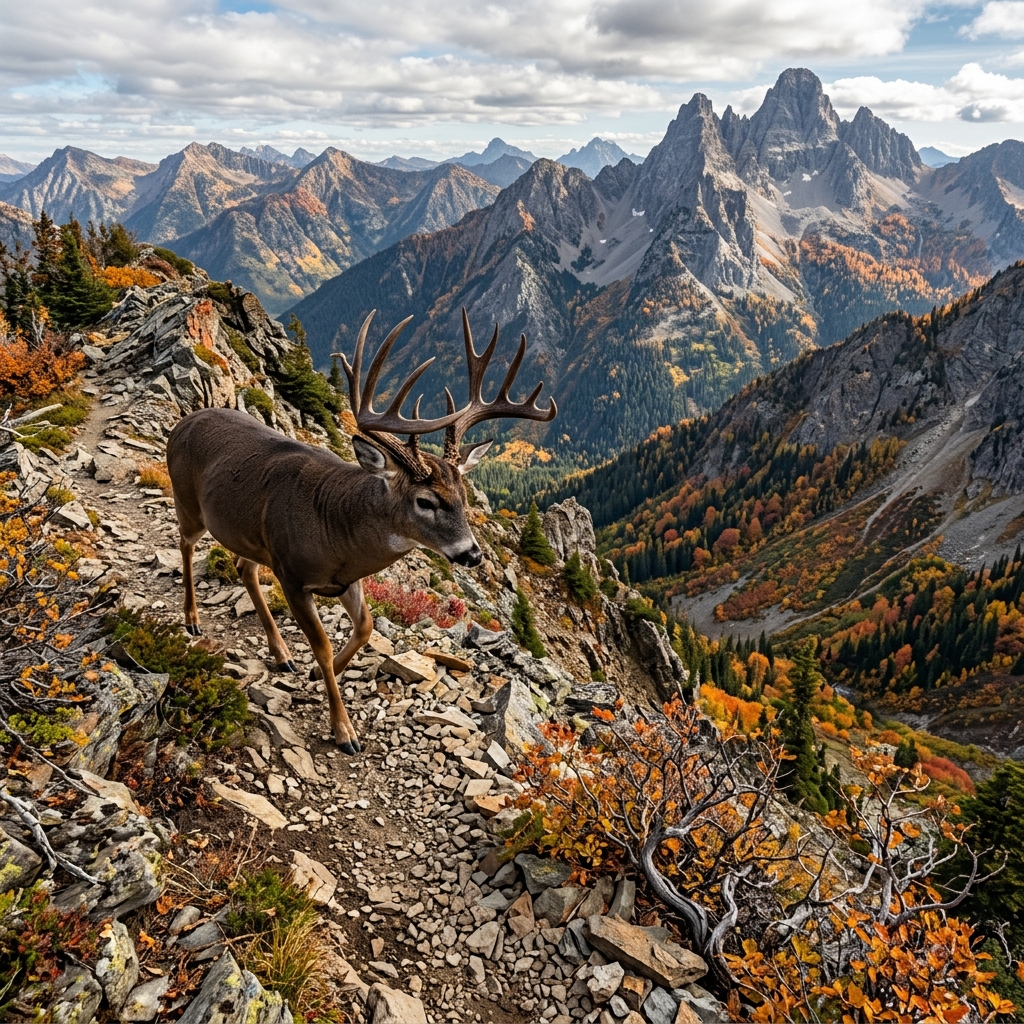
Mountain Whitetails: Mathematically Hunting Saddles, Benches, and Ridges
Hunt mountain whitetails by reading saddles, benches, and leeward beds. Master thermals, topo funnels, and safe access in steep Appalachian and Ozark timber.
Mountain whitetails in the Appalachians, Ozarks, and similar steep timber live by topography and air. Flatland field edges matter less than saddles, benches, and the daily rise and fall of thermals. If you cannot read a contour map, you are guessing in country that punishes guesswork.
Terrain is the master variable. Food and cover still matter, but mature bucks bed and travel where elevation gives them wind advantage and calorie-efficient routes between drainages.
Read Saddles as Deer Highways
A saddle is the low dip on a ridge between two higher points. Deer use it as a crossing between drainages because it costs less energy than climbing the peak.
Hunt detail, not the skyline:
- Bucks rarely silhouette on the absolute crest in daylight.
- Many travel or bed 15–25 yards down on the leeward side—the side sheltered from prevailing wind.
- That spot lets them smell over the ridge while watching the valley below.
Mark saddles on your map, then glass or walk the lee shelf for beds, rubs, and droppings. The “X” is often one contour below the low point, not in the notch itself.
Creek and river country uses similar pinch logic—compare with hunting river bottoms and creek crossings.
Benches: Flat Shelves on Steep Hills
A bench is a relatively flat shelf on an otherwise steep slope. Bucks bed on benches because thermals and wind often pool or shear there in predictable ways, and because walking a contour is easier than fighting vertical ground.
What to look for:
- Benches connecting two saddles along a ridge system
- Benches with thick cover on the uphill side and a view downhill
- Multiple beds facing downwind/downhill on the same shelf
Morning rising thermals can pool on benches and give bedded deer a scent advantage. Evening falling air drains off benches into hollows—stand placement must account for that flip.
Thermals: Air Acts Like Water
In mountains, wind is not a steady horizontal breeze. Sun-warmed air rises upslope in the morning; cooling air dumps downslope in the evening.
Rules that save seasons:
- Morning: Avoid hunting low creek bottoms if bucks bed on ridges above you. Your scent rides the thermal elevator straight to them.
- Evening: Hunt slightly above expected travel so falling thermals carry scent under or past the trail, not onto it.
- Midday transition: Directions get messy. Sit only if you have a strong consistent ridge wind that overrides weak thermals.
Carry a milkweed or powder bottle and test every 15–20 minutes when the sun angle changes. More detail lives in understanding thermals.
Mapping a Mountain Hunt in One Evening
Before you hike:
- Trace primary ridges and mark every saddle.
- Shade south-facing slopes for winter warmth and north/east thickets for security cover depending on season.
- Circle benches within 75–150 yards of hard or soft mast.
- Draw two access routes that keep you off the skyline and off the leeward bedding shelf.
E-scouting layers and LIDAR help, but confirm with boots. Digital pins fail when thermals disagree with the forecast. Tools and habits from e-scouting whitetails speed the map work; the hike confirms it.
Access Without Educating the Ridge
Mountain bucks survive by hearing and smelling pressure from below. Do not climb the same drainage the deer use as an evening trail.
Better access patterns:
- Drop in from a parallel ridge and contour across
- Use a noisy creek only when water covers footfall and wind is right
- Hang stands midweek; hunt them when the wind matches the setup
Quiet, low-sweat access tools such as e-bikes for stealth access help on legal motorized routes, but many mountain units restrict them—verify first.
Gear and Safety Redundancy
Cell coverage dies in folded drainages. Make redundancy non-negotiable:
- Satellite messenger (inReach, Zoleo, or similar) with scheduled check-ins every 4 hours
- Paper topo and baseplate compass
- Extra layers; mountain temps swing 20–30°F between hollow and ridge
- Headlamp, blaze, and a simple injury plan
Electronics fail in cold. A magnetic compass does not. Treat big timber like backcountry even when the truck feels “close” on the map.
Seasonal Adjustments in Steep Country
- Early season: Focus benches near soft mast and shaded oak pockets; see how to hunt persimmons and soft mast.
- Rut: Saddles and ridge crossings heat up as bucks check multiple drainages.
- Late season: South-facing thermal cover plus nearest calorie source; overlap with late season whitetail tactics.
Food still matters—just filtered through elevation. A white oak on a bench beats a prettier oak on an exposed peak.
Micro-Terrain Features Flatlanders Miss
Beyond saddles and benches, train your eye for smaller features that concentrate mountain deer:
- Spurs: Short ridges shooting off the main spine—bucks use them as side doors between drainages
- Knobs: Rounded high points with a lee pocket just below the crest
- Cutbanks and old logging decks: Flat spots where timber crews once worked, now grown into staging cover
- Conifer stringers: Narrow pine or hemlock lines that offer thermal cover on otherwise hardwood ridges
- Rock outcrops: Day beds with a view and tricky human approach angles
Walk these with binoculars first. Fresh beds show oval depressions, dropped guard hairs, and polished dirt. Old beds without droppings nearby are history. In oak years, benches with white oaks outproduce prettier benches that only hold red oaks.
Pressure maps differently in mountains. A single trail camera on a saddle can educate every buck that crosses for a week if you check it from the leeward bedding shelf. Hang cams on the approach trail 60 yards off the notch, and check from the windward side when possible.
Multi-Day Mountain Hunt Rhythm
DIY mountain trips fail when hunters burn the best saddle on the first noisy morning. Use a rhythm:
- Day 1 afternoon: glass and hang one solid evening set on a confirmed crossing
- Day 2 morning: hunt a wind-right bench well away from yesterday’s exit
- Midday: nap, water, and e-scout a backup drainage
- Day 2 evening: return to the primary only if wind matches and sign stayed fresh
- Day 3: move to the parallel ridge if pressure or thermals soured the first
Hydrate more than you think. Steep climbs in cold air still dry you out, and decision-making falls apart when you are behind on water. Pack 2–3 liters for long loops and a filter if creeks are reliable.
Food Placement on Vertical Ground
Mountain deer still eat; they just will not climb needlessly. Rank food by elevation cost:
- Soft mast and white oaks on benches beat peak-top oaks with better views
- Logging decks that hold clover or browse become midday loafing snacks
- Creek-bottom soft mast works evenings only when falling thermals will not betray you from below
Scout with a notebook that lists tree species, elevation band, and wind notes. A white oak at 2,200 feet on a leeward bench is a different hunt than the same species on an exposed west face. When mast fails, shift to browse lines and any agricultural foothill fields, but keep saddle intercepts in the rotation because bucks still cross drainages to check does.
Carry lightweight sticks and a compact stand if you move often. Mountain hunts reward hunters who can hang a temporary set on a fresh sign bench without building a permanent skylined fortress. Quiet, mobile gear turns topo literacy into arrows on the ground.
Also practice shooting steep downhill angles before season. Twenty yards of slope changes point-of-impact. Confirm your gap shooting or sight tape on a hill, not only on flat ranges.
Frequently Asked Questions
How far down from a saddle should I hang?
Often 15–40 yards down on the leeward side, with a shot to the crossing trail. Exact distance depends on cover and how tightly deer hug the contour.
Can I hunt mornings in a hollow?
Only if wind and thermals keep scent off ridge beds—or if you are hunting deer that actually bed in the hollow. Default assumption: morning scent rises.
What map scale works best?
USGS-style 1:24,000 topos or equivalent app layers with 20–40 foot contours. If benches disappear on the map, switch to finer contour or LIDAR hillshade.
Do mountain bucks use the same beds daily?
Many reuse leeward benches for weeks until pressure or food shifts. Hunt them sparingly; one careless morning thermal can empty a shelf for days.
Is spot-and-stalk realistic?
Yes on open hardwood sides after leaf drop, with wind in your face and sun at your angle. Most bowhunters still win more from saddle/bench ambushes than pure stalks.
In the mountains the topo map is primary gear. Find the saddle, bed the lee bench, and let thermals tell you when you are allowed to sit. The bucks that live here are rarely random—they are geometry made of bone and hair.
Wildsnap • Open beta
Join Wildsnap and try the beta
In the open beta, you turn trail-cam data into actionable insights—free, fast, and simple.
No credit card