
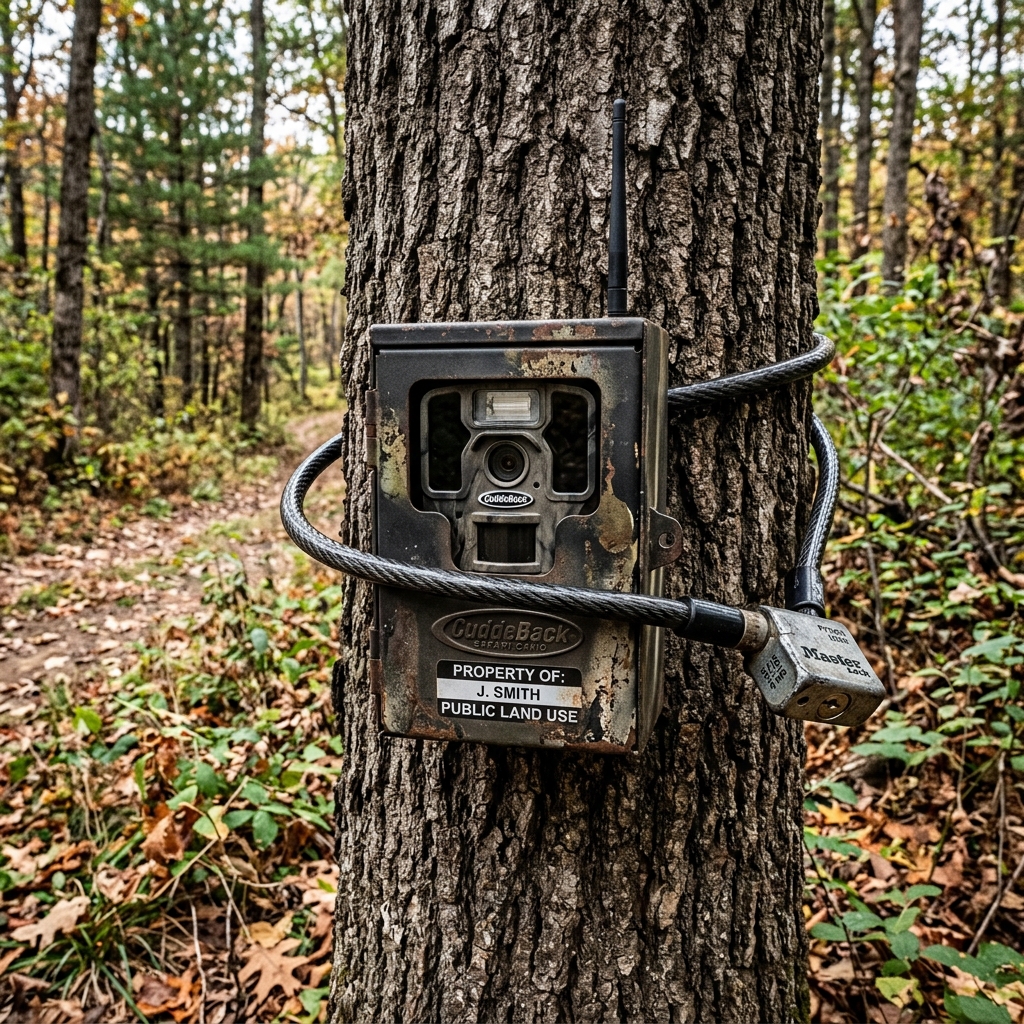
Securing Cellular Cameras on Public Land: Tactical Theft Prevention
Stop public-land trail camera theft: mount 10–12 feet high, cinch cable locks, use steel boxes, and install safely without advertising your setup.
On pressured public land, a cellular camera is both a money sink and an intelligence source. There is no fully theft-proof camera—only a hard target. Most thefts are crimes of opportunity by people scanning at eye level. Think vertically, lock physically, and avoid advertising your setup.
Why Public-Land Cameras Get Stolen
Cameras vanish because they are:
- Mounted at chest height on obvious trails
- Visible from two-tracks and scrape lines everyone walks
- Left with dangling cables that catch the eye
- Associated with known “good” spots shared online
Thieves rarely bring grinders into remote swamps for a $200 unit. They take what is easy. Your job is to make removal slow, loud, and awkward.
The 12-Foot Rule
Keep cameras outside the normal human visual band (about 5–6 feet).
Extreme vertical height: use a climbing stick to mount units around 10–12 feet, angled steeply downward (~45°). That height sits above most hikers’ natural gaze and out of easy reach without gear.
Benefits beyond theft:
- Fewer curious hands
- Better antler angles on deer passing below
- Less lens flare from low sun in some setups
Confirm local regulations—some properties restrict climbing sticks, screws, or permanent hardware.
Locks, Boxes, and Cable Discipline
Layer physical security:
- Steel security box sized for your camera model
- Python-style cable cinched tight to the trunk
- Lag bolts into the box (where legal) so the housing cannot be shaken off
- Tuck excess cable behind the box—hanging tails are visual beacons
No lock stops a determined thief with power tools. These layers stop the 90%+ of opportunity thefts that happen in seconds.
For power choices that support long soaks without frequent visits (which also reduce discovery), see trail camera tech: battery and solar.
Placement That Hides in Plain Sight
Height helps; location finishes the job.
Prefer:
- Off-trail micro-funnels instead of primary logging roads
- Multi-trunk trees and dark bark backgrounds
- Slight bends where the camera is not silhouetted against sky from the trail
- Secondary scrapes and creek crossings 50–100 yards off the obvious path
Avoid:
- Brand-new blazes and flagging pointing at the tree
- Muddy boot highways straight to the mount
- Social-media geotags of the exact funnel
Pair concealment with the patterning approach in patterning a buck on public land.
Digital Deterrents and Privacy Etiquette
Psychology matters.
- Place a durable “GPS tracked / under surveillance” sticker on the steel box. Real GPS trackers exist for some setups; even a credible warning moves casual thieves along.
- Enable theft alerts or login notifications if your camera app supports them.
- Use strong, unique passwords—stolen cameras sometimes get factory-reset and resold, but accounts should not hand over your other locations.
Privacy etiquette: never point a camera at another hunter’s confirmed stand or blind. That starts woods conflicts fast and helps no one. Aim at deer travel, not people.
Broader connected-camera ethics appear in ethics of smart hunting.
Batteries, Corrosion, and Forced Return Trips
Theft is not the only way you lose a camera. Acid leaks and dead power force recovery walks that expose locations.
- Use lithium AA batteries for multi-week soaks
- Avoid cheap alkalines that swell and corrode boards
- Consider solar where canopy allows reliable charge
- Check firmware and antenna position before the long soak so you are not hiking in weekly “just to reboot”
Fewer visits mean fewer chances for strangers to watch you hang gear.
Installation Safety at Height
Mounting at 12 feet with a box, drill, and camera is a fall risk.
Non-negotiable habits:
- Wear a lineman’s belt or equivalent fall restraint while working
- Climb with hands free; hoist the camera and box with a rope after you are secured
- Keep three points of contact on sticks
- Never free-climb with a steel box in one hand
A stolen camera hurts. A fall from 12 feet can end seasons—or worse.
If a Camera Does Get Stolen
Have a plan:
- Note GPS coordinates and last transmission time
- Report to local game wardens or agency contacts when appropriate
- Check nearby trailheads and online marketplaces cautiously
- Relocate remaining cameras; assume the thief knows the pattern
- Review whether flagging, height, or trail choice made the unit obvious
Do not escalate into confrontations in the woods over gear. Replace, harden, and move.
Camouflage the Install Day Itself
Many cameras are compromised not by random hikers, but by someone who watched you hang them. Install tradecraft matters.
- Arrive midweek mid-day when lots are empty
- Carry the box and sticks inside a quiet pack—not swinging from a shoulder in blaze
- Avoid cutting fresh shooting-lane style brush that points at the tree
- Leave on a different trail than you approached when possible
- Do not post “just hung cams on the north unit” to social media the same afternoon
If someone walks up while you work, be polite, keep details vague, and consider relocating that unit later. Friendly conversation is not a reason to narrate GPS coordinates.
Decoy and Decoy-Adjacent Tactics
Some hunters hang a cheap visible camera at eye level as a sacrificial distraction while the real cellular unit sits 12 feet up nearby. Results vary. If you try it:
- Do not put real SD cards with precious history in the decoy
- Keep the real unit on a different tree than the obvious decoy
- Accept that decoys can attract vandals who then look harder
Often, pure invisibility beats theater. Height plus off-trail placement remains the highest ROI move per minute of effort.
Legal and Ethical Boundaries
Security does not excuse illegal hardware. Before lag-bolting boxes:
- Read agency rules on screws, nails, and permanent fixtures
- Respect seasonal equipment removal dates on some WMAs
- Never booby-trap trees or cameras—illegal and dangerous
- Do not accuse nearby hunters without evidence
Report theft through proper channels with serial numbers and last-known coordinates. Serial-number photos taken before the soak save headaches later. Pair physical security with the low-intrusion scouting mindset in cellular trail cameras for deer hunting and data hygiene in managing trail camera data.
Multi-Camera Networks Without Multiplying Risk
Every additional camera is another theft and discovery opportunity. Smarter networks use fewer, better sites:
- One cellular unit on the best micro-funnel beats three obvious road cams
- Stagger hang dates so you are not advertising a full “camera day” to observers
- Retire units that only produce nocturnal raccoons after two weeks of soak
- Keep a master map offline—not in a public cloud folder titled “Trophy Spots 2026”
When a camera goes missing, assume nearby units are compromised and harden or move them within 48 hours. Thieves and unethical hunters often work a ridge systematically once they find one easy box.
Also inventory after season: remove hardware on properties that require it, and store boxes where UV and moisture will not wreck gaskets before next August.
Public Land Courtesy That Reduces Blowback
Aggressive security can look like aggression. Stay courteous:
- Do not block trails with cables at face height
- Avoid covering another person’s stand approach with your lens
- Leave no cut poles or trash from install day
- If confronted about a camera, stay calm and involve wardens if theft is alleged
Most hunters are not thieves. Making every stranger an enemy creates the woods wars that get gear destroyed out of spite. Be a hard target and a decent neighbor at the same time.
Before each soak season, photograph serial numbers and box markings. If a camera disappears, that paperwork turns a vague complaint into a usable report for wardens and marketplace searches. Move neighboring units within 48 hours under the assumption the ridge was worked systematically. Inventory after season as well: remove hardware where required, and store steel boxes where UV and moisture will not wreck gaskets before next August.
Frequently Asked Questions
Is 12 feet always legal? Not everywhere. Check screws, climbing sticks, and hardware rules for that property before mounting.
Will a python lock stop all thieves? No—but it stops most opportunity thefts and buys time.
Should I hide cameras with brush? Light naturalization helps; heavy brush that blocks the lens or looks freshly cut can backfire. Prioritize height and off-trail trees.
Do warning stickers actually work? Often enough on casual thieves. Pair stickers with real locks and height.
What is the single best anti-theft move? Mount high and off the main trail so the camera is never casually noticed.
Secure the gear, respect other hunters, and remember: the best security is the camera that was never seen.
Turn your trail camera data into scouting intelligence
Wildsnap AI filters noise, recognizes species, and surfaces activity patterns from your own photos.
No credit card
Wildsnap • Open beta
Turn your trail camera data into scouting intelligence
Wildsnap AI filters noise, recognizes species, and surfaces activity patterns from your own photos.
No credit card