
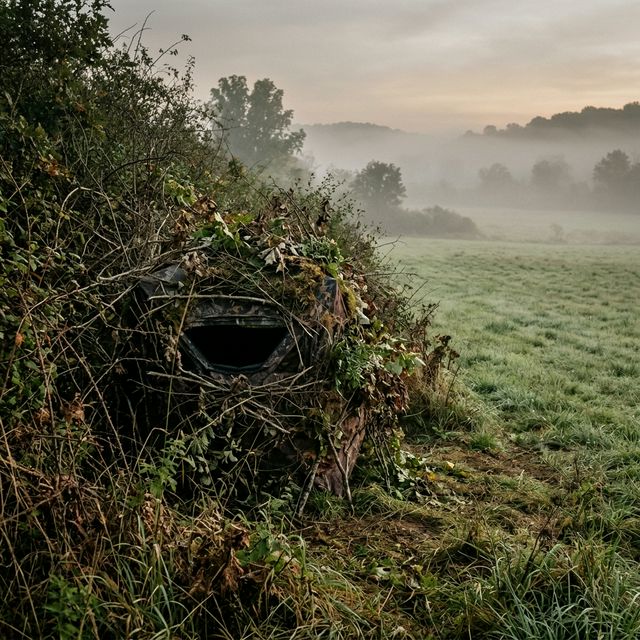
Ground Blind Strategies: Staying Concealed at Eye Level
Master ground blinds for whitetails: black-out clothing, brushing-in, wind, mesh choice, heater safety, and setups that hide you at eye level.
When the funnel has no climbable tree—or you are hunting with youth or mobility limits—a ground blind is the right tool. It also puts you on the same plane as a deer’s eyes and nose. Most failures are not about camo patterns; they are about light, outline, wind, and setup timing.
Hunt the blind like a system, not a popup tent.
The Black-Hole Effect and Light Bleed
A blind is a dark cave in the woods. Deer notice wrong light.
- Open one primary shooting window toward expected approach. Extra rear/side windows create silhouettes.
- Wear matte black (hoodie, gloves, face mask) inside dark interiors so skin and hands disappear.
- Keep interior clutter low; pale coffee cups and phone screens flash like beacons.
- Sit back from the window—barrel or rest near the opening, body in shadow.
If you must open a second window for wind or a second shooter, crack it minimally and stay deeper in the void.
Brushing In: Break the Box
A new blind in a cut cornfield looks like a sudden boulder.
- Texture: Pile local cedar, corn stalks, grass, and deadfall against corners. Kill the 90-degree edges.
- Roofline: Drape long branches over the flat roof—the most unnatural line at distance.
- Back into cover: Fence rows, brush lines, multi-trunk trees, and ditch banks beat open flats.
- Height: Nest the blind so it does not skylined on a rise.
Spend 20 to 40 minutes brushing. Five minutes of half-effort gets you busted at 60 yards.
Timing: When to Place the Blind
Deer notice change. Ideal protocol:
- Set 2 to 4 weeks before you hunt when possible.
- On public land or short notice, brush heavily and hunt midday first while deer are bedded elsewhere—or use natural existing cover blinds.
- Avoid dropping a blind on a hot trail the evening you hunt and expecting giants to shrug.
Permanent brush blinds and DIY wood blinds can be even better for seasonal farms—see DIY pallet deer blind plans if you want a fixed option.
Wind and Scent on the Ground
Elevation is not saving you. Your scent sheet blows at nose height.
- Place so prevailing wind carries odor into a non-deer zone (pasture, deep water, steep dead ground).
- A blind is not a scent locker—fabric breathes and windows leak.
- Rake crunchy leaves under the floor area so foot shifts stay quiet.
- Enter with rubber boots; do not walk the expected deer trail to the door.
Pair with solid scent-control habits. For water-edge blinds, study hunting over water thermals—bottoms swirl.
Shooting Windows, Mesh, and Broadheads
- Practice drawing and anchoring inside the blind before season.
- Confirm bow limbs clear walls and roof at full draw.
- Shoot-through mesh: Use fixed-blade broadheads. Mechanicals can deploy on mesh and wreck arrow flight.
- Laser-range landmarks from the seat you will hunt—angles deceive at eye level.
- For firearms, know your netting policy; many hunters zip shoot-through panels clear for gun season.
Youth or new hunters benefit from roomy double blinds—silence coaching matters as much as camo.
Heater Safety and Late-Season Comfort
Cold sits tempt propane heaters. Carbon monoxide in a sealed blind is deadly.
- Crack upper vents for cross-flow anytime a heater runs.
- Exit immediately if you feel headache, nausea, or unusual fatigue.
- Consider chemical toe/hand warmers and better clothing before open flame.
- Never sleep overnight with a heater in a sealed blind.
Comfort also comes from cold-weather layering so you move less.
Best Locations for Ground Blinds
High-odds spots:
- Inside corners of fields
- Fence-line crossings and ditch funnels (pinch points)
- Food-plot edges backed by brush
- Ag gaps with no suitable trees
- Water holes with firm banks and a downwind non-deer blowout
Avoid skylined hilltops and the geometric middle of bare fields unless brush and time-on-site are exceptional.
Mistakes That Get You Busted
- Two open windows creating a light tunnel
- Woodland camo glowing inside a black interior
- Setting up overnight on a pressured public trail
- Ignoring wind because “the blind hides smell”
- Shifting on loud leaf litter at 15 yards
- Phone brightness during primetime
Entry, Exit, and Noise Discipline
The blind does not hide a clumsy approach.
- Park so headlights never rake the food source or trail.
- Walk the designated path; stop 30 yards out to quiet breathing before the final approach.
- Open the door away from expected deer travel when possible.
- Zip slowly—practice at home so the sound is familiar and minimized.
- Exit after dark when deer are feeding elsewhere, or wait until they clear if you are pinned.
Teach youth hunters hand signals inside the blind before the season. Whispered coaching at 18 yards ends more hunts than bad camo.
Weather and Seasonal Adjustments
- Rain: Hub blinds shine; keep a towel for wet bows and silence dripping flys.
- Snow: Brush white/grey naturally; knock snow off the roof carefully so sheets do not crash mid-sit.
- High wind: Stake guy lines; a flapping blind is worse than no blind.
- Early season: Bug mesh and scent-free insect strategies matter as much as concealment.
- Rut: Bigger windows for scanning, but keep rear closed to avoid silhouettes when you turn.
Re-brush after windstorms. A naked nylon box that was hidden in October can be exposed by November leaf drop—plan a quick midday refresh.
Field Notes and Practical Numbers Use these benchmarks to keep decisions concrete rather than vague:
- Log every sit with date, wind direction, temperature, and deer observations—patterns appear after 8 to 12 recorded hunts on the same property.
- Limit first-time pressure on a hot pin to one quality sit, then rest at least 24 to 48 hours unless the rut calendar demands otherwise.
- Carry a short checklist in your phone notes so gear and safety steps do not depend on memory at 4:30 a.m.
- Revisit your plan weekly during the season; crops, pressure, and breeding phases change the right answer.
- When in doubt, choose the option that leaves mature deer less educated for the next sit—longevity beats one burned encounter.
These habits compound across a season and across years on the same ground.
Successful hunters treat preparation as part of the hunt itself. Write down what worked, what failed, and what you will change next time. Small improvements in access, timing, and patience usually matter more than buying another gadget. Stay flexible after weather swings, keep safety non-negotiable, and measure success by clean opportunities and ethical recoveries—not only by antlers on the wall. Over a full season, disciplined routines outperform random hard hunting.
Public Land Blind Ethics and Theft On public ground, pop-ups invite theft and clutter.
- Prefer natural brush blinds you can abandon without trash.
- If you leave a hub blind, check local rules—many WMAs ban unattended blinds after a set number of days.
- Label with name/phone if required; lock zippers do little against knives.
- Pack out every stake, bottle, and card cover.
- Hunt midday first after a quick setup to reduce overnight education when you cannot pre-set for weeks.
A stolen blind is annoying; educating every deer on a ridge with a neon box is worse.
Frequently Asked Questions
Can deer see black mesh?
They notice contrast more than mesh weave. Mesh can soften a harsh open hole; movement behind it still gets you caught. Stay still and blacked out.
How far should a blind be from a trail?
For bows, 15 to 30 yards offset often beats sitting on top of the trail. Perfect centering leaves no margin when a doe smells the door seam.
Are hub blinds or natural blinds better?
Hub blinds win for portability and weather. Natural/brush blinds win for permanence and outline. Match to property and pressure.
Can I use a ground blind for rut lockdown?
Yes—tucked into micro-cover edges. Keep the profile brushed and hunt lockdown thickets without skyline exposure.
Do I need a chair that swivels?
A quiet 360 chair helps, but practice locking shots without dramatic spins. Noise kills more hunts than imperfect angles.
Ground hunting is intimate. At 20 yards, every light leak and scent mistake matters. Master shadow, brush, and wind, and the blind becomes a precision ambush instead of a nylon beacon.
Wildsnap • Open beta
Join Wildsnap and try the beta
In the open beta, you turn trail-cam data into actionable insights—free, fast, and simple.
No credit card